
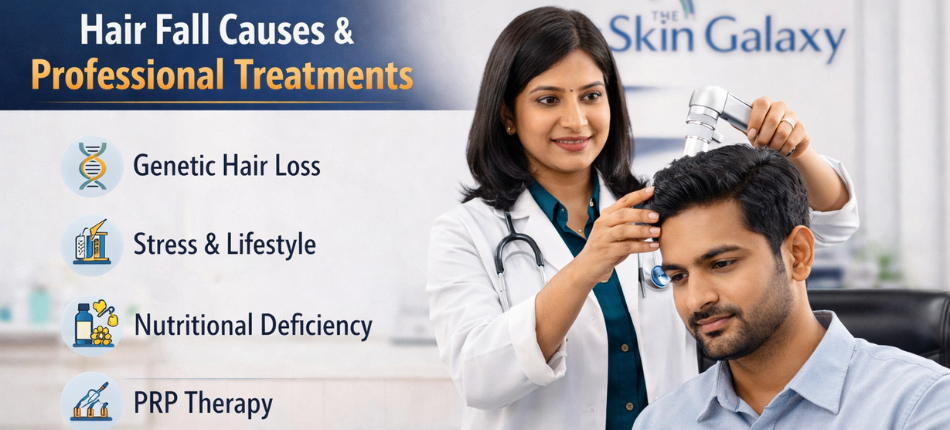
Hair Fall Causes and Professional Treatments – The Skin Galaxy – A Complete Guide
Introduction
Hair fall is one of the most common concerns affecting both men and women across all age groups. While losing 50–100 strands a day is normal, excessive hair loss can indicate underlying health, lifestyle, or genetic issues. Understanding hair fall causes and professional treatments is essential for effective and long-term hair restoration.
Common Causes of Hair Fall
1. Genetic Hair Loss (Androgenetic Alopecia)
Genetic hair loss, medically known as Androgenetic Alopecia, is the most common cause of hair thinning and baldness in both men and women. It is a hereditary condition influenced by genetics and hormones, particularly androgens such as dihydrotestosterone (DHT).
Androgenetic alopecia is a progressive hair loss condition characterized by the gradual shrinking of hair follicles. Over time, affected follicles produce thinner, shorter hair strands until hair growth eventually stops.Genetic hair loss is inherited from either parent and is linked to sensitivity of hair follicles to DHT. DHT binds to hair follicle receptors and causes:
-
Shortened hair growth cycles
-
Weakening of hair follicles
-
Miniaturization of hair strands
As follicles shrink, new hair becomes finer and less pigmented until it disappears completely.
2. Hair Styling and Chemical Damage
Hair Styling and Chemical Damage occur due to frequent use of heat styling tools, tight hairstyles, hair coloring, re-bonding, and chemical treatments. These practices weaken the hair shaft, damage the cuticle, and lead to breakage, thinning, and increased hair fall over time.
Frequent use of:
-
Heat styling tools
-
Chemical treatments
-
Hair coloring
can damage hair shafts and weaken roots over time.
3. Autoimmune and Medical Conditions
Autoimmune and Medical Conditions can disrupt the normal hair growth cycle when the immune system mistakenly attacks hair follicles, as seen in conditions like alopecia areata and lupus. Other medical issues such as thyroid disorders, diabetes, and chronic illnesses can also trigger excessive hair fall and slow hair regrowth
Conditions such as:
-
Alopecia areata
-
Lupus
-
Diabetes
can directly affect hair growth cycles.
4. Nutritional Deficiencies
Lack of essential nutrients such as:
-
Iron
-
Protein
-
Vitamin D
-
Vitamin B12
-
Zinc
can weaken hair roots, leading to excessive shedding.
5. Stress and Lifestyle Factors
Chronic stress, irregular sleep, smoking, and poor diet can push hair follicles into a resting phase, causing telogen effluvium, a common hair fall condition.
6. Scalp Conditions
Issues like:
-
Dandruff
-
Fungal infections
-
Psoriasis
-
Seborrheic dermatitis
can damage hair follicles and obstruct healthy hair growth.
Effective Professional Treatments for Hair Fall
1. Customized Hair Loss Treatment Plans
Customized Hair Loss Treatment Plans are designed based on an individual’s hair type, scalp condition, and underlying cause of hair loss. This personalized approach ensures targeted treatment, better results, and long-term control of hair fall.
Professional clinics design personalized treatment plans based on:
-
Hair type
-
Cause of hair fall
-
Scalp condition
Customization ensures better results.
2. PRP (Platelet-Rich Plasma) Therapy
PRP therapy is a popular non-surgical treatment that:
-
Strengthens hair follicles
-
Reduces hair fall
-
Promotes new hair growth
It uses the patient’s own blood platelets to stimulate scalp healing.
3. Mesotherapy for Hair Loss
Mesotherapy involves injecting vitamins, minerals, and amino acids directly into the scalp to:
-
Nourish hair roots
-
Improve blood circulation
-
Reduce hair thinning
4. Nutritional & Lifestyle Counseling
Professional hair treatments often include:
-
Diet correction
-
Supplement guidance
-
Stress management strategies
This holistic approach ensures long-term hair health.
5. Advanced Hair Transplant Solutions
For severe or permanent hair loss, hair transplant procedures such as:
-
FUE (Follicular Unit Extraction)
-
FUT (Follicular Unit Transplantation)
offer long-term, natural-looking results.
Benefits of Professional Hair Fall Treatments
-
Accurate diagnosis
-
Clinically proven results
-
Safe and monitored procedures
-
Long-term hair retention
Professional care reduces trial-and-error approaches.
Conclusion
Hair fall can be caused by multiple factors, and self-treatment often fails to deliver lasting results. Understanding hair fall causes and professional treatments allows individuals to seek timely medical care. With proper diagnosis and expert intervention, hair fall can be controlled and even reversed in many cases
Hair Fall Causes and Professional Treatments Hair Fall Causes and Professional Treatments Hair Fall Causes and Professional Treatments Hair Fall Causes and Professional Treatments Hair Fall Causes and Professional Treatments Hair Fall Causes and Professional Treatments Hair Fall Causes and Professional Treatments