
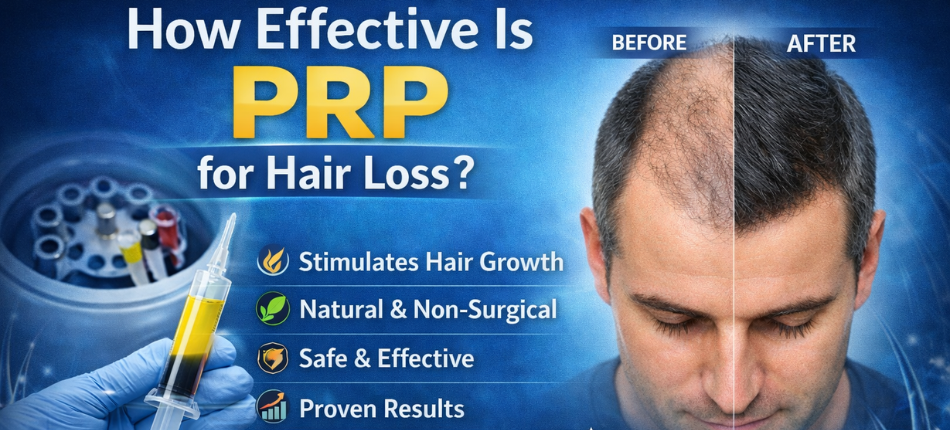
How Effective Is PRP for Hair Loss – A Comprehensive Guide
Introduction
Hair loss affects millions of men and women worldwide, undermining confidence and quality of life. Among emerging treatments, PRP (Platelet-Rich Plasma) therapy has gained tremendous popularity. But how effective is PRP for hair loss, really? At The Skin Galaxy, we break down the science, benefits, results, and expectations of this advanced solution.
What Is PRP Therapy?
PRP stands for Platelet-Rich Plasma, derived from your own blood. It contains growth factors that help stimulate hair follicles and promote natural regrowth.
How PRP works:
-
A small amount of blood is drawn from your arm.
-
It’s spun in a centrifuge to isolate platelets.
-
The concentrated platelets are injected into the scalp at the level of hair roots.
This process stimulates circulation and encourages dormant follicles to enter a new growth phase.
Why PRP Has Become So Popular
PRP (Platelet-Rich Plasma) therapy has become increasingly popular because it offers a safe, natural, and non-surgical approach to treating hair loss. Unlike hair transplant surgery, PRP does not involve incisions or lengthy recovery periods, making it a convenient option for individuals with busy lifestyles. The procedure has minimal downtime, allowing patients to resume their daily activities almost immediately. Since PRP uses the patient’s own blood to stimulate hair follicles, it works through the body’s natural healing mechanisms, reducing the risk of allergic reactions or serious side effects. Additionally, PRP is suitable for both men and women experiencing early to moderate hair thinning, making it a versatile solution. These benefits make PRP especially appealing to individuals who prefer a minimally invasive alternative to surgery or long-term medication.
Does PRP Really Work for Hair Loss?
Clinical evidence shows promising results:
✔ Increased hair count
✔ Improved hair density
✔ Stronger, thicker strands
Here’s what research and expert observation suggest:
-
Best results are seen in early to moderate hair thinning
-
Individuals with advanced baldness may see limited improvement
-
Results vary depending on age, genetics, and scalp health
At The Skin Galaxy, we assess each patient individually to tailor PRP treatments for the best outcomes.
Who Is an Ideal Candidate?
You’re experiencing early thinning – PRP works best when hair follicles are still active and not completely dormant.
Your hair loss is hereditary (Androgenetic Alopecia) – It is especially effective for genetic pattern hair loss in both men and women.
You’re seeking a minimally invasive option – PRP is ideal if you prefer a non-surgical treatment with little to no downtime.
You have realistic expectations – PRP improves hair thickness and density gradually but does not create instant or dramatic regrowth.
What to Expect During Treatment
Consultation & Scalp Evaluation – Your specialist examines your scalp, hair density, and pattern of hair loss to determine if PRP is suitable for you. A personalized treatment plan is then created based on your condition and goals.
Blood Draw and Preparation – A small amount of blood is drawn from your arm, similar to a routine blood test. The sample is placed in a centrifuge to separate and concentrate the platelet-rich plasma.
Microneedling or Scalp Injection Session – The prepared PRP is carefully injected into targeted areas of the scalp or applied with microneedling. This process stimulates hair follicles and enhances blood circulation to promote regrowth.
Post-Care Instructions – You will receive simple aftercare guidelines, such as avoiding hair wash or heavy exercise for a short period. Mild redness or tenderness may occur but usually settles quickly.
Each session takes about 30–45 minutes, and most people can return to their normal daily activities immediately after the procedure.
Tips for Better PRP Outcomes
To achieve the best results from PRP therapy, maintaining a healthy lifestyle is essential. A balanced diet rich in proteins, vitamins, iron, and biotin supports stronger hair growth and enhances the effectiveness of the treatment. Avoiding smoking is equally important, as smoking reduces blood circulation to the scalp and can negatively impact follicle health. Carefully following your doctor’s post-treatment care instructions—such as avoiding harsh hair products or strenuous activities for a short time—helps ensure proper healing and optimal results. Most importantly, staying consistent with scheduled sessions and maintenance treatments allows PRP to gradually stimulate and strengthen hair follicles. While PRP enhances natural hair growth, your daily habits and overall health significantly influence long-term outcomes.
How Effective Is PRP for Hair Loss How Effective Is PRP for Hair Loss How Effective Is PRP for Hair Loss How Effective Is PRP for Hair Loss How Effective Is PRP for Hair Loss How Effective Is PRP for Hair Loss How Effective Is PRP for Hair Loss How Effective Is PRP for Hair Loss How Effective Is PRP for Hair Loss