Types of Lentigines – The Skin Galaxy – Causes, Symptoms, and Treatment Options
Introduction
Lentigines are common skin lesions that appear as dark, flat spots on the skin. While often harmless, different types of lentigines may indicate sun damage, genetic factors, or underlying skin conditions. At The Skin Galaxy, our dermatology experts help patients understand and treat various types of lentigines with advanced skin care solutions.
Discover the types of lentigines, from sun spots to genetic spots, and how The Skin Galaxy can help treat and manage them safely.
What Are Lentigines?
Lentigines are pigmented spots caused by an increased number of melanocytes in the skin. Unlike freckles, they do not fade with reduced sun exposure and can appear anywhere on the body.
Common Types of Lentigines
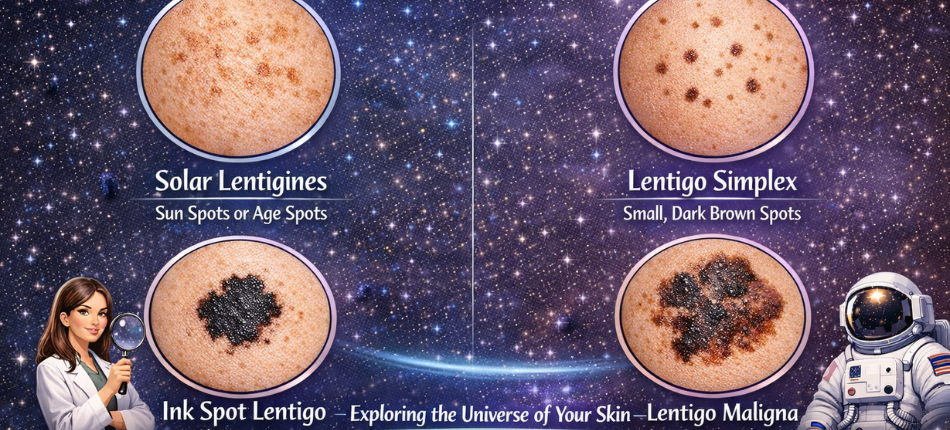
1. Solar Lentigines (Sun Spots / Age Spots)
Solar lentigines develop due to prolonged sun exposure.
Solar lentigines are most commonly found on areas of the body that receive frequent sun exposure, such as the face, hands, shoulders, and arms. These spots develop gradually over time and are more prevalent in adults and elderly individuals due to cumulative UV damage. Their appearance can vary in shade, ranging from light brown to dark brown, depending on skin type and the extent of sun exposure.
2. Simple Lentigines
These are benign lentigines not related to sun exposure.
Simple lentigines often appear during childhood or early adulthood and are not related to sun exposure. They can occur anywhere on the body, including areas not exposed to sunlight, and usually remain uniform in shape and color. These spots are generally harmless and tend to stay stable in size over time without causing medical concern.
3. Lentigines Associated with Syndromes
Some lentigines are linked to genetic conditions.
Certain types of lentigines are associated with genetic syndromes such as Peutz-Jeghers syndrome and LEOPARD syndrome. These lentigines often appear in clusters on the lips, face, and mucous membranes, including the mouth. Because they may be linked to underlying systemic conditions, proper medical evaluation and regular monitoring by a dermatologist and physician are important.
4. Ink Spot Lentigines
Also known as reticulated lentigines.
Ink spot lentigines are most commonly seen in fair-skinned individuals and usually develop after episodes of intense sun exposure. These lesions appear as dark pigmented spots with irregular, jagged borders, giving them an ink-splatter appearance. Although generally benign, they should be evaluated by a dermatologist to rule out other pigmented skin conditions.
When Should You See a Dermatologist?
1. Sudden increase in number or size
A rapid rise in the number or size of lentigines may indicate abnormal skin changes. Prompt evaluation by a dermatologist is important to rule out serious conditions.
2. Color changes or irregular borders
Lentigines that darken, lighten, or develop uneven edges can signal potential skin issues. Early assessment helps detect problems like melanoma at an early stage.
3. Associated itching or bleeding
Itching, pain, or bleeding in a pigmented spot is not normal and may indicate an underlying skin disorder. Immediate medical attention is recommended for proper diagnosis and treatment.
Diagnosis of Lentigines
Dermatologists diagnose lentigines through:
1. Clinical examination
A dermatologist carefully inspects the lentigines, noting size, color, shape, and location. This initial evaluation helps determine whether further tests are needed.
2. Dermoscopy
Dermoscopy uses a special magnifying tool to examine pigmented spots in detail. It allows dermatologists to detect subtle features that are not visible to the naked eye.
3. Skin biopsy (if required)
A small sample of skin may be taken for microscopic analysis if the diagnosis is uncertain. This helps rule out serious conditions like melanoma and ensures accurate treatment.
Why Choose The Skin Galaxy?
-
Expert dermatologists
-
Advanced diagnostic tools
-
Customized treatment plans
-
Safe laser and cosmetic procedures
Prevention Tips
-
Use broad-spectrum sunscreen daily
-
Avoid excessive sun exposure
-
Regular skin check-ups
-
Follow dermatologist-recommended skincare
Conclusion
Lentigines are usually benign but can impact appearance and confidence. Knowing the type helps in choosing the right treatment. At The Skin Galaxy, we combine medical expertise with advanced technology for safe and effective pigmentation treatment.
Types of Lentigines Types of Lentigines Types of Lentigines Types of Lentigines Types of Lentigines Types of Lentigines Types of Lentigines Types of Lentigines Types of Lentigines Types of Lentigines Types of Lentigines
Dermatology and Cosmetology Clinic in Mumbai
Skin Specialist in Bhandup | The Skin Galaxy