
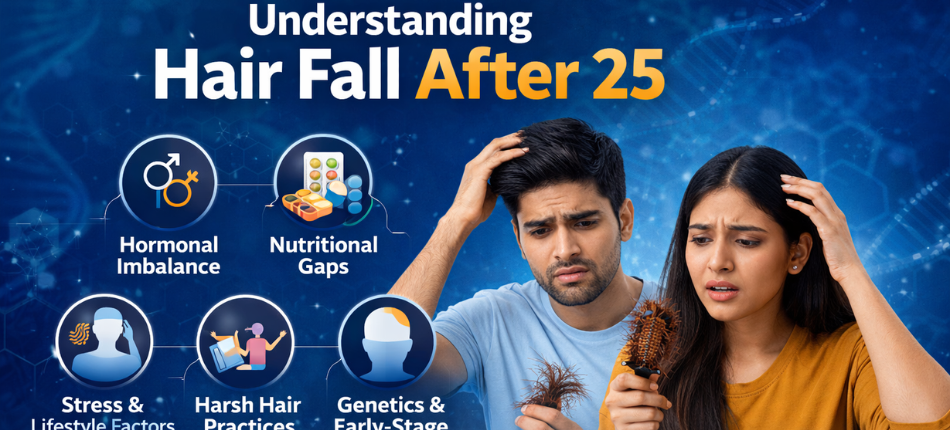
Understanding Hair Fall After 25 – Causes, Warning Signs & Modern Dermatology Solutions by The Skin Galaxy
Millions of people notice their first signs of thinning or hair fall in their late twenties. While this can feel alarming, the good news is that today’s advanced dermatology offers highly effective solutions. The Skin Galaxy specializes in diagnosing the root cause of hair fall and providing modern, safe, and customized treatments for long-lasting results.
Understanding Hair Fall After 25 explains the major causes behind early hair thinning and highlights modern dermatology solutions to restore healthy, strong hair.
Why Your Hair Behaves Differently After 25
The hair growth cycle is sensitive to internal and external factors. After the age of 25, hormonal changes, metabolic shifts, stress, and lifestyle patterns begin to impact follicle strength. If left unaddressed, these factors can gradually weaken roots and reduce hair volume.
Major Causes of Hair Fall After 25
1. Hormonal Imbalance
Hormonal changes are one of the most common reasons for hair fall after 25. Fluctuations in hormones such as estrogen, testosterone, progesterone, and thyroid hormones directly affect the hair growth cycle. Conditions like PCOS, thyroid disorders, post-pregnancy shifts, and even high cortisol levels due to stress can push hair into the shedding phase prematurely. When hormones are not balanced, the follicles weaken, leading to thinning, reduced volume, and slow regrowth. Addressing hormonal imbalance through medical evaluation and targeted treatment is essential to restore healthy hair growth.
2. Nutritional Gaps
Modern diets often fall short of essential nutrients required for strong, healthy hair. Key nutrients like iron, vitamin D, vitamin B12, protein, zinc, and omega-3 fatty acids play a crucial role in follicle strength and hair production. Even a mild deficiency can disrupt the hair cycle, causing breakage, dryness, and excessive shedding. People who skip meals, follow restrictive diets, or consume mostly processed foods are at a higher risk. Correcting nutritional gaps through balanced meals and supplementation helps nourish the scalp, strengthen roots, and promote consistent regrowth.
3. Stress & Lifestyle Factors
Stress is a silent trigger behind widespread hair fall in people above 25. Long work hours, poor sleep, mental fatigue, and everyday pressure increase cortisol levels—weakening hair follicles and shortening the growth phase. This often leads to a condition called telogen effluvium, where large amounts of hair suddenly shed. Unhealthy lifestyle habits such as smoking, irregular sleep, lack of exercise, and high caffeine intake further damage follicle health. Improving lifestyle quality, managing stress, and maintaining a healthy routine can significantly reduce hair fall and support scalp wellness.
4. Harsh Hair Practices
Frequent chemical treatments, hair coloring, straightening, curling, and excessive heat styling can damage the hair shaft and weaken roots over time. Tight hairstyles like ponytails, braids, or buns cause constant tension on the follicles, leading to traction alopecia—a form of hair loss caused by mechanical stress. Even everyday habits like using harsh shampoos, overwashing, or rubbing wet hair aggressively can contribute to breakage. Adopting gentle haircare practices, minimizing heat, and choosing mild products help protect the scalp and prevent long-term damage.
5. Genetics & Early-Stage Pattern Baldness
Genetics play a major role in hair loss, and many individuals start noticing the first signs of patterned thinning between 25–35 years. Male Pattern Baldness and Female Pattern Hair Loss are caused by hereditary sensitivity to hormones like DHT, which gradually shrink hair follicles over time. Early symptoms include a receding hairline, thinning at the crown, and overall reduced density. Identifying pattern baldness early and beginning targeted treatments can slow its progression, preserve existing hair, and stimulate healthier regrowth.
When Should You Seek Professional Help?
You should consult a dermatologist if you notice:
- Widening hair parting
- Excessive daily shedding
- Visible thinning at the crown
- Receding hairline
- Bald patches
- Slow hair regrowth
Early diagnosis prevents permanent follicle miniaturization.
Modern Dermatology Solutions at The Skin Galaxy
1. Follicle Regeneration Therapies
Follicle regeneration therapies focus on reviving weak, dormant, or miniaturized hair follicles so they can re-enter the active growth phase. These treatments boost blood circulation, increase nutrient delivery, and improve cellular activity within the follicle. By stimulating natural healing and regeneration mechanisms of the scalp, these therapies help strengthen the roots, increase hair density, and reduce thinning. They are especially effective for early-stage hair loss and are considered one of the most advanced, non-surgical approaches for long-term hair restoration.
2. Scalp Rejuvenation Programs
Scalp rejuvenation programs are designed to enhance overall scalp health, which is essential for strong and healthy hair growth. These programs typically include deep cleansing, exfoliation, detoxification, hydration, and nourishment to remove dandruff, excess oil, product buildup, and inflammation. A clean, balanced scalp environment ensures that hair follicles receive the oxygen and nutrients they need to grow effectively. These treatments also improve circulation and reduce irritation, making them ideal for individuals experiencing dandruff, itching, or scalp sensitivity along with hair fall.
3. Advanced Laser Therapy
Advanced laser therapy uses low-level laser light to stimulate inactive or weakened hair follicles. This non-invasive, painless treatment increases blood flow to the scalp, boosts cellular energy (ATP production), and prolongs the hair’s growth phase. Regular sessions help improve hair thickness, reduce shedding, and strengthen overall follicle vitality. Laser therapy is particularly effective for pattern baldness and diffuse thinning, and it works well when combined with other medical or regenerative treatments. Patients often see gradual, natural-looking improvements in density and texture.
4. Medical Treatments Based on Scientific Evidence
Scientifically backed medical treatments focus on clinically researched and dermatologist-approved solutions to control hair fall and promote regrowth. These include topical applications, oral medications, nutritional support, and customized treatment plans tailored to the patient’s diagnosis. Evidence-based treatments target the root cause—such as hormonal imbalance, nutrient deficiency, inflammation, or genetic factors. Because they are proven through research and clinical studies, these medical therapies offer safe, predictable, and long-lasting results when monitored by a qualified specialist.
5. Hybrid Treatment Plans
Hybrid treatment plans combine multiple advanced therapies to deliver faster, stronger, and more noticeable improvements. By addressing hair loss from different angles—follicular stimulation, scalp health improvement, nutrient support, and hormonal balance—these integrated plans create a comprehensive and highly effective solution. Hybrid approaches are particularly beneficial for moderate to severe hair fall, early pattern baldness, or complex cases with multiple underlying causes. This multi-layered strategy ensures maximum follicle activation, enhanced regrowth, reduced shedding, and long-term maintenance of hair density.
Conclusion
Hair fall after 25 doesn’t have to be permanent. With timely diagnosis, personalized care, and modern dermatological solutions, restoring strong, healthy hair is absolutely possible. To regain confidence and control hair fall effectively, trust the expertise of The Skin Galaxy.
Understanding Hair Fall After 25 Understanding Hair Fall After 25 Understanding Hair Fall After 25 Understanding Hair Fall After 25 Understanding Hair Fall After 25 Understanding Hair Fall After 25 Understanding Hair Fall After 25 Understanding Hair Fall After 25 Understanding Hair Fall After 25 Understanding Hair Fall After 25 Understanding Hair Fall After 25 Understanding Hair Fall After 25