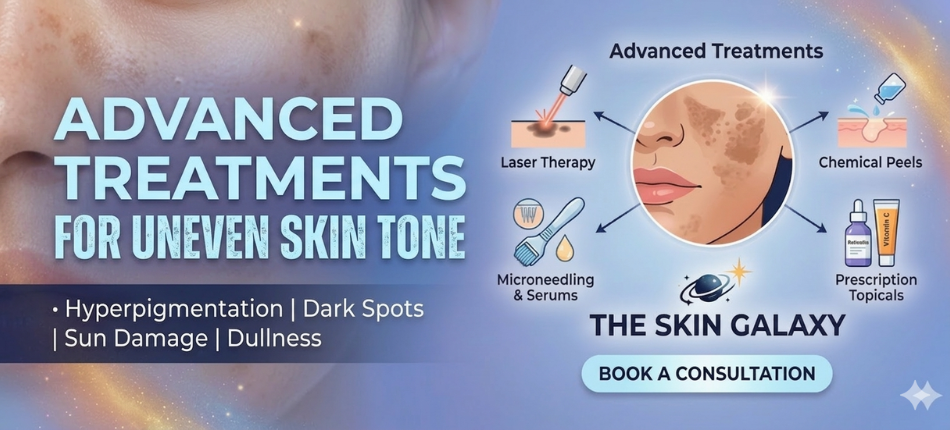
Advanced Treatments for Uneven Skin Tone – Discover the Latest Dermatology Treatments at The Skin Galaxy
Uneven skin tone is one of the most common skincare concerns today. From dark patches and pigmentation to dullness and discoloration, it can make the skin look tired and older than it actually is.
Fortunately, modern dermatology offers several advanced treatments that can restore a clearer, brighter, and more even complexion.
At The Skin Galaxy, dermatologists use medically proven skin treatments that target pigmentation, sun damage, and skin discoloration at the root cause.
Discover advanced treatments for uneven skin tone including laser therapy, chemical peels, and microneedling to reduce pigmentation and restore clear skin.
What is Uneven Skin Tone?
Uneven skin tone refers to a condition where different areas of the skin appear darker, lighter, redder, or duller than the surrounding skin, resulting in an inconsistent complexion. It commonly occurs due to irregular melanin production, which is the pigment responsible for skin color. Factors such as sun exposure, acne scars, hormonal changes, aging, and environmental damage can cause certain patches of skin to become discolored or pigmented. Uneven skin tone may appear as dark spots, patches, redness, hyperpigmentation, or dull areas on the face or body. While it is a common and usually harmless skin concern, many people seek dermatological treatments and proper skincare to restore a smoother, brighter, and more balanced complexion.
Common Causes of Uneven Skin Tone
Sun Exposure
Sun exposure is one of the most common causes of uneven skin tone. When the skin is exposed to ultraviolet (UV) rays for long periods, it produces extra melanin to protect itself from damage. This excess melanin can lead to dark spots, sunspots, and patchy pigmentation on areas like the face, neck, and hands. Over time, repeated sun exposure can also damage skin cells and slow down the natural skin renewal process, making discoloration more visible. Using sunscreen daily and limiting direct sun exposure are important steps to prevent sun-related pigmentation.
Acne Scars & Post-Inflammatory Hyperpigmentation
Acne breakouts can often leave behind dark marks even after the pimples heal. This condition is known as post-inflammatory hyperpigmentation (PIH). It occurs when inflammation from acne triggers the skin to produce excess melanin during the healing process. As a result, dark spots or patches appear where the acne once existed. These marks may fade gradually over time, but in many cases they persist for months without proper skincare or dermatological treatments.
Hormonal Changes
Hormonal fluctuations can significantly affect the skin’s pigmentation. Conditions such as pregnancy, birth control usage, thyroid disorders, or hormonal imbalance may stimulate melanin production, leading to a condition called melasma. Melasma typically appears as dark patches on the cheeks, forehead, nose, or upper lip. Because hormonal pigmentation develops internally, it often requires professional dermatological treatments along with protective skincare to manage and reduce its appearance.
Aging
As the skin ages, its natural ability to regenerate and repair itself slows down. The process of cell turnover becomes less efficient, causing dead skin cells to accumulate on the surface. This can make the skin appear dull, patchy, or uneven in tone. Aging skin may also develop age spots, fine lines, and pigmentation changes due to years of sun exposure and environmental damage. Proper skincare and advanced dermatology treatments can help improve skin renewal and restore a more even complexion.
Environmental Damage
Environmental factors such as pollution, dust, and harsh weather conditions can also contribute to uneven skin tone. Pollutants in the air can penetrate the skin and generate free radicals, which damage skin cells and disrupt melanin balance. Over time, this damage may lead to dullness, pigmentation, and skin discoloration. Combined with stress and poor lifestyle habits, environmental exposure can accelerate skin aging and worsen uneven skin tone, making proper skin protection and cleansing essential for maintaining healthy skin.
Advanced Treatments for Uneven Skin Tone
Dermatology treatments today go far beyond regular facials or creams. Medical-grade procedures can significantly improve skin clarity.
1. Chemical Peels
Chemical peels are a popular dermatological treatment used to improve uneven skin tone by removing the outer layer of damaged skin. During this procedure, a dermatologist applies a specially formulated chemical solution that gently exfoliates the skin and stimulates new cell growth. As the top layer of skin sheds, it helps reduce dark spots, pigmentation, acne marks, and dullness. Chemical peels also improve skin texture and promote a brighter, more even complexion over time. Depending on the severity of pigmentation, dermatologists may recommend light, medium, or deeper peels for optimal results.
2. Laser Skin Rejuvenation
Laser skin rejuvenation is an advanced treatment that targets pigmentation and skin discoloration using focused light energy. The laser penetrates the skin to break down excess melanin responsible for dark spots and uneven tone. At the same time, it stimulates collagen production, which helps improve skin texture and overall skin health. This treatment is commonly used to reduce sunspots, age spots, acne marks, and other forms of hyperpigmentation. With multiple sessions, laser rejuvenation can significantly enhance skin clarity and create a smoother, more balanced complexion.
3. Medical-Grade Skin Brightening Treatments
Medical-grade skin brightening treatments involve professional skincare procedures that use high-quality active ingredients designed to reduce pigmentation and improve overall skin radiance. These treatments often combine specialized serums, exfoliating techniques, and hydration therapies to restore the skin’s natural glow. Unlike over-the-counter products, medical-grade treatments penetrate deeper layers of the skin and deliver more noticeable results. They help improve dull skin, reduce discoloration, and support healthier skin renewal for a brighter and more even skin tone.
4. Microneedling with Pigmentation Correction
Microneedling is a minimally invasive procedure that uses tiny, fine needles to create controlled micro-injuries in the skin. These micro-channels stimulate the skin’s natural healing process and encourage collagen production. When combined with pigmentation-correcting serums or solutions, microneedling can help fade dark spots, acne scars, and uneven skin tone. The treatment also improves skin texture, reduces pore size, and enhances the absorption of skincare ingredients, resulting in smoother and more radiant skin over time.
5. Customized Dermatology Treatment Plans
Every individual’s skin is unique, which is why customized dermatology treatment plans are essential for effectively treating uneven skin tone. Dermatologists evaluate factors such as skin type, pigmentation severity, medical history, and lifestyle before recommending the most suitable treatments. A personalized plan may include a combination of procedures like chemical peels, laser therapy, microneedling, and medical skincare products. This tailored approach ensures that the treatment targets the root cause of pigmentation while delivering safe, long-lasting results for healthier and more even-looking skin.
At-Home Tips to Maintain Even Skin Tone
Maintaining an even skin tone at home requires a consistent skincare routine and healthy habits. Using sunscreen daily helps protect the skin from UV damage that can cause pigmentation and dark spots. Regular cleansing, gentle exfoliation, hydration, and the use of brightening ingredients like Vitamin C can also support skin renewal and keep the complexion looking clear and balanced.
Why Choose Professional Treatment?
Over-the-counter creams often provide slow or minimal results. Professional dermatology treatments target pigmentation at deeper skin layers, offering faster and more noticeable improvements.
At The Skin Galaxy, dermatology experts assess your skin and recommend advanced treatments designed to safely restore an even and radiant complexion.
Final Thoughts
Uneven skin tone doesn’t have to be permanent. With modern dermatological treatments and proper skincare guidance, achieving brighter, smoother, and healthier skin is possible.
If you are struggling with pigmentation, dark spots, or dull skin, professional treatment can make a significant difference.
Consult a dermatologist to find the right solution for your skin type and concerns.
Advanced Treatments for Uneven Skin Tone Advanced Treatments for Uneven Skin Tone Advanced Treatments for Uneven Skin Tone Advanced Treatments for Uneven Skin Tone Advanced Treatments for Uneven Skin Tone Advanced Treatments for Uneven Skin Tone Advanced Treatments for Uneven Skin Tone Advanced Treatments for Uneven Skin Tone Advanced Treatments for Uneven Skin Tone Advanced Treatments for Uneven Skin Tone Advanced Treatments for Uneven Skin Tone Advanced Treatments for Uneven Skin Tone Advanced Treatments for Uneven Skin Tone Advanced Treatments for Uneven Skin Tone Advanced Treatments for Uneven Skin Tone
Dermatology and Cosmetology Clinic in Mumbai
Expert Cosmetologist in Bhandup | The Skin Galaxy