
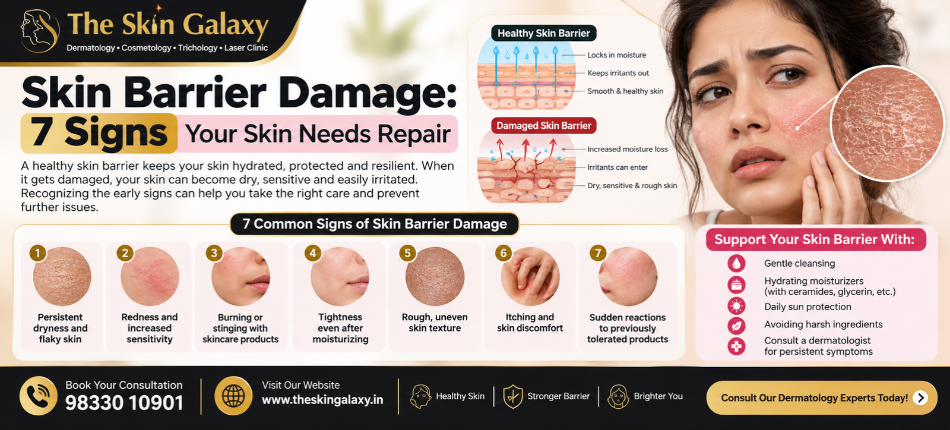
Skin Barrier Damage: 7 Signs Your Skin Needs Repair – The Skin Galaxy
1. Introduction
Does your skin feel unusually dry, tight, itchy, or sensitive even after following your regular skincare routine? Have you noticed that products you previously used comfortably now cause burning, redness, or irritation? These changes may indicate that your skin’s protective barrier is not functioning as effectively as it should.
The skin barrier plays an essential role in maintaining healthy skin. It helps retain moisture, protects against environmental irritants, and limits the entry of potentially harmful substances. However, factors such as excessive exfoliation, harsh cleansers, environmental conditions, and certain skin disorders can interfere with its protective function.
Recognizing Skin Barrier Damage Symptoms early can help you understand when your skincare routine needs adjustment and when professional dermatological advice may be necessary.
At The Skin Galaxy, understanding the causes of skin sensitivity and maintaining a healthy skin barrier are important aspects of skin health awareness.
In this detailed guide, we will explore seven common signs of a compromised skin barrier, why skin barrier problems occur, skincare ingredients that may help, common mistakes to avoid, and when to consult a dermatologist.
2. What Is the Skin Barrier?
The skin barrier is the outermost protective layer of the skin, primarily associated with the stratum corneum, which forms part of the epidermis.
This layer consists of flattened skin cells called corneocytes, surrounded by lipids such as ceramides, cholesterol, and fatty acids.
A useful way to understand its structure is to imagine a brick wall. The skin cells act like bricks, while the lipids form the material that holds them together.
Together, these components help maintain the skin’s protective function.
Important Functions of the Skin Barrier
1. Prevents Excessive Moisture Loss: A healthy skin barrier helps limit transepidermal water loss (TEWL), allowing the skin to retain necessary moisture and remain comfortable.
2. Protects Against Environmental Irritants: The barrier reduces the penetration of irritants, pollutants, and other external substances that may trigger skin reactions.
3. Supports Skin Hydration: Natural moisturizing factors and protective lipids work together to maintain adequate hydration in the outer skin layers.
4. Helps Maintain Skin Comfort: When the barrier functions properly, the skin is generally better able to tolerate ordinary environmental exposure and appropriate skincare products.
5. Supports Overall Skin Health: The barrier contributes to the skin’s natural defense system and helps maintain a balanced environment for normal skin function.
When this protective system becomes disrupted, the skin may become more vulnerable to dryness, irritation, and inflammation.
3. What Causes Skin Barrier Damage?
Skin barrier disruption can occur for several reasons. Some are related to skincare habits, while others involve environmental exposure or underlying skin conditions.
Excessive Exfoliation
Using chemical exfoliants such as alpha hydroxy acids (AHAs) or beta hydroxy acids (BHAs) too frequently may cause irritation, particularly in people with sensitive skin.
Aggressive physical scrubbing can also disturb the outer protective layer.
Harsh Cleansers
Strong cleansers, frequent washing, and products that leave the skin feeling excessively tight may remove some of the natural oils that support barrier function.
Overuse of Active Skincare Ingredients
Retinoids, exfoliating acids, and certain acne treatments can cause dryness or irritation, especially when introduced too quickly or used in unsuitable combinations.
Environmental Conditions
Cold weather, low humidity, strong winds, and prolonged exposure to dry indoor environments may increase moisture loss.
Hot Water and Frequent Washing
Repeated exposure to hot water and cleansing products can contribute to dryness and irritation.
Underlying Skin Conditions
Atopic dermatitis, contact dermatitis, and certain other inflammatory skin conditions can affect barrier function.
Inappropriate Skincare Products
Fragrances, preservatives, or other ingredients may trigger irritant or allergic contact dermatitis in susceptible individuals.
Understanding the underlying cause is important because skin barrier symptoms can resemble several dermatological conditions.
4. Skin Barrier Damage Symptoms: 7 Signs Your Skin Needs Repair
A compromised skin barrier may cause several noticeable changes in skin appearance, texture, and comfort.
However, these symptoms are not specific to barrier damage and may also occur with eczema, contact dermatitis, rosacea, infections, or other skin conditions.
Sign 1: Persistent Dryness and Flaky Skin
One of the most commonly noticed signs of impaired skin barrier function is persistent dryness.
When the skin barrier becomes disrupted, the skin may lose moisture more easily, resulting in a rough, tight, or flaky appearance.
You may notice dry patches around the cheeks, forehead, nose, or other areas of the face.
Some people experience dryness even after applying moisturizer, especially when the product is not suitable for their skin or an underlying condition remains untreated.
What May Help: Use a gentle, fragrance-free moisturizer containing ingredients such as ceramides, glycerin, or petrolatum. Apply it after cleansing while the skin is still slightly damp to help retain moisture.
Sign 2: Redness and Increased Skin Sensitivity
A weakened skin barrier may make the skin more reactive to everyday skincare products and environmental exposures.
You might notice redness after washing your face, applying moisturizer, or spending time in cold or windy conditions.
Products that were previously comfortable may suddenly cause irritation.
This increased sensitivity may be associated with inflammation or an underlying dermatological condition.
What May Help: Temporarily simplify your skincare routine and avoid unnecessary exfoliating products. If redness persists, spreads, or becomes painful, consult a dermatologist for an accurate diagnosis.
Sign 3: Burning or Stinging After Applying Skincare Products
Does your face sting when you apply a serum, cleanser, or moisturizer?
Burning or stinging can occur when the skin becomes irritated or its protective function is disrupted.
Some active ingredients may cause temporary irritation, particularly when used frequently or on already inflamed skin.
However, burning sensations should not automatically be considered a normal part of skincare.
What May Help: Stop using products that repeatedly cause discomfort. Choose mild, fragrance-free formulations and avoid combining multiple potentially irritating active ingredients until the cause has been assessed.
Sign 4: Tightness Even After Moisturizing
Healthy skin should generally feel comfortable after cleansing and moisturizing.
If your skin continues to feel tight, stretched, or uncomfortable, it may be experiencing dryness or inadequate moisture retention.
This sensation is particularly common after using strong cleansers or washing with hot water.
Sometimes, people mistake tightness for a sign that their skin has been thoroughly cleaned.
In reality, excessive tightness after washing may indicate that the cleansing routine is too harsh.
What May Help: Use lukewarm water, select a gentle cleanser, and apply an appropriate moisturizer after washing. Avoid excessive cleansing throughout the day.
Sign 5: Rough, Uneven Skin Texture
Changes in skin texture may occur when the outer skin layers become excessively dry or irritated.
The skin may feel rough, flaky, or uneven when touched.
In some cases, people respond by increasing exfoliation, believing that removing more dead skin cells will restore smoothness.
However, additional exfoliation may worsen irritation when the skin is already sensitive.
What May Help: Reduce unnecessary exfoliation and focus on gentle cleansing and consistent moisturizing. If roughness persists, a dermatologist can assess whether another condition is contributing to the texture changes.
Sign 6: Itching and Skin Discomfort
Itching is another possible symptom associated with dry or inflamed skin.
When the protective barrier is impaired, environmental irritants may more easily contribute to discomfort.
The skin may feel itchy after bathing, exposure to dry weather, or contact with certain skincare products.
Repeated scratching can further damage the skin and increase the risk of irritation or secondary infection.
What May Help: Use fragrance-free moisturizers regularly and avoid scratching. Persistent itching, oozing, crusting, or painful skin changes should be evaluated by a healthcare professional.
Sign 7: Sudden Reactions to Previously Tolerated Products
Have you been using the same skincare products for months, but suddenly your skin starts reacting to them?
This may happen when skin sensitivity changes or an underlying inflammatory condition develops.
Products containing fragrances, preservatives, exfoliating acids, or other ingredients may become uncomfortable.
Importantly, a new reaction can also indicate allergic contact dermatitis, which may require professional assessment and patch testing.
What May Help: Pause the suspected product and keep your routine simple. If reactions continue, consult a dermatologist rather than repeatedly trying new skincare products.
5. How to Repair a Damaged Skin Barrier
Skin barrier repair generally focuses on reducing irritation, restoring moisture, and allowing the skin’s protective function to recover.
Step 1: Simplify Your Skincare Routine
Using too many products at once can make it difficult to identify what is causing irritation. A simple routine consisting of a gentle cleanser, moisturizer, and sunscreen is often a reasonable starting point.
Temporarily reduce unnecessary serums, scrubs, and exfoliating products when your skin feels irritated. Once the skin becomes comfortable, products can be reintroduced gradually according to individual tolerance.
Step 2: Choose a Gentle, Fragrance-Free Cleanser
Harsh cleansing products may remove natural oils and contribute to dryness. Select a mild cleanser that removes dirt and excess oil without leaving the skin feeling excessively tight.
Avoid washing your face repeatedly throughout the day unless necessary. Lukewarm water is generally preferable to very hot water.
Step 3: Apply Moisturizer Regularly
Moisturizers help reduce moisture loss and improve the comfort of dry skin. Products containing ceramides, glycerin, hyaluronic acid, or petrolatum may be useful depending on your skin type.
Apply moisturizer after washing while the skin is slightly damp. For very dry skin, a cream may be more suitable than a lightweight lotion.
Step 4: Temporarily Reduce Strong Active Ingredients
Retinoids, glycolic acid, salicylic acid, and other active ingredients can be useful for specific skin concerns, but they may aggravate already irritated skin.
If these products are causing persistent burning or peeling, seek advice about temporarily adjusting their use.
Patients using prescription treatments should consult their prescribing clinician before making significant changes.
Step 5: Protect Your Skin From Sun Exposure
Sun protection is an important part of maintaining healthy skin.
Choose a broad-spectrum sunscreen with SPF 30 or higher that is comfortable for your skin type. Combine sunscreen with shade and protective clothing when appropriate.
If a sunscreen causes persistent stinging, consider discussing a suitable alternative with a dermatologist.
Step 6: Avoid Excessive Scrubbing
Physical scrubs, harsh exfoliating brushes, and repeated exfoliation can worsen skin irritation.
When the skin is already dry or inflamed, focus on moisturizing rather than trying to remove every visible flake.
Step 7: Consult a Dermatologist When Necessary
Persistent irritation may indicate more than temporary skin barrier disruption.
A dermatologist can assess whether eczema, contact dermatitis, rosacea, infection, or another condition is responsible and recommend appropriate treatment.
6. Best Skincare Ingredients for Skin Barrier Support
Choosing appropriate ingredients may help improve hydration and skin comfort.
| Ingredient | Potential Benefit |
|---|---|
| Ceramides | Help replenish lipids that support the skin barrier |
| Hyaluronic Acid | Helps attract and retain moisture |
| Glycerin | Acts as a humectant to support hydration |
| Petrolatum | Reduces moisture loss through the skin |
| Dimethicone | Helps form a protective layer and reduce water loss |
| Panthenol | May support hydration and soothe irritation |
| Niacinamide | May support barrier function in suitable formulations |
| Colloidal Oatmeal | May help soothe certain types of dry, irritated skin |
7. Skin Barrier Damage vs Dry Skin: Understanding the Difference
Dry skin and impaired skin barrier function are closely related, but they are not identical.
| Dry Skin | Impaired Skin Barrier |
|---|---|
| Often feels tight or rough | May feel tight, irritated, or unusually sensitive |
| May develop flakes | May involve flaking, stinging, and inflammation |
| Can be influenced by climate and skin type | Can be affected by irritants, excessive cleansing, or skin disease |
| Often improves with suitable moisturizing | May require removing triggers and treating underlying conditions |
| Does not always involve inflammation | May occur alongside inflammatory skin conditions |
Dryness is one possible sign of a compromised barrier, but it is not enough to confirm the diagnosis.
8. Can Oily and Acne-Prone Skin Have Barrier Damage?
Yes. Oily and acne-prone skin can also experience irritation and impaired barrier function.
People with oily skin sometimes use strong cleansers, frequent exfoliation, or multiple acne treatments to control excess oil.
However, these practices may contribute to dryness, peeling, redness, and discomfort.
Some acne medications can also temporarily increase skin sensitivity.
A suitable routine for acne-prone skin may include a gentle cleanser, a lightweight non-comedogenic moisturizer, and appropriate sun protection.
Acne treatment should be adjusted according to skin tolerance and professional advice rather than discontinued automatically.
9. How Long Does It Take to Repair a Damaged Skin Barrier?
The time required for skin barrier recovery depends on the underlying cause, severity of irritation, skincare habits, and presence of any dermatological condition.
Mild irritation caused by excessive cleansing or over-exfoliation may improve after removing the trigger and following a gentle skincare routine.
More persistent problems associated with eczema, contact dermatitis, or other inflammatory conditions may require longer-term management.
10. Common Skincare Mistakes That Can Worsen Skin Barrier Damage
Using Too Many Active Ingredients
Combining multiple exfoliating acids, retinoids, and other potentially irritating ingredients can increase the likelihood of dryness or discomfort. Introducing one product at a time makes it easier to assess tolerance.
Washing the Face Too Frequently
Repeated cleansing may remove protective oils and worsen tightness. Use a gentle cleanser as needed rather than washing excessively.
Skipping Moisturizer Because of Oily Skin
Oily skin still requires adequate hydration. A lightweight, non-comedogenic moisturizer may help maintain comfort without feeling excessively heavy.
Trying Multiple New Products During Irritation
Changing several products simultaneously can make it difficult to identify the cause of a reaction. A simpler routine is usually preferable while symptoms settle.
Ignoring Persistent Burning or Redness
Repeated stinging, significant redness, and painful skin reactions should not be dismissed as normal skincare effects. These symptoms may require dermatological assessment.
11. Daily Skincare Routine for Supporting Skin Barrier Recovery
A simple routine may help reduce irritation while supporting the skin’s protective function.
Morning Routine
-
Gentle Cleansing: Wash with lukewarm water and a mild cleanser if needed.
-
Moisturizing: Apply a suitable fragrance-free moisturizer.
-
Sun Protection: Use broad-spectrum SPF 30 or higher and other protective measures when outdoors.
Night Routine
-
Gentle Cleansing: Remove sunscreen, makeup, and daily impurities without aggressive scrubbing.
-
Moisturizing: Apply a barrier-supportive moisturizer suited to your skin type.
-
Avoid Unnecessary Actives: Temporarily reduce products that cause irritation and follow professional guidance for prescription treatments.
Consistency is generally more important than using a large number of skincare products.
12. When Should You Consult a Dermatologist?
Occasional dryness may improve with basic skincare adjustments, but some symptoms require professional evaluation.
Consider consulting a dermatologist if you experience persistent redness, repeated burning after applying products, severe itching, cracking, painful skin, or irritation that does not improve with gentle care.
You should also seek medical advice if the skin develops oozing, crusting, increasing warmth, swelling, or other signs of possible infection.
A dermatologist can assess whether your symptoms are caused by irritant contact dermatitis, allergic reactions, eczema, rosacea, or another condition.
Professional assessment is particularly important when symptoms repeatedly return despite changing skincare products.
13. Skin Barrier Care and Dermatology Awareness – The Skin Galaxy
Healthy skin is not simply about achieving a smooth or glowing appearance. Maintaining the protective function of the skin barrier is an important part of long-term skin health.
At The Skin Galaxy, skin barrier awareness can help patients understand the importance of choosing suitable skincare products, recognizing irritation, and seeking professional advice for persistent skin concerns.
A dermatologist may evaluate the patient’s skin type, skincare routine, environmental exposures, and possible underlying conditions before recommending an appropriate management plan.
Individualized guidance is particularly important because a skincare routine suitable for one person may not work for someone with sensitive, acne-prone, or eczema-prone skin.
Conclusion
Recognizing Skin Barrier Damage Symptoms is an important step toward maintaining healthy and comfortable skin.
Persistent dryness, redness, burning, tightness, rough texture, itching, and unexpected reactions to skincare products may indicate that your skin needs additional care.
A gentle skincare routine, appropriate moisturizing, sun protection, and avoiding unnecessary irritation can help support normal skin barrier function.
However, not every case of sensitive or irritated skin is caused by barrier damage alone. Underlying dermatological conditions may require specific medical treatment.
The Skin Galaxy encourages greater awareness of skin health and the importance of seeking professional dermatological guidance when symptoms persist.
Skin Barrier Damage Symptoms Skin Barrier Damage Symptoms Skin Barrier Damage Symptoms Skin Barrier Damage Symptoms Skin Barrier Damage Symptoms Skin Barrier Damage Symptoms Skin Barrier Damage Symptoms Skin Barrier Damage Symptoms Skin Barrier Damage Symptoms Skin Barrier Damage Symptoms Skin Barrier Damage Symptoms Skin Barrier Damage Symptoms Skin Barrier Damage Symptoms Skin Barrier Damage Symptoms Skin Barrier Damage Symptoms Skin Barrier Damage Symptoms Skin Barrier Damage Symptoms Skin Barrier Damage Symptoms Skin Barrier Damage Symptoms