
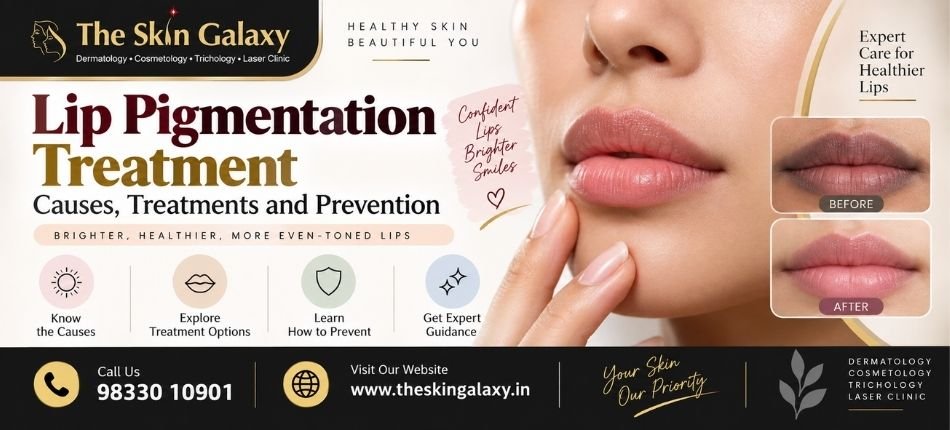
Lip Pigmentation Treatment : Causes, Treatments and Prevention – The Skin Galaxy
Introduction
Healthy lips naturally vary in colour from person to person. However, some people notice that their lips gradually become darker, uneven, patchy, or more pigmented than before. This change is commonly referred to as lip pigmentation or lip hyperpigmentation.
Lip pigmentation may develop due to several factors, including sun exposure, smoking, dehydration, irritation from cosmetic products, repeated lip licking, certain medications, and underlying medical conditions. In many cases, identifying and managing the underlying cause can significantly improve the appearance of the lips.
At The Skin Galaxy, a dermatologist can assess the possible reason for pigmentation and recommend an appropriate Lip Pigmentation Treatment based on the individual’s skin type, severity, and overall lip health.
What Is Lip Pigmentation?
Lip pigmentation refers to increased or uneven production of melanin in the lips. Melanin is the natural pigment responsible for the colour of the skin, hair, and eyes.
Some degree of pigmentation is completely natural. The concern usually arises when the lips become noticeably darker than before or when pigmentation develops unevenly.
The appearance may range from mild brownish discolouration to darker patches involving part or most of the lips. Because many factors can cause these changes, proper evaluation is important before beginning treatment.
What Causes Lip Pigmentation?
There is no single cause of dark lips. The most common contributing factors include:
1. Excessive Sun Exposure
The lips are continuously exposed to sunlight but are often overlooked when applying sun protection. Ultraviolet radiation can stimulate melanin production, leading to gradual darkening.
Regular use of an appropriate lip balm containing SPF may help protect the lips from further sun-related pigmentation.
2. Smoking
Smoking is an important lifestyle-related factor associated with lip discolouration. Heat, nicotine, and other chemicals can contribute to changes in lip colour over time.
Reducing or stopping smoking can benefit both lip appearance and overall health.
3. Lip Licking and Biting
Frequently licking, biting, or picking at the lips can cause repeated irritation. Chronic inflammation may eventually result in post-inflammatory hyperpigmentation.
Breaking these habits and keeping the lips moisturised can help reduce irritation.
4. Dehydration and Dry Lips
Dry, cracked lips can become irritated and inflamed. Repeated episodes of dryness may contribute to uneven pigmentation, especially when the lips are constantly rubbed or peeled.
Adequate hydration and regular moisturisation are therefore important parts of lip care.
5. Allergic or Irritant Reactions
Lipsticks, lip balms, toothpaste, mouthwash, fragrances, and other personal-care products may sometimes irritate sensitive lips.
Persistent irritation can cause inflammation followed by pigmentation. A dermatologist may recommend discontinuing suspected products to determine whether they are contributing to the problem.
6. Hormonal Changes
Hormonal fluctuations may affect melanin production in some individuals. This can sometimes cause pigmentation changes on different areas of the face, including around or on the lips.
7. Certain Medications
Some medicines may cause pigmentation as a side effect. If lip darkening begins after starting a new medication, it is important to discuss it with a doctor rather than stopping prescribed medication independently.
8. Medical and Nutritional Factors
Less commonly, persistent changes in lip colour may be associated with nutritional deficiencies or certain medical conditions. This is one reason why unexplained or rapidly developing pigmentation should be professionally evaluated.
How Is Lip Pigmentation Diagnosed?
A dermatologist generally begins by examining the colour, distribution, duration, and pattern of pigmentation. Your doctor may also ask about your skincare routine, cosmetics, smoking history, medications, sun exposure, and whether the pigmentation developed suddenly or gradually.
If an underlying medical cause is suspected, additional investigations may occasionally be advised.
Correct diagnosis is important because Lip Pigmentation Treatment should ideally target the underlying cause rather than only the visible pigmentation.
Lip Pigmentation Treatment Options
Treatment depends on the cause, severity, skin type, and individual response. Not everyone requires the same procedure.
1. Topical Treatment
Dermatologist-prescribed topical products may be recommended for selected cases. These formulations can help regulate pigmentation and improve uneven lip tone gradually.
Because lip skin is delicate, strong skin-lightening products should not be applied without professional advice.
2. Chemical Peels
Certain mild chemical peels may be suitable for carefully selected patients. They work by encouraging controlled exfoliation and skin renewal, which may gradually improve superficial pigmentation.
The type and strength of peel should be chosen by a qualified professional because inappropriate acids can irritate the lips and potentially worsen pigmentation.
3. Laser Treatment
Laser-based procedures may be considered for persistent pigmentation in appropriate candidates. Specific laser energy targets excess pigment while attempting to minimise damage to surrounding tissue.
The number of sessions required varies according to the depth and cause of pigmentation, natural lip colour, and response to treatment.
4. Combination Treatment
Some patients benefit from a combination of professional procedures, topical care, sun protection, and lifestyle modification.
A personalised approach is often preferable because treating pigmentation while continuing the factor causing it may limit improvement.
How Many Sessions Are Required?
There is no fixed number of treatment sessions suitable for everyone. Mild pigmentation may respond relatively quickly, while deeper or long-standing pigmentation may require multiple sessions and ongoing maintenance.
Results also depend on the cause of pigmentation and how consistently preventive measures are followed.
Can Lip Pigmentation Come Back?
Yes. Pigmentation can recur, particularly when triggering factors continue. Excessive sun exposure, smoking, irritation, dehydration, or unsuitable cosmetic products may contribute to recurrence.
For this reason, prevention and maintenance are important even after successful treatment.
How to Prevent Lip Pigmentation
Simple everyday habits can help protect the lips:
- Use a suitable SPF lip balm during the daytime.
- Keep your lips adequately moisturised.
- Avoid repeatedly licking, biting, or peeling dry lips.
- Avoid smoking and tobacco products.
- Drink adequate water throughout the day.
- Stop using lip products that repeatedly cause burning, itching, or irritation.
- Avoid aggressive DIY scrubs and unprescribed chemical treatments.
- Remove lip makeup gently before sleeping.
- Follow dermatologist-recommended aftercare following professional procedures.
Avoid DIY Lip-Lightening Remedies
Lemon juice, baking soda, toothpaste, harsh scrubs, and other home remedies are frequently promoted online for dark lips. These substances can irritate the delicate lip barrier.
Irritation and inflammation can sometimes make pigmentation worse rather than better. Dermatologist-guided treatment is a safer option when pigmentation is persistent or bothersome.
When Should You See a Dermatologist?
Consider consulting a dermatologist when pigmentation develops suddenly, continues to increase, becomes patchy, is associated with pain or persistent irritation, or does not improve despite basic lip care.
A professional evaluation is also useful before undergoing any cosmetic pigmentation procedure.
Conclusion
Lip pigmentation is common and can result from environmental, lifestyle, cosmetic, inflammatory, or medical factors. Effective Lip Pigmentation Treatment begins with understanding why the pigmentation developed.
With appropriate diagnosis, professional treatment, sun protection, and consistent lip care, many types of pigmentation can be managed effectively.
The Skin Galaxy provides personalised dermatological evaluation and treatment plans based on individual skin and lip concerns.
Pigmentation Treatment Lip Pigmentation Treatment Lip Pigmentation Treatment Lip Pigmentation Treatment Lip Pigmentation Treatment Lip Pigmentation Treatment Lip Pigmentation Treatment Lip Pigmentation Treatment Lip Pigmentation Treatment Lip Pigmentation Treatment Lip Pigmentation Treatment Lip Pigmentation Treatment Lip Pigmentation Treatment