
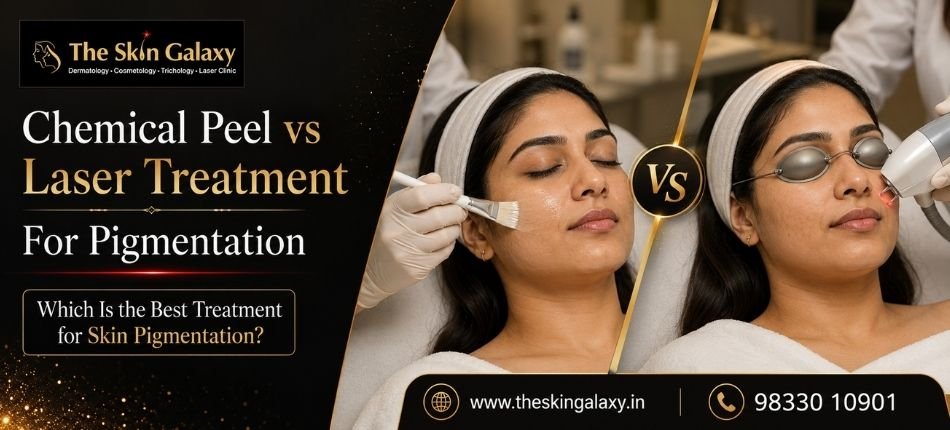
Chemical Peel vs Laser Treatment for Pigmentation | Best Treatment for Skin Pigmentation – The Skin Galaxy
Skin pigmentation is one of the most common cosmetic concerns among people of all ages. Dark patches, acne marks, sunspots, melasma and uneven skin tone can affect the brightness and overall appearance of the skin. Two commonly recommended procedures for treating these concerns are chemical peels and laser treatments.
However, choosing between them is not always simple. The best treatment for skin pigmentation depends on the type, depth and cause of pigmentation, as well as the patient’s skin tone, sensitivity and medical history.
Discover the best treatment for skin pigmentation. Compare chemical peels and laser treatments, their benefits, side effects, and suitability.
What Is Skin Pigmentation?
Skin pigmentation refers to the natural colour of the skin, which is mainly determined by a pigment called melanin. When melanin is produced unevenly or in excessive amounts, it can cause dark spots, patches and an uneven skin tone. Common pigmentation concerns include melasma, freckles, sunspots, age spots and post-inflammatory hyperpigmentation caused by acne, injuries or skin irritation. Hormonal changes, prolonged sun exposure, certain medicines, genetics and inflammation can also increase melanin production. Identifying the type and cause of pigmentation is essential before selecting the right treatment.
What Is a Chemical Peel?
A chemical peel is a skin-resurfacing procedure in which a dermatologist applies a carefully selected chemical solution to the skin. The solution exfoliates damaged or pigmented surface layers and encourages the development of smoother, more evenly toned skin.
Dermatologists may use chemical peels to treat discolouration, melasma, age spots, dullness, acne and sun-damaged skin. Depending on their strength, some peels may require downtime.
Common Types of Chemical Peels
Chemical peels are generally classified into three categories:
Superficial Peels
Superficial peels work primarily on the outermost layer of the skin. They commonly contain glycolic acid, lactic acid, mandelic acid or salicylic acid. These peels may be suitable for mild pigmentation, acne marks, dullness and uneven skin tone.
Medium-Depth Peels
Medium-depth peels penetrate more deeply than superficial peels. They may be used for stubborn pigmentation, sun damage and certain types of acne marks. Recovery time is usually longer, and treatment must be performed under professional supervision.
Deep Peels
Deep chemical peels reach the deeper skin layers and involve considerable recovery. They are not routinely recommended for every skin tone or pigmentation concern because of the possibility of prolonged redness, scarring and pigment changes.
How Do Chemical Peels Treat Pigmentation?
Chemical peels exfoliate pigmented surface cells and accelerate skin renewal. As the treated layers shed, the skin may gradually appear brighter and more even.
Superficial epidermal pigmentation may respond to alpha-hydroxy-acid or beta-hydroxy-acid peels. However, deeper pigmentation is usually more difficult to treat and may require a combination of topical medication and professionally selected procedures.
Benefits of Chemical Peels for Pigmentation
Chemical peels may offer the following benefits:
- Reduction in superficial dark spots
- Brighter and more even-looking skin
- Improvement in post-acne pigmentation
- Smoother skin texture
- Reduction in mild sun damage
- Improvement in dullness
- Lower cost compared with many laser procedures
- Ability to customise peel type and strength
Several sessions may be required, particularly when mild peels are used. The dermatologist may gradually increase the strength based on the skin’s response.
Possible Side Effects of Chemical Peels
Chemical peels are generally safe when performed by a qualified dermatologist, but temporary redness, dryness, mild swelling, sensitivity, burning and visible peeling may occur after the procedure. If the peel is too strong or unsuitable for the person’s skin type, it may cause irritation, infection, scarring or temporary changes in skin colour. Some people, particularly those with darker skin tones, may develop post-inflammatory hyperpigmentation. Picking the peeling skin or exposing it to sunlight can increase the risk of complications, so proper aftercare and dermatologist supervision are important.
What Is Laser Treatment for Pigmentation?
Laser treatment uses controlled wavelengths of light to target pigment within the skin. The laser energy is absorbed by melanin and helps break concentrated pigment into smaller particles, which the body gradually clears.
Different laser technologies target different depths and types of pigmentation. These may include Q-switched lasers, fractional lasers, picosecond lasers and other specialised light-based devices.
Not every laser is suitable for every skin type. The dermatologist must select the wavelength, energy level and treatment settings carefully.
How Does Laser Pigmentation Treatment Work?
Laser devices deliver focused light energy to areas containing excess melanin. Depending on the technology, the treatment may target pigment directly or create controlled microscopic treatment zones that encourage skin renewal.
Laser treatments can be particularly useful for selected sunspots, freckles, age spots and certain resistant pigmentation concerns. However, melasma requires special caution because heat and inflammation may sometimes trigger recurrence or worsening.
Benefits of Laser Treatment for Pigmentation
Potential benefits include:
- Precise targeting of pigmented areas
- Treatment of selected deeper pigmentation
- Faster visible improvement in some sunspots
- Customisable wavelength and intensity
- Improvement in overall skin tone
- Ability to treat pigmentation with associated texture concerns
- Controlled treatment of specific areas
Although some pigmentation may respond quickly, multiple sessions are often necessary. Brown spots and freckles may respond to pigment-targeting lasers, but treatment results depend on pigment depth and skin type.
Possible Side Effects of Laser Treatment
After laser pigmentation treatment, patients may experience temporary redness, warmth, mild swelling, sensitivity or darkening of the treated spots. Depending on the type and intensity of the laser, light crusting or peeling may also occur. Incorrect laser selection or aggressive settings can cause burns, blisters, infection, scarring, post-inflammatory hyperpigmentation or loss of skin colour. People with darker skin tones and those with melasma require additional caution because heat and inflammation may worsen pigmentation or trigger recurrence. Laser treatment should therefore be performed only after a detailed skin assessment.
Chemical Peel vs Laser Treatment: Key Differences
| Factor | Chemical Peel | Laser Treatment |
|---|---|---|
| Treatment method | Controlled chemical exfoliation | Focused light or laser energy |
| Best suited for | Superficial pigmentation and uneven tone | Selected deeper or well-defined pigmentation |
| Precision | Treats a broader skin area | Can target individual spots precisely |
| Sessions | Usually requires multiple sessions | May require fewer or multiple sessions |
| Downtime | Depends on peel strength | Depends on laser type and intensity |
| Cost | Generally more affordable | Usually more expensive |
| Skin texture | Can improve mild roughness and dullness | Some lasers can improve pigment and texture |
| Darker skin tones | Must use carefully selected peel strength | Requires suitable laser and conservative settings |
| Melasma | May be added to a medical treatment plan | Used cautiously because of recurrence risk |
| Maintenance | Sun protection and skincare required | Sun protection and maintenance may be necessary |
Which Treatment Is Better for Melasma?
Neither a chemical peel nor laser treatment should automatically be considered the first or only treatment for melasma.
Melasma is often chronic and influenced by sunlight, hormones, heat and genetic factors. Dermatologists usually begin treatment with strict sun protection and pigment-reducing topical medication. A chemical peel or laser may then be added if appropriate.
The American Academy of Dermatology notes that chemical peels and selected laser or light treatments may be added to an existing melasma treatment plan.
Both procedures must be used cautiously because they may sometimes worsen melasma or produce post-inflammatory pigmentation. Recurrence is also possible, particularly after sun exposure.
Which Is Better for Post-Acne Pigmentation?
Superficial chemical peels are frequently considered for surface-level acne marks, especially when the patient also has active acne, oiliness or dull skin.
Laser treatment may be considered for resistant marks or pigmentation accompanied by acne scars and textural irregularities. However, the active acne should first be controlled to prevent new marks from appearing.
In some cases, procedures can aggravate post-inflammatory hyperpigmentation by irritating or injuring the epidermis.
Which Is Better for Sunspots and Age Spots?
Well-defined sunspots may respond faster to pigment-targeting laser treatment. Chemical peels can be more suitable when pigmentation is widespread and accompanied by overall sun damage, dullness or uneven texture.
A dermatologist should still examine new or changing dark spots before cosmetic treatment to ensure they are safe to treat.
What Is the Best Treatment for Skin Pigmentation?
There is no single treatment that is best for every person. The best treatment for skin pigmentation is the one selected after evaluating:
- Type of pigmentation
- Depth of pigment
- Skin tone
- Sensitivity
- Previous treatments
- Tendency to develop dark marks
- Medical history
- Expected downtime
- Possibility of recurrence
A superficial chemical peel may be suitable for mild, widespread epidermal pigmentation, while a carefully selected laser may be more effective for certain localised spots. Melasma and deeper pigmentation often require a long-term combination plan rather than one aggressive procedure.
Conclusion
Chemical peels and laser treatments can both help improve skin pigmentation, but they work differently and are suitable for different concerns. Chemical peels are commonly used for superficial pigmentation, dullness and uneven tone, while lasers may provide more precise treatment for selected resistant or well-defined spots.
The safest way to choose the best treatment for skin pigmentation is to consult an experienced dermatologist. At The Skin Galaxy, every pigmentation treatment plan can be customised according to the patient’s skin type, pigmentation pattern and treatment goals.
Best Treatment for Skin Pigmentation Best Treatment for Skin Pigmentation Best Treatment for Skin Pigmentation Best Treatment for Skin Pigmentation Best Treatment for Skin Pigmentation Best Treatment for Skin Pigmentation Best Treatment for Skin Pigmentation Best Treatment for Skin Pigmentation Best Treatment for Skin Pigmentation Best Treatment for Skin Pigmentation Best Treatment for Skin Pigmentation Best Treatment for Skin Pigmentation