
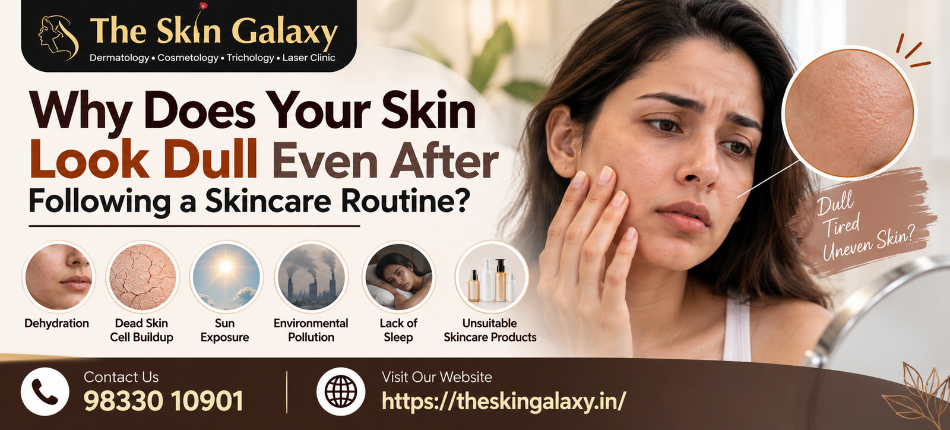
Why Does Your Skin Look Dull Even After Following a Skincare Routine? | Causes of Dull Skin – The Skin Galaxy
Introduction
You follow your skincare routine every day, cleanse your face, apply moisturizer, use sunscreen, and even invest in expensive serums. Yet, when you look in the mirror, your skin still appears tired, uneven, and lacking its natural glow. If this sounds familiar, you are not alone.
Many people assume that using more skincare products automatically leads to healthier, brighter-looking skin. However, the causes of dull skin can extend beyond your daily skincare routine. Factors such as dehydration, dead skin cell buildup, sun exposure, environmental pollution, inadequate sleep, and certain skin conditions can affect your skin’s appearance.
Understanding why your skin looks dull despite regular skincare is the first step toward improving its overall health and appearance.
In this detailed guide, The Skin Galaxy explains the common causes of dull skin, skincare mistakes that may contribute to dullness, and practical ways to support healthier, more radiant-looking skin.
1. What Is Dull Skin?
Dull skin refers to skin that appears tired, rough, uneven, or less radiant than usual. Instead of reflecting light evenly, the skin’s surface may look flat or lack its natural brightness.
Dullness is not a medical diagnosis. It is a common cosmetic concern that may occur with different skin types, including oily, dry, combination, and sensitive skin.
Common Signs of Dull Skin:
-
Uneven skin tone
-
Rough or dry skin texture
-
Lack of natural radiance
-
Visible dry patches
-
Tired-looking facial appearance
-
Skin that appears less smooth or fresh
Although dullness is often related to everyday environmental and skincare factors, persistent changes in skin appearance may sometimes require professional evaluation.
2. What Are the Main Causes of Dull Skin?
A. Accumulation of Dead Skin Cells
Your skin naturally sheds dead cells as part of its renewal process. When these cells accumulate on the surface, the skin may appear rough, uneven, and less radiant.
Dead skin cell buildup can also make skincare products feel less effective, especially when dryness or flaky skin is present.
Gentle exfoliation may help improve the appearance of rough skin, but excessive exfoliation can damage the skin barrier and worsen irritation.
B. Skin Dehydration
Dehydration is one of the common reasons skin can appear dull even when you follow a consistent skincare routine.
Dehydrated skin lacks sufficient water in its outer layers, which can make fine lines more noticeable and reduce the appearance of smoothness.
Unlike dry skin, which produces less natural oil, dehydrated skin can occur in people with oily or combination skin.
Using a suitable moisturizer containing ingredients such as glycerin, hyaluronic acid, or ceramides can help support skin hydration.
C. Excessive Sun Exposure
Prolonged exposure to ultraviolet radiation can contribute to uneven pigmentation, rough texture, and premature skin aging.
Even if you regularly use skincare products, inadequate sun protection may allow cumulative sun damage to affect your skin’s appearance.
Using broad-spectrum sunscreen with SPF 30 or higher, along with protective clothing and shade, helps protect the skin from harmful UV exposure.
D. Environmental Pollution
Daily exposure to dust, smoke, and airborne pollutants may contribute to oxidative stress and skin irritation.
Pollution can also leave particles on the skin’s surface, particularly when combined with sweat, oil, and makeup.
Gentle cleansing and appropriate skincare can help remove surface impurities without unnecessarily stripping the skin of its natural protective oils.
E. Lack of Adequate Sleep
Sleep plays an important role in overall health and normal skin function.
Insufficient sleep may contribute to a tired facial appearance, more noticeable under-eye darkness, and changes in skin barrier function.
Maintaining a consistent sleep schedule and getting adequate rest may help support healthier-looking skin over time.
F. Using Skincare Products That Do Not Suit Your Skin
Not every popular skincare product is suitable for every skin type.
For example, using strong exfoliating acids on sensitive skin or harsh cleansers on dry skin may cause irritation and barrier disruption.
Similarly, combining multiple active ingredients without understanding their effects can lead to redness, dryness, or discomfort.
A skincare routine should be selected according to your skin type, concerns, and tolerance rather than social media trends.
G. Skin Barrier Damage
The skin barrier helps retain moisture and protect the skin from external irritants.
When this protective barrier becomes compromised, the skin may feel tight, irritated, dry, or rough.
Frequent exfoliation, harsh cleansers, excessive washing, and unsuitable products can contribute to barrier damage.
A gentle skincare routine and consistent moisturizing may help support recovery.
H. Uneven Pigmentation
Dark spots, post-inflammatory hyperpigmentation, and sun-related pigmentation can make the complexion appear uneven.
People may interpret these pigmentation changes as overall skin dullness.
Managing pigmentation requires identifying its underlying cause. Some conditions may benefit from dermatologist-guided topical treatments or procedures.
3. Why Does Your Skin Still Look Dull Despite a Skincare Routine?
Following a skincare routine consistently is helpful, but consistency alone does not guarantee the desired results.
Several common skincare mistakes may prevent visible improvement.
Using Too Many Products: Applying multiple serums, exfoliants, and treatment products may increase irritation rather than improve the skin’s appearance.
Skipping Moisturizer: Even oily skin needs appropriate hydration. Skipping moisturizer may contribute to dehydration and discomfort.
Over-Exfoliating: Frequent scrubbing or excessive use of chemical exfoliants can irritate the skin and damage its protective barrier.
Ignoring Sunscreen: Without adequate UV protection, sun exposure may continue contributing to pigmentation and uneven skin tone.
Expecting Immediate Results: Some skincare improvements take several weeks or longer. Results depend on the concern, ingredients, and individual skin response.
Following the Wrong Routine: A skincare routine designed for someone else may not address your particular skin concerns.
4. How to Identify the Reason Behind Dull Skin
Different causes of dullness may produce different symptoms.
| Skin concern | Possible contributing factor |
|---|---|
| Rough, flaky skin | Dryness or dead skin cell buildup |
| Tight, tired-looking skin | Dehydration or barrier disruption |
| Uneven skin tone | Pigmentation or sun exposure |
| Redness and irritation | Harsh products or sensitive skin |
| Dark spots after acne | Post-inflammatory hyperpigmentation |
| Persistent unexplained changes | Possible underlying skin or health condition |
These observations can provide clues, but they cannot confirm a diagnosis. If dullness is persistent or accompanied by other symptoms, professional evaluation may be appropriate.
5. How to Improve Dull Skin Naturally
Improving dull skin often requires a combination of appropriate skincare, consistent sun protection, and healthy lifestyle habits.
A. Maintain Proper Skin Hydration
Hydration is essential for maintaining a smooth and healthy-looking skin surface. Use a moisturizer suited to your skin type and apply it after cleansing while your skin is slightly damp.
Ingredients such as glycerin, hyaluronic acid, and ceramides can help retain moisture and support the skin barrier.
B. Follow a Balanced Diet
A balanced diet containing fruits, vegetables, proteins, healthy fats, and essential nutrients supports overall skin health.
Foods containing vitamin C, vitamin E, and other antioxidants contribute to normal cellular functions. However, no single food can guarantee brighter skin.
C. Get Adequate Sleep
Aim for a consistent sleep schedule and sufficient nightly rest. Poor sleep may contribute to a tired appearance and more noticeable under-eye concerns.
D. Protect Your Skin from Sun Damage
Apply broad-spectrum SPF 30 or higher sunscreen regularly. Reapply when outdoors according to the product instructions, particularly after sweating or swimming.
Sun protection is especially important for people experiencing pigmentation and uneven skin tone.
E. Avoid Harsh Skincare Practices
Avoid aggressively scrubbing your face or using several exfoliating products simultaneously. If your skin feels irritated, simplify your routine and prioritize gentle cleansing and moisturizing.
The American Academy of Dermatology recommends gentle products, appropriate moisturizers, and daily sun protection to support skin health.
6. Best Daily Skincare Routine for Dull Skin
A simple skincare routine can often be more beneficial than using numerous products without understanding their purpose.
Morning Skincare Routine
Step 1: Gentle Cleansing
Use a mild facial cleanser suitable for your skin type to remove overnight oil and impurities.
Step 2: Targeted Serum (Optional)
Depending on your skin concerns and tolerance, ingredients such as vitamin C or niacinamide may help improve the appearance of uneven skin tone over time.
Step 3: Moisturizer
Apply a suitable moisturizer to support hydration and protect the skin barrier.
Step 4: Sunscreen
Finish with broad-spectrum SPF 30 or higher sunscreen to protect against UV-related damage.
Night Skincare Routine
Step 1: Remove Makeup and Sunscreen
Cleanse your face thoroughly but gently to remove accumulated impurities.
Step 2: Apply Suitable Treatment Products
If appropriate, use a dermatologist-recommended product targeting pigmentation, texture, or another specific concern.
Step 3: Moisturize
Apply moisturizer to maintain hydration overnight.
Step 4: Allow Your Skin to Recover
Avoid introducing several strong active ingredients at once. Consistency and skin tolerance are more important than the number of products used.
7. Skincare Ingredients That May Help Improve Dull Skin
Different skincare ingredients address different underlying causes of dullness.
| Ingredient | Potential benefit |
|---|---|
| Vitamin C | Helps improve the appearance of uneven pigmentation |
| Hyaluronic Acid | Supports skin hydration |
| Niacinamide | May help improve uneven tone and barrier function |
| Ceramides | Support the skin’s protective barrier |
| Lactic Acid | Can improve rough texture through exfoliation |
| Glycolic Acid | May help reduce the appearance of surface dullness |
| Retinoids | May improve texture and certain pigmentation concerns over time |
Not every ingredient is appropriate for every person. Exfoliating acids and retinoids can cause irritation, especially when introduced too frequently. Retinoid use during pregnancy or when planning pregnancy requires medical guidance.
8. Can Professional Skin Treatments Help with Dull Skin?
Sometimes, dull-looking skin does not improve adequately with routine skincare because the underlying concern requires a more targeted approach.
A qualified dermatologist may recommend professional treatments after evaluating your skin type, medical history, and concerns.
A. Chemical Peels
Chemical peels use specially formulated solutions to exfoliate layers of skin. They may help improve selected pigmentation and texture concerns.
The type and strength of a peel must be chosen carefully because inappropriate treatment can cause irritation or pigmentation changes.
B. Hydrating Facial Treatments
Certain professional facial treatments focus on cleansing and temporary skin hydration. They may improve the immediate appearance of dry or rough skin, although results and duration vary.
C. Dermatologist-Guided Pigmentation Treatment
If uneven pigmentation is contributing to dullness, a dermatologist may recommend topical treatments or selected procedures depending on the diagnosis.
D. Skin Barrier Repair
When dryness and irritation are the main problems, aggressive cosmetic treatments may not be suitable. A barrier-supporting skincare plan may be more appropriate.
Important: Professional treatments should be selected based on individual skin assessment rather than the expectation of instant or permanent skin brightening.
9. How Long Does It Take to Improve Dull Skin?
The time required depends on the underlying cause and the skincare approach.
Dryness-related dullness may begin improving within days to a few weeks after suitable moisturizing. The American Academy of Dermatology notes that some cases of dry skin improve within approximately two weeks of appropriate self-care.
Pigmentation and texture concerns may require several weeks or months of consistent treatment.
Rather than frequently changing products, follow a suitable routine and monitor your skin’s response.
10. When Should You Consult a Dermatologist for Dull Skin?
Occasional skin dullness is common and may improve with proper hydration, a balanced skincare routine, and adequate sun protection. However, if your skin continues to look dull despite consistent care, it may indicate an underlying skin concern. Consulting a dermatologist can help identify the possible causes of dull skin and determine suitable treatment options.
A. Dullness Persists Despite a Proper Skincare Routine
If your skin continues to appear tired, rough, or lifeless despite regular cleansing, moisturizing, and sunscreen application, professional evaluation may be helpful. Persistent dullness can be associated with dehydration, pigmentation, dead skin cell buildup, or other skin concerns. A dermatologist can assess your skin type and identify factors affecting its appearance. Based on the findings, they may recommend suitable skincare products or treatments.
B. Your Skin Becomes Unusually Dry, Itchy, or Irritated
Excessive dryness, itching, flaking, or irritation may indicate a weakened skin barrier or an underlying dermatological condition. Using harsh cleansers, excessive exfoliation, or unsuitable skincare products can sometimes worsen these symptoms. If regular moisturizing does not provide relief, consulting a dermatologist is advisable. Early evaluation can help identify the cause and prevent further irritation.
C. You Develop Persistent Dark Patches or Pigmentation
Dark patches, uneven skin tone, and persistent pigmentation can make your complexion appear dull and uneven. These changes may be associated with sun exposure, post-inflammatory hyperpigmentation, melasma, or other skin conditions. A dermatologist can examine the pigmentation and determine its possible cause. Appropriate treatment may include sun protection, prescribed topical products, or selected dermatological procedures.
D. Skincare Products Regularly Cause Burning or Redness
If your skin frequently experiences burning, redness, stinging, or discomfort after applying skincare products, it may be reacting to certain ingredients. Strong exfoliating acids, retinoids, fragrances, and other active ingredients can sometimes irritate sensitive skin. Continuing to use irritating products may worsen dryness and skin barrier damage. A dermatologist can help identify potential triggers and recommend a gentler skincare routine.
E. Your Skin Develops Unexplained Changes in Color or Texture
Sudden or unexplained changes in skin color, roughness, thickness, or texture should not be ignored. Although some changes may result from dryness or environmental exposure, others can be associated with underlying skin or medical conditions. A dermatologist can evaluate these changes and determine whether further investigation is necessary. Timely assessment helps ensure that appropriate treatment is provided when needed.
F. Dryness Is Accompanied by Cracking, Bleeding, or Discomfort
Severely dry skin may develop painful cracks, inflammation, or bleeding, especially when the skin barrier becomes significantly compromised. These symptoms can increase discomfort and may raise the risk of infection. If your skin does not improve with gentle cleansing and regular moisturizing, professional medical attention is recommended. A dermatologist can identify the underlying cause and suggest appropriate treatment to support skin healing.
11. Understanding Dull Skin with The Skin Galaxy
At The Skin Galaxy, we believe that understanding your skin’s needs is an important part of developing a suitable skincare routine.
Dull skin may result from dehydration, environmental exposure, pigmentation, or inappropriate skincare practices. Identifying the contributing factors can help you make more informed decisions about skincare products and professional consultation.
Instead of relying on trending skincare products or complicated routines, focus on gentle cleansing, adequate hydration, daily sun protection, and addressing your specific concerns.
If dullness persists or is accompanied by irritation, consulting a qualified dermatologist can help identify the cause and appropriate treatment options.
Conclusion
Understanding the causes of dull skin is essential when your skincare routine does not deliver the results you expect.
Dullness may develop due to dehydration, dead skin cell buildup, environmental exposure, pigmentation, inadequate sleep, or unsuitable skincare products. In some cases, underlying skin conditions may also contribute.
The most effective approach is not necessarily adding more products. Instead, focus on identifying your skin’s needs, maintaining adequate hydration, protecting against UV exposure, and using appropriate skincare ingredients.
With consistent care and professional guidance when necessary, you can work toward healthier, smoother, and more radiant-looking skin.
The Skin Galaxy – Understand Your Skin. Care for It Better.
Causes of Dull Skin Causes of Dull Skin Causes of Dull Skin Causes of Dull Skin Causes of Dull Skin Causes of Dull Skin Causes of Dull Skin Causes of Dull Skin Causes of Dull Skin Causes of Dull Skin Causes of Dull Skin Causes of Dull Skin Causes of Dull Skin Causes of Dull Skin Causes of Dull Skin Causes of Dull Skin Causes of Dull Skin Causes of Dull Skin Causes of Dull Skin Causes of Dull Skin Causes of Dull Skin Causes of Dull Skin