
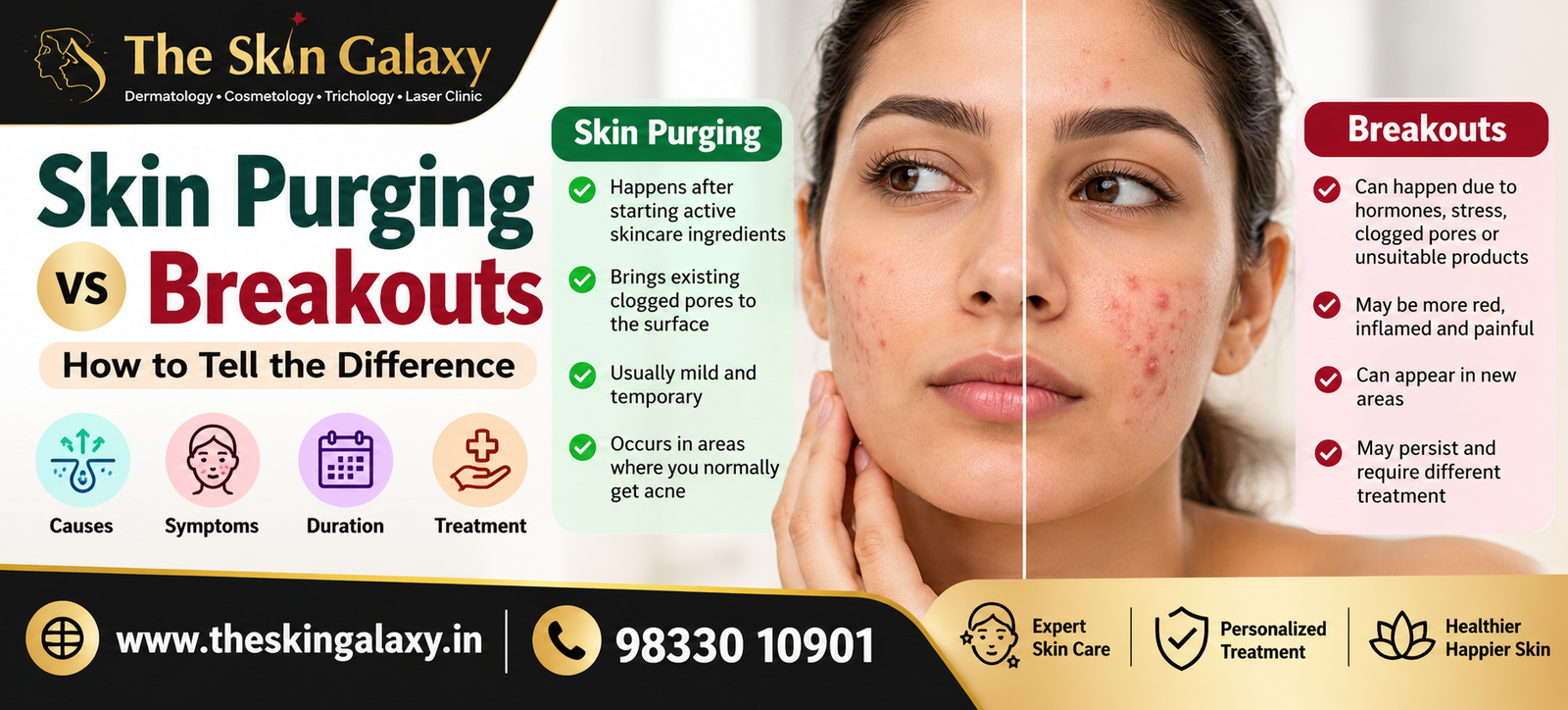
Skin Purging vs Breakouts: How to Tell the Difference – The Skin Galaxy
Starting a new skincare routine can be exciting, especially when you introduce products designed to improve skin texture, reduce acne, or achieve a healthier complexion. However, sometimes your skin may react unexpectedly, causing pimples, redness, or small bumps. This can leave you wondering whether your skin is experiencing purging or a regular breakout.
Understanding skin purging vs breakouts is important because both conditions may look similar but have different causes and require different approaches.
Skin purging is a temporary increase in visible blemishes that can occur when certain active skincare ingredients accelerate skin cell turnover. On the other hand, regular breakouts may develop due to clogged pores, excess oil, hormonal changes, irritation, or unsuitable skincare products.
At The Skin Galaxy, we believe that understanding your skin is the first step toward making informed skincare decisions.
In this comprehensive guide, we will explain the difference between skin purging and breakouts, their symptoms, causes, duration, and how to manage them safely.
What Is Skin Purging?
Skin purging refers to a temporary increase in acne-like blemishes that may occur after introducing skincare ingredients that increase skin cell turnover.
Our skin naturally sheds dead skin cells and replaces them with new ones. Certain skincare ingredients can accelerate this process, potentially bringing existing clogged pores and developing blemishes to the surface more quickly.
As a result, you may notice whiteheads, blackheads, or small pimples during the initial weeks of using an active skincare product.
Common Signs of Skin Purging
- Small whiteheads or blackheads appearing after starting an active ingredient
- Pimples developing in areas where you normally experience acne
- A temporary increase in existing acne lesions
- Blemishes appearing relatively soon after introducing a new product
- Gradual improvement as the skin adjusts to the treatment
Skin purging is not a guaranteed or necessary part of skincare treatment. Many people use active ingredients without experiencing any noticeable purging.
How Long Does Skin Purging Last?
When a temporary breakout is associated with increased skin cell turnover, it may settle over approximately 4–6 weeks, although the duration varies depending on the ingredient, skin condition, and individual response.
Some acne treatments take 8–12 weeks to show meaningful improvement. Therefore, a worsening breakout should not automatically be considered purging simply because it occurs during the first few weeks.
If your skin continues to worsen, becomes painful, or develops significant irritation, consult a dermatologist.
What Are Regular Skin Breakouts?
A regular skin breakout occurs when hair follicles become clogged with excess sebum, dead skin cells, and other debris. Inflammation and acne-associated bacteria may also contribute to the development of pimples.
Unlike skin purging, regular breakouts are not necessarily related to accelerated skin cell turnover.
Breakouts may develop at any time and can be influenced by several internal and external factors.
Common Signs of Regular Breakouts
- Pimples appearing in new or unusual areas
- Persistent acne that does not improve over time
- Red, inflamed, or painful pimples
- Blackheads and whiteheads
- Deep, tender acne nodules or cysts
- Breakouts associated with hormonal changes or unsuitable products
Regular breakouts can affect the forehead, cheeks, chin, jawline, chest, shoulders, and back.
What Causes Regular Breakouts?
Several factors may contribute to acne breakouts.
1. Excess Oil Production
Overactive sebaceous glands may produce excess oil, increasing the likelihood of clogged pores.
2. Hormonal Changes
Hormonal fluctuations during puberty, menstruation, pregnancy, or certain medical conditions may influence acne development.
3. Pore-Clogging Products
Some cosmetic and skincare formulations may contribute to clogged pores, particularly in acne-prone individuals.
4. Skin Irritation
Harsh cleansers, excessive exfoliation, and incompatible skincare products may damage the skin barrier and worsen inflammation.
5. Stress and Lifestyle Factors
Stress may aggravate existing acne in some people. Sleep patterns and certain dietary factors may also influence acne severity.
6. Genetics
A family history of acne may increase the likelihood of developing persistent breakouts.
Understanding the underlying cause helps determine an appropriate skincare and treatment approach.
Skin Purging vs Breakouts: Key Differences
Although skin purging and breakouts can appear similar, certain patterns may help distinguish them.
| Factor | Skin Purging | Regular Breakouts |
|---|---|---|
| Main trigger | Introduction of certain cell-turnover ingredients | Clogged pores, hormones, inflammation, or other triggers |
| Common locations | Areas already prone to acne | Existing or new acne-prone areas |
| Timing | Often begins after starting an active product | May occur at any time |
| Duration | May improve over several weeks | May persist or recur |
| Appearance | Often resembles existing acne | May include whiteheads, papules, pustules, or deeper lesions |
| Management | Monitor tolerance and adjust product use if necessary | Identify triggers and use appropriate acne treatment |
Important: These differences are helpful clues, not definitive diagnostic rules. The location or timing of pimples alone cannot confirm skin purging.
Which Skincare Ingredients May Cause Skin Purging?
Not every skincare product causes purging. It is most commonly discussed in connection with ingredients that increase skin cell turnover or help clear clogged pores.
1. Retinol and Retinoids
Retinol and prescription retinoids are commonly used to manage acne, improve skin texture, and address signs of skin aging.
These ingredients influence skin cell turnover and may cause an initial increase in visible acne lesions in some individuals.
They may also cause dryness, peeling, and irritation, especially when first introduced.
2. Salicylic Acid (BHA)
Salicylic acid is a beta hydroxy acid commonly used in acne-prone skincare routines.
It helps exfoliate the skin and reduce the buildup of dead skin cells inside pores.
Some users may experience temporary changes in blemishes after starting salicylic acid, although worsening acne can also indicate irritation or an unsuitable routine.
3. Glycolic Acid (AHA)
Glycolic acid is an alpha hydroxy acid that helps remove dead skin cells from the skin’s surface.
It is frequently used to improve uneven texture and dull-looking skin.
Overuse, however, may cause irritation rather than beneficial exfoliation.
4. Lactic Acid
Lactic acid is another alpha hydroxy acid used in exfoliating skincare products.
It may help improve skin texture, but excessive application can contribute to redness and sensitivity.
5. Prescription Acne Treatments
Some prescription acne treatments, particularly topical retinoids, may cause temporary worsening or irritation during the initial treatment period.
Always follow professional instructions when using prescription skincare products.
Which Ingredients Usually Do Not Cause Skin Purging?
Certain skincare ingredients, such as hyaluronic acid, niacinamide, ceramides, glycerin, and gentle moisturizers, generally do not cause skin purging because they do not significantly accelerate skin cell turnover. These ingredients primarily help hydrate the skin, strengthen the skin barrier, and improve overall skin health. However, some products may still cause irritation, clogged pores, or breakouts depending on their formulation and individual skin sensitivity. If you notice new pimples after introducing these products, it may indicate a regular breakout or product reaction rather than skin purging. Choosing products suitable for your skin type can help maintain healthy, balanced skin.
How to Tell Whether Your Skin Is Purging or Breaking Out
If you notice pimples after introducing a new skincare product, consider the following questions.
1. Did You Recently Start an Active Skincare Ingredient?
If you recently introduced a retinoid or exfoliating acid, temporary changes in acne may occur.
However, not every breakout after starting an active ingredient is purging.
2. Are Pimples Appearing in Familiar Areas?
Purging is often described as occurring in areas where you already develop acne.
If pimples appear in completely new locations, the product may be contributing to breakouts or irritation.
This pattern is suggestive rather than conclusive.
3. Is Your Skin Improving Over Time?
Gradual improvement over several weeks may suggest that your skincare routine is becoming effective.
However, persistent worsening, increasing inflammation, or painful acne deserves professional assessment.
4. Are You Experiencing Burning or Severe Irritation?
Burning, intense itching, marked redness, or swelling may indicate irritation or an allergic reaction rather than skin purging.
Discontinue the suspected product and seek medical advice when appropriate.
5. Have You Introduced Multiple New Products?
Using several new products simultaneously makes it difficult to identify the cause of skin changes.
Introducing one product at a time can help you better understand how your skin responds.
How to Manage Skin Purging Safely
If you suspect your skin is experiencing a temporary adjustment to an active ingredient, gentle skincare may help minimize irritation.
1. Follow a Simple Skincare Routine
Avoid adding unnecessary products while your skin is adjusting.
A basic routine may include a gentle cleanser, suitable moisturizer, and sunscreen.
2. Introduce Active Ingredients Gradually
Some active ingredients, especially retinoids, are better tolerated when introduced slowly.
The appropriate frequency depends on the product, concentration, and your skin’s sensitivity.
3. Keep Your Skin Moisturized
A suitable non-comedogenic moisturizer may help reduce dryness and support the skin barrier.
4. Avoid Excessive Exfoliation
Combining multiple exfoliating acids, scrubs, and retinoids can increase irritation.
Avoid aggressive exfoliation while your skin is sensitive.
5. Use Sunscreen Daily
Certain exfoliating ingredients and retinoids can increase sensitivity to sunlight.
Choose a broad-spectrum sunscreen with SPF 30 or higher and use it as directed.
6. Avoid Picking Pimples
Picking or squeezing acne lesions may increase inflammation and the risk of scarring or post-inflammatory dark spots.
7. Monitor Your Skin’s Response
Take photographs under consistent lighting every one or two weeks.
This may help you notice whether blemishes are improving or becoming more severe.
If significant irritation develops, do not continue using a product simply because you believe the reaction is purging.
How to Treat Regular Skin Breakouts
Regular acne breakouts may require a different approach depending on their severity and underlying cause.
Gentle Cleansing
Wash your face with a mild cleanser, usually twice daily and after heavy sweating.
Avoid harsh scrubbing.
Non-Comedogenic Skincare
Choose products labelled non-comedogenic or oil-free when appropriate for your skin type.
Acne-Focused Ingredients
Ingredients such as salicylic acid, benzoyl peroxide, and topical retinoids may help manage certain types of acne.
The right option depends on your skin condition, age, sensitivity, and other medical considerations.
Professional Acne Treatment
Persistent, inflammatory, or scarring acne may require dermatologist-prescribed topical or oral treatments.
Some people may also benefit from professionally supervised procedures, depending on their diagnosis.
Consistent Skincare
Acne treatment generally requires patience and consistency.
Frequently switching products may make it difficult to evaluate treatment effectiveness.
Common Mistakes to Avoid During Skin Purging or Breakouts
Mistake 1: Assuming Every Breakout Is Purging
Not every skincare reaction represents a beneficial adjustment period.
Persistent or worsening acne may indicate that a product is unsuitable.
Mistake 2: Using Too Many Active Ingredients
Layering retinol, exfoliating acids, and other strong products without proper guidance may cause irritation.
Mistake 3: Skipping Moisturizer
Even oily or acne-prone skin may benefit from an appropriate moisturizer.
Mistake 4: Ignoring Severe Irritation
Painful swelling, blistering, or significant burning should not be dismissed as normal purging.
Mistake 5: Expecting Overnight Results
Most evidence-based acne treatments require several weeks of consistent use before noticeable improvement occurs.
When Should You Consult a Dermatologist?
Consider professional dermatological advice if you experience:
- Persistent breakouts that continue to worsen
- Painful, deep, or cystic acne
- Acne that leaves scars or dark marks
- Significant redness, peeling, or burning
- Repeated reactions to skincare products
- Difficulty identifying suitable skincare ingredients
- Acne affecting your confidence or daily life
Seek prompt medical attention for severe swelling, blistering, or signs of a serious allergic reaction.
A dermatologist can assess your skin condition, identify possible triggers, and recommend an individualized treatment plan.
How The Skin Galaxy Can Help You Understand Your Skin
Choosing the right skincare routine involves more than following trending products or social media recommendations.
Different skin types respond differently to active ingredients. A product that works well for one person may cause irritation or breakouts in another.
At The Skin Galaxy, we emphasize the importance of understanding skin concerns, choosing suitable skincare approaches, and recognizing when professional dermatological guidance is necessary.
Whether you are dealing with recurring acne, sensitivity, uneven skin texture, or uncertainty about a new skincare product, identifying the cause of your skin changes is an important first step.
A personalized approach can help you make better skincare decisions while avoiding unnecessary irritation.
Conclusion
Understanding skin purging vs breakouts can help you make more informed decisions about your skincare routine.
Skin purging may occur temporarily after introducing certain active ingredients that influence skin cell turnover, while regular breakouts can develop due to clogged pores, hormonal changes, inflammation, or unsuitable skincare products.
Although timing, location, and duration can provide helpful clues, they cannot always establish the cause of a breakout.
The most effective approach is to use skincare products carefully, avoid excessive exfoliation, protect your skin barrier, and seek professional guidance when necessary.
The Skin Galaxy encourages a balanced and informed approach to skincare because healthy-looking skin begins with understanding what your skin truly needs.
Skin Purging vs Breakouts Skin Purging vs Breakouts Skin Purging vs Breakouts Skin Purging vs Breakouts Skin Purging vs Breakouts Skin Purging vs Breakouts Skin Purging vs Breakouts Skin Purging vs Breakouts Skin Purging vs Breakouts Skin Purging vs Breakouts Skin Purging vs Breakouts Skin Purging vs Breakouts Skin Purging vs Breakouts Skin Purging vs Breakouts Skin Purging vs Breakouts Skin Purging vs Breakouts Skin Purging vs Breakouts Skin Purging vs Breakouts Skin Purging vs Breakouts Skin Purging vs Breakouts Skin Purging vs Breakouts Skin Purging vs Breakouts Skin Purging vs Breakouts