
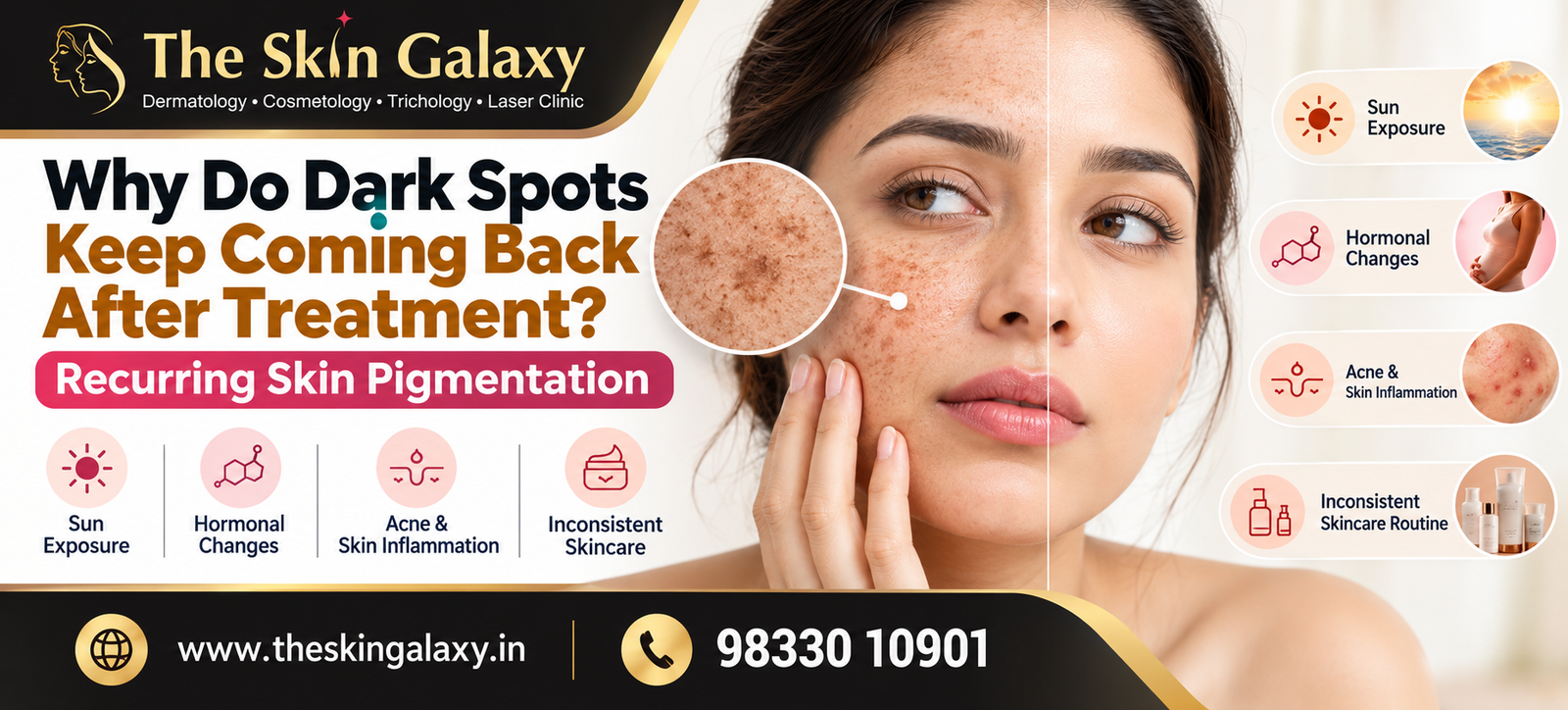
Why Do Dark Spots Keep Coming Back After Treatment? | Recurring Skin Pigmentation – The Skin Galaxy
Dark spots, uneven skin tone, and pigmentation are common skin concerns that can affect people of different ages and skin types. Many individuals invest in skincare products, chemical peels, laser treatments, or dermatologist-recommended creams to reduce pigmentation. However, one frustrating problem often remains: Why do dark spots keep coming back after treatment?
The answer lies in understanding recurring skin pigmentation, its underlying causes, and the importance of long-term skin maintenance.
Pigmentation treatment can help fade existing dark spots, but certain conditions, particularly melasma, have a tendency to return. Sun exposure, hormonal changes, acne, skin irritation, and inconsistent skincare routines can all contribute to the recurrence of pigmentation.
At The Skin Galaxy, understanding the causes of recurring pigmentation is an important part of helping patients make informed decisions about skin health and appropriate dermatological care.
In this article, we explore why dark spots return after treatment, the different types of pigmentation, available treatment options, and practical ways to maintain a more even-looking complexion.
1. What Is Recurring Skin Pigmentation?
Recurring skin pigmentation refers to dark spots or discolored patches that reappear after they have faded or improved with treatment.
Skin pigmentation occurs when melanocytes, the cells responsible for producing melanin, generate excess pigment in certain areas of the skin.
Melanin gives the skin its natural color. However, excessive or uneven melanin production can lead to conditions such as:
-
Melasma
-
Post-inflammatory hyperpigmentation (PIH)
-
Sun spots
-
Acne-related dark marks
-
Uneven skin tone
-
Certain medication-related pigmentation changes
Not every type of pigmentation behaves in the same way. Some dark spots gradually disappear once the underlying cause is treated, while others may require ongoing management.
For example, melasma is often a chronic condition that can return even after successful treatment, particularly when sunlight or other triggers remain present.
2. Why Do Dark Spots Keep Coming Back After Treatment?
Understanding the causes of recurring skin pigmentation is essential for managing it effectively.
2.1 Excessive Sun Exposure
Sun exposure is one of the most significant factors contributing to recurring pigmentation.
Ultraviolet (UV) radiation stimulates melanocytes to produce more melanin. As a result, previously treated dark spots may become noticeable again.
Even when pigmentation has improved after treatment, regular exposure to sunlight without adequate protection can trigger new discoloration.
Common situations that increase sun exposure include walking outdoors, commuting, spending time near sunny windows, and participating in outdoor activities.
Prevention tip: Use a broad-spectrum sunscreen with SPF 30 or higher daily, and reapply approximately every two hours while outdoors, particularly after sweating or swimming.
For melasma, tinted sunscreen containing iron oxides may offer additional protection against visible light.
2.2 Hormonal Changes
Hormonal fluctuations can contribute to pigmentation problems, particularly melasma.
Melasma commonly appears as brown or grayish-brown patches on the cheeks, forehead, nose, and upper lip.
Hormonal influences may include pregnancy, hormonal contraceptives, and certain hormone treatments.
Even after pigmentation improves, ongoing hormonal triggers can contribute to its recurrence.
Prevention tip: Consult a dermatologist for appropriate evaluation and treatment. Never discontinue prescribed hormonal medication without discussing it with the prescribing clinician.
2.3 Incomplete Treatment or Lack of Maintenance
Some individuals stop pigmentation treatment immediately after noticing visible improvement.
However, fading dark spots does not always mean that the underlying tendency to develop pigmentation has disappeared.
Certain pigmentation conditions require maintenance strategies to help preserve results.
A dermatologist may recommend continued sun protection, gentle skincare, or selected maintenance medications based on the condition.
Prevention tip: Follow the prescribed treatment duration and maintenance plan rather than stopping or restarting medicated products independently.
2.4 Acne and Post-Inflammatory Hyperpigmentation
Acne is another common reason dark spots repeatedly appear on the face.
When acne causes inflammation, the skin may produce additional melanin during the healing process.
This condition is known as post-inflammatory hyperpigmentation (PIH).
If new pimples continue to develop, new dark marks may appear even while older pigmentation is fading.
Other inflammatory conditions, including eczema, skin injuries, and irritation, may also trigger PIH.
Prevention tip: Managing active acne and avoiding squeezing pimples can help reduce the formation of new pigmentation marks.
2.5 Using Harsh or Unsuitable Skincare Products
Using multiple active skincare products without professional guidance may irritate the skin.
Aggressive exfoliation, unsuitable chemical peels, and frequent use of strong products can damage the skin barrier.
Inflammation caused by irritation may result in additional pigmentation, particularly in people with medium to darker skin tones.
Prevention tip: Choose gentle skincare products and avoid using strong acids, retinoids, or pigmentation creams in excessive amounts.
2.6 Deep Pigmentation
Pigmentation may affect different layers of the skin.
Superficial pigmentation, located mainly in the epidermis, may respond more readily to certain treatments.
Deeper pigmentation involving the dermis can be more persistent and difficult to manage.
Some individuals have mixed pigmentation affecting both layers.
Prevention tip: A dermatologist can assess the pigmentation pattern and recommend realistic treatment goals.
2.7 Incorrect Diagnosis or Treatment
Not all dark spots are caused by the same condition.
Melasma, acne marks, sun spots, and other pigmentary disorders may look similar but require different treatment approaches.
A treatment that works well for one condition may be ineffective or unsuitable for another.
For example, certain laser procedures can worsen melasma or cause post-inflammatory hyperpigmentation in susceptible patients.
Prevention tip: Obtain an accurate dermatological diagnosis before undergoing repeated pigmentation procedures.
3. Common Types of Pigmentation That May Return
| Pigmentation Type | Common Causes | Recurrence Pattern |
|---|---|---|
| Melasma | Sunlight, visible light, hormonal factors, genetic susceptibility | Often chronic and recurrent |
| Post-inflammatory hyperpigmentation | Acne, eczema, injuries, irritation | New marks may develop if inflammation continues |
| Sun spots | Long-term UV exposure | Existing spots may persist and new spots can form |
| Acne-related dark marks | Repeated acne inflammation | May recur with new breakouts |
| Medication-related pigmentation | Certain prescribed medicines | May persist or recur depending on the cause |
Correctly identifying the pigmentation type is essential because treatment and long-term management differ.
4. How Can Recurring Skin Pigmentation Be Treated?
Recurring skin pigmentation can be managed through dermatologist-recommended treatments based on the type, severity, and underlying cause of dark spots. Treatment options may include topical creams, chemical peels, laser procedures, and combination therapies. Ingredients such as vitamin C, azelaic acid, and retinoids may help improve uneven skin tone. Consistent sunscreen application and a proper skincare routine are essential to maintain treatment results. Consulting a dermatologist helps ensure safe and effective pigmentation management.
4.1 Dermatologist-Recommended Topical Treatments
Topical treatments are commonly used to manage hyperpigmentation.
Depending on the diagnosis, dermatologists may recommend ingredients such as:
-
Vitamin C: An antioxidant that may help improve uneven skin tone.
-
Azelaic Acid: May help manage acne-related pigmentation and certain other pigmentary conditions.
-
Kojic Acid: An ingredient used in some skin-brightening formulations.
-
Retinoids: May support skin cell turnover and help improve selected forms of hyperpigmentation.
-
Hydroquinone: A prescription pigmentation treatment that requires appropriate medical supervision.
The correct product, concentration, and treatment duration should be determined by a qualified healthcare professional.
4.2 Chemical Peels
Chemical peels use selected chemical solutions to exfoliate the skin.
They may help improve some types of superficial pigmentation and uneven skin tone.
However, chemical peels are not suitable for every pigmentation condition or skin type.
Excessive or improperly performed peeling may cause irritation and post-inflammatory pigmentation.
4.3 Laser and Light-Based Treatments
Certain laser and light-based procedures may be considered for selected pigmentation concerns.
Their suitability depends on the diagnosis, skin type, and pigment depth.
Lasers are not automatically the best treatment for recurring pigmentation. In particular, melasma can relapse or worsen following some procedures.
A dermatologist should assess the potential benefits and risks before recommending laser treatment.
4.4 Combination Treatment
For some patients, a combination of treatments may provide better results than a single approach.
A treatment plan may include prescribed topical products, consistent sun protection, selected procedures, and follow-up assessments.
The goal is not only to improve visible pigmentation but also to address contributing factors and reduce the likelihood of recurrence.
5. How to Prevent Dark Spots from Coming Back After Treatment
Although not every type of pigmentation can be permanently prevented, consistent skincare and appropriate medical management can help reduce recurrence.
Follow These Seven Important Steps
-
Apply sunscreen daily. Choose broad-spectrum SPF 30 or higher. For melasma, consider tinted sunscreen with iron oxides.
-
Maintain a gentle skincare routine. Use a mild cleanser, suitable moisturizer, and dermatologist-recommended products.
-
Avoid excessive exfoliation. Overusing strong exfoliating products can irritate the skin.
-
Manage acne early. Controlling new breakouts may prevent additional post-inflammatory dark spots.
-
Follow your treatment plan. Do not independently stop, restart, or prolong prescription pigmentation medications.
-
Reduce unnecessary sun exposure. Seek shade and use protective clothing, sunglasses, or a wide-brimmed hat.
-
Schedule follow-up consultations. Periodic dermatological assessments can help identify recurring triggers and adjust treatment when necessary.
Important: Consistency is often more beneficial than repeatedly changing products or pursuing aggressive treatments.
6. How Long Does It Take for Recurring Pigmentation to Fade?
The time required to improve pigmentation varies considerably.
Superficial post-inflammatory dark spots may gradually fade over several months. Some marks can take approximately 6–12 months, while deeper discoloration may persist for years.
Melasma can require prolonged treatment and may recur after improvement.
Treatment response depends on the cause, pigment depth, skin type, ongoing triggers, and adherence to treatment.
No pigmentation treatment can guarantee permanent clearance for every patient.
7. Common Mistakes That Can Make Pigmentation Worse
Many individuals unintentionally contribute to recurring dark spots through unsuitable skincare practices.
Common mistakes include using sunscreen only during summer, frequently changing pigmentation creams, trying unverified home remedies, over-exfoliating, picking acne lesions, and using prescription-strength creams without medical supervision.
Unregulated skin-lightening products may contain harmful ingredients, including potent steroids or mercury.
Avoid using bleaching agents or unknown fairness creams on the skin.
A safe skincare approach should prioritize skin health rather than rapid or unrealistic whitening claims.
8. When Should You Consult a Dermatologist for Recurring Dark Spots?
If dark spots repeatedly return after treatment, become darker, or spread to new areas, it is advisable to consult a dermatologist. Persistent pigmentation may be associated with hormonal changes, sun exposure, acne, or underlying skin conditions. A dermatologist can identify the cause and recommend suitable treatments based on your skin type and concerns. Early evaluation can help prevent unnecessary skin irritation and improve long-term pigmentation management. Any rapidly changing, bleeding, or irregularly shaped dark spot should be examined promptly.
9. Why Choose The Skin Galaxy for Pigmentation Treatment in Mumbai?
Recurring pigmentation can be challenging because every individual’s skin behaves differently.
Understanding whether dark spots are related to melasma, acne, sun exposure, or other factors is an important first step toward effective management.
If you are looking for guidance regarding recurring skin pigmentation in Mumbai, The Skin Galaxy can be contacted to enquire about skin consultations and available pigmentation-related services.
An appropriate dermatological assessment can help determine which treatments may be suitable, whether maintenance care is needed, and what results are realistic.
For more information, visit The Skin Galaxy.
Conclusion
Recurring skin pigmentation can be frustrating, especially when dark spots return after weeks or months of treatment. However, understanding the underlying causes can help patients make better skincare decisions.
Sun exposure, hormonal changes, acne, skin irritation, deep pigmentation, and incomplete maintenance routines are among the factors that may contribute to recurring dark spots.
Successful pigmentation management involves more than temporarily fading discoloration. It requires an accurate diagnosis, appropriate treatment, consistent sun protection, and long-term care when necessary.
If you are experiencing persistent or recurring dark spots, consider seeking professional guidance to understand your skin’s needs.
Learn more about skin care and pigmentation-related concerns at The Skin Galaxy.
Recurring Skin Pigmentation Recurring Skin Pigmentation Recurring Skin Pigmentation Recurring Skin Pigmentation Recurring Skin Pigmentation Recurring Skin Pigmentation Recurring Skin Pigmentation Recurring Skin Pigmentation Recurring Skin Pigmentation Recurring Skin Pigmentation Recurring Skin Pigmentation Recurring Skin Pigmentation Recurring Skin Pigmentation Recurring Skin PigmentationRecurring Skin Pigmentation