
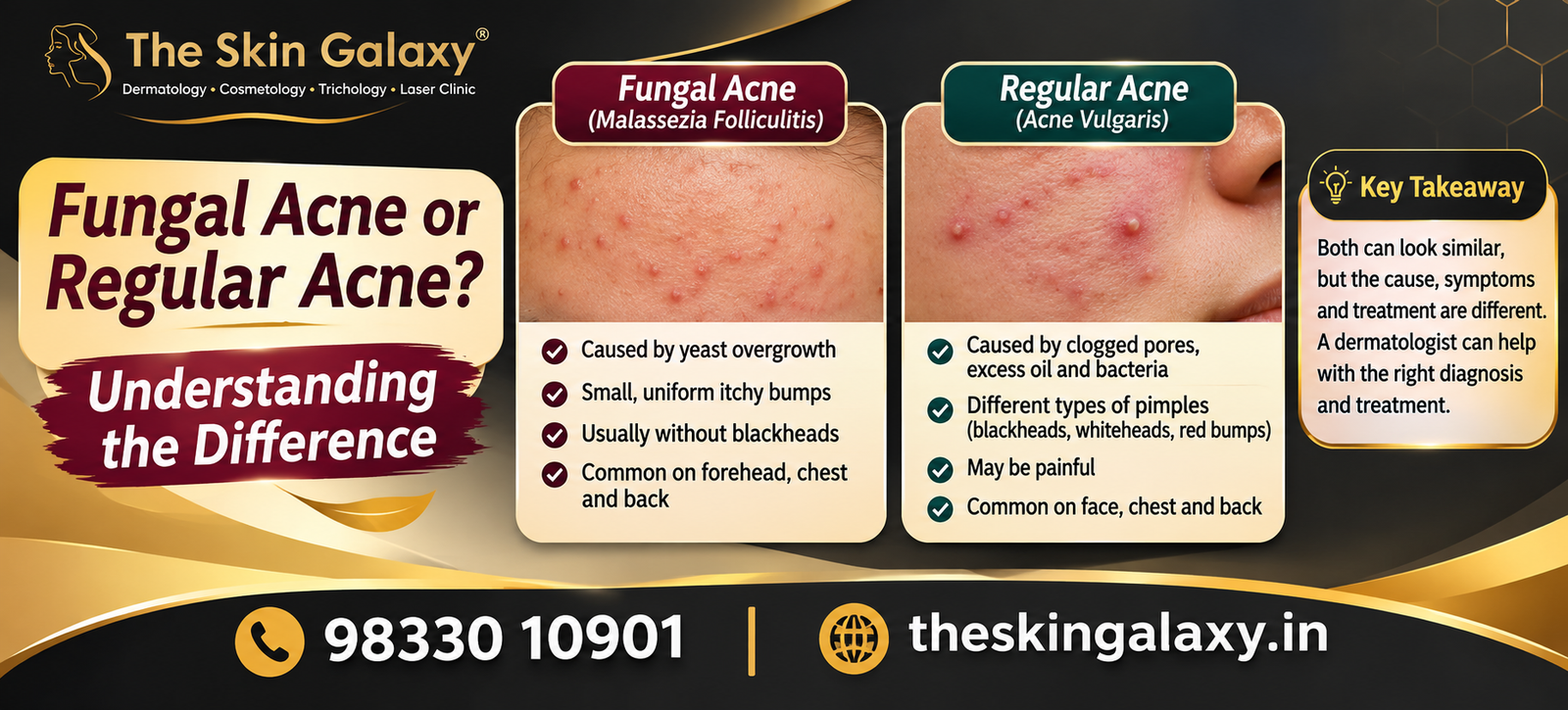
Fungal Acne or Regular Acne? Understanding the Difference – The Skin Galaxy
Acne is one of the most common skin concerns affecting teenagers and adults. However, not every small red bump or pimple-like breakout is regular acne. Sometimes, what appears to be acne may actually be a condition commonly called fungal acne, which requires a different treatment approach.
Understanding Fungal Acne vs Acne is important because both conditions can look similar but develop for different reasons. While regular acne is associated with clogged pores, excess oil, and inflammation, fungal acne is caused by an overgrowth of yeast within hair follicles.
At The Skin Galaxy, understanding the underlying cause of recurring breakouts is an important step toward choosing appropriate skincare and treatment.
In this article, we explain the differences between fungal acne and regular acne, including their causes, symptoms, affected areas, treatment options, prevention tips, and when to consult a dermatologist.
1. What Is Fungal Acne?
Fungal acne, medically known as Malassezia folliculitis or Pityrosporum folliculitis, is a skin condition caused by the overgrowth of Malassezia yeast within hair follicles.
Malassezia is naturally present on human skin and usually does not cause problems. However, certain conditions, such as excessive sweating, humid weather, and increased skin oil production, can encourage yeast overgrowth.
Unlike regular acne, fungal acne is not primarily caused by clogged pores.
Common Symptoms of Fungal Acne
- Small, uniform red or skin-coloured bumps
- Itchy pimples or pustules
- Clusters of similar-looking bumps
- Breakouts around the forehead and hairline
- Bumps on the chest, shoulders, and upper back
- Breakouts that may worsen with sweating or humidity
One important characteristic of fungal acne is that the bumps often appear similar in size and shape.
Fungal acne may also be confused with bacterial folliculitis, heat rash, or other skin conditions. A dermatologist can help establish the correct diagnosis.
2. What Is Regular Acne?
Regular acne, medically called Acne Vulgaris, is an inflammatory skin condition that develops when hair follicles become clogged with excess sebum (skin oil) and dead skin cells.
Bacteria called Cutibacterium acnes, along with hormonal influences and inflammation, can contribute to acne development.
Regular acne commonly affects the face, forehead, chin, jawline, chest, shoulders, and back.
Common Symptoms of Regular Acne
- Blackheads
- Whiteheads
- Red inflammatory pimples
- Pus-filled pimples
- Painful nodules
- Deep acne lesions
- Post-acne dark spots and scarring
Unlike fungal acne, regular acne often produces different types and sizes of lesions simultaneously.
Hormonal fluctuations, genetics, excess sebum production, and certain skincare products may contribute to regular acne.
3. Fungal Acne vs Acne: Key Differences
Although both conditions can cause pimple-like breakouts, their underlying causes and treatment approaches are different.
| Feature | Fungal Acne | Regular Acne |
|---|---|---|
| Medical name | Malassezia Folliculitis | Acne Vulgaris |
| Main cause | Yeast overgrowth in hair follicles | Clogged follicles, excess oil and inflammation |
| Appearance | Small, similar-looking bumps | Different types and sizes of pimples |
| Itching | Common | Usually less prominent |
| Blackheads | Typically absent | Common |
| Whiteheads | True comedones absent | Common |
| Common areas | Forehead, hairline, chest, upper back | Face, chest, shoulders, back |
| Common triggers | Heat, humidity, sweating, occlusion | Hormones, genetics, oil production |
| Treatment | Antifungal medications | Acne-specific treatments |
| Recurrence | Can recur, especially with ongoing triggers | Can recur due to multiple contributing factors |
Important: These differences are useful clues, but appearance and itching alone cannot confirm the diagnosis. Some people may experience fungal acne and regular acne at the same time.
4. What Causes Fungal Acne?
Fungal acne develops when Malassezia yeast grows excessively within hair follicles.
Several environmental and individual factors can increase the likelihood of developing this condition.
Excessive Sweating
Sweat creates a warm, moist environment that may encourage yeast growth, particularly when sweaty clothing remains against the skin for long periods.
Hot and Humid Weather
People living in humid climates may experience fungal folliculitis more frequently because warm and moist conditions can support yeast overgrowth.
Oily Skin
Malassezia yeast thrives in lipid-rich environments. Individuals with increased sebum production may be more susceptible.
Tight Clothing
Tight or non-breathable clothing can trap heat and moisture, especially around the chest, shoulders, and back.
Certain Skincare Products
Heavy, occlusive skincare products may contribute to conditions that favour folliculitis in susceptible individuals.
Antibiotic Use
Prolonged antibiotic treatment can alter the skin’s microbial environment and may increase the risk of Malassezia folliculitis in some people.
Reduced Immune Function
Certain medical conditions or medications that affect immune function may increase susceptibility to fungal folliculitis.
5. What Causes Regular Acne?
Regular acne develops through a combination of biological and environmental factors.
Excess Sebum Production
Sebaceous glands produce natural oils that help protect the skin. However, excess sebum can contribute to blocked hair follicles.
Dead Skin Cell Accumulation
When dead skin cells accumulate inside follicles, they can combine with sebum and contribute to clogged pores.
Hormonal Changes
Hormonal fluctuations during puberty, menstrual cycles, and certain medical conditions may increase oil production and acne breakouts.
Bacterial Activity
Cutibacterium acnes is a normal skin bacterium that can contribute to inflammation within blocked follicles.
Genetics
A family history of acne may increase an individual’s likelihood of developing persistent breakouts.
Skincare and Lifestyle Factors
Certain comedogenic products, friction, stress, and other individual factors may aggravate acne.
Understanding these causes helps explain why regular acne requires a different treatment approach from fungal acne.
6. How to Identify Fungal Acne vs Regular Acne at Home
Recognizing the differences between Fungal Acne vs Regular Acne can help you understand when professional skin assessment may be necessary.
Check Whether the Bumps Are Itchy
Fungal acne frequently causes itching, especially during sweating or hot weather.
Regular acne may be painful or tender but is generally less itchy.
However, itching alone does not confirm fungal acne.
Observe the Size and Appearance
Fungal acne usually appears as multiple small bumps of similar size.
Regular acne often includes a mixture of blackheads, whiteheads, inflamed pimples, and occasionally deeper lesions.
Look for Blackheads and Whiteheads
The presence of true blackheads and whiteheads is more characteristic of regular acne.
Malassezia folliculitis generally does not produce comedones.
Notice Where Breakouts Occur
Fungal acne frequently develops on the forehead, hairline, chest, shoulders, and upper back.
Regular acne commonly affects the face, jawline, chest, and back.
Evaluate Your Response to Treatment
If breakouts remain unchanged despite appropriate acne treatment, another condition may be responsible.
However, a lack of improvement does not automatically mean the condition is fungal acne.
Remember: Self-diagnosis can be misleading. A dermatologist may need to examine your skin and perform additional tests when necessary.
7. Can Fungal Acne and Regular Acne Occur Together?
Yes. Some individuals may develop both Malassezia folliculitis and regular acne simultaneously.
For example, a person may experience blackheads and inflammatory pimples on the cheeks while also developing small, itchy, uniform bumps around the forehead or upper back.
Because the two conditions have different underlying causes, treating only one may not completely resolve the breakouts.
A dermatologist can assess the types of lesions present and recommend an appropriate treatment plan.
8. How Is Fungal Acne Diagnosed?
Fungal acne, medically known as Malassezia folliculitis, is diagnosed by a dermatologist through a detailed skin examination and evaluation of symptoms. During the assessment, the dermatologist checks the appearance, size, and distribution of acne-like bumps, particularly on the forehead, hairline, chest, shoulders, and back. Unlike regular acne, fungal acne often appears as small, uniform, itchy bumps without blackheads or whiteheads. The dermatologist may also review factors such as excessive sweating, humid weather, oily skin, recent antibiotic use, and previous acne treatments to identify possible triggers. In some cases, additional diagnostic tests, such as a skin scraping or Potassium Hydroxide (KOH) test, may be recommended to detect yeast and help confirm the diagnosis. Since fungal acne can resemble regular acne or bacterial folliculitis, an accurate diagnosis is essential for selecting the appropriate treatment. At The Skin Galaxy, professional dermatological evaluation can help patients understand the cause of recurring breakouts and receive suitable skincare and treatment guidance.
Skin Scraping and Microscopic Examination
A sample from the affected skin may be examined under a microscope to identify yeast.
Potassium Hydroxide (KOH) Test
A KOH preparation can help detect fungal elements in selected cases.
Dermoscopy
A dermatologist may use a dermatoscope to examine the appearance and distribution of lesions more closely.
Not every patient requires laboratory testing. The diagnostic approach depends on clinical findings.
9. Fungal Acne Treatment: What Are the Available Options?
Because fungal acne involves yeast overgrowth, treatment usually focuses on controlling Malassezia within the affected hair follicles.
Topical Antifungal Treatment
A dermatologist may recommend topical antifungal medications such as ketoconazole or other suitable antifungal preparations.
The choice and duration depend on the severity and location of the condition.
Medicated Cleansers or Shampoos
Certain antifungal shampoos or washes may be recommended for affected body areas.
These should be used according to professional guidance, as inappropriate use may cause irritation.
Oral Antifungal Medication
In extensive, persistent, or recurrent cases, a dermatologist may consider oral antifungal treatment.
These medications require medical supervision because they may interact with other medicines and can have important side effects.
Managing Contributing Factors
Reducing prolonged sweating, changing out of damp clothing, and reviewing potentially occlusive products may help prevent recurrence.
Important: Avoid starting oral antifungal medication without a doctor’s prescription.
10. Regular Acne Treatment: What Works?
Regular acne treatment depends on the type and severity of lesions, skin sensitivity, and individual medical history.
Salicylic Acid
Salicylic acid helps exfoliate within pores and may be useful for blackheads and whiteheads.
Benzoyl Peroxide
Benzoyl peroxide helps reduce acne-associated bacteria and inflammatory breakouts.
Topical Retinoids
Dermatologists may recommend topical retinoids such as adapalene or tretinoin to help prevent clogged pores and improve acne.
Certain retinoids should not be used during pregnancy or when planning pregnancy without medical advice.
Azelaic Acid
Azelaic acid may help manage acne and some forms of post-inflammatory pigmentation.
Prescription Treatments
Moderate or severe acne may require prescription medications, hormonal treatment in selected patients, or other dermatologist-supervised options.
Oral isotretinoin may be considered for severe or treatment-resistant acne under specialist supervision.
The correct treatment depends on the individual diagnosis.
11. Why Does Fungal Acne Sometimes Get Worse with Regular Acne Treatments?
Some treatments commonly used for regular acne may not address the underlying yeast overgrowth associated with fungal acne.
For example, prolonged antibiotic use may alter the balance of microorganisms on the skin and can sometimes contribute to Malassezia folliculitis.
Similarly, repeated use of strong exfoliating products may irritate the skin without treating the actual condition.
This does not mean all acne products worsen fungal acne. It means treatment must match the diagnosis.
If your breakouts are persistent, itchy, or repeatedly return despite treatment, professional assessment is recommended.
12. Skincare Routine for Fungal Acne-Prone Skin
A simple, gentle skincare routine can support skin comfort while following dermatologist-recommended treatment.
Morning Routine
Step 1: Gentle Cleansing
Use a mild cleanser to remove sweat, oil, and impurities without excessively drying the skin.
Step 2: Lightweight Moisturizer
Choose a non-comedogenic moisturizer suitable for your skin type.
Step 3: Sunscreen
Apply broad-spectrum sunscreen with SPF 30 or higher to protect against UV exposure.
Evening Routine
Step 1: Cleanse the Skin
Remove sunscreen, makeup, and accumulated impurities using a gentle cleanser.
Step 2: Apply Prescribed Treatment
Use dermatologist-recommended antifungal or acne medication as directed.
Step 3: Moisturize
Apply a suitable moisturizer if needed to maintain skin comfort.
Avoid introducing multiple strong active ingredients simultaneously, especially when the skin is already irritated.
13. How to Prevent Fungal Acne and Regular Acne Breakouts
Although fungal acne and regular acne cannot always be prevented, healthy skincare and hygiene practices may help reduce certain triggers.
Keep Skin Clean After Sweating
Wash or shower after heavy sweating, particularly following workouts or outdoor activities.
Wear Breathable Clothing
Choose comfortable clothing that allows ventilation and reduces prolonged moisture buildup.
Avoid Heavy Product Layering
Use skincare products suited to your skin type and avoid unnecessarily heavy or occlusive formulations if they aggravate breakouts.
Do Not Pick or Squeeze Pimples
Picking can worsen inflammation, damage the skin, and increase the risk of marks or scarring.
Follow a Consistent Skincare Routine
Avoid frequently switching products without allowing sufficient time to evaluate their effects.
Seek Advice for Persistent Breakouts
Repeatedly treating an undiagnosed skin condition with different products may delay effective care.
14. When Should You Visit a Dermatologist for Fungal Acne or Regular Acne?
If you are experiencing persistent, itchy, painful, or recurring breakouts, consulting a dermatologist can help determine the underlying cause. Although fungal acne and regular acne may appear similar, their treatments are different. Professional evaluation is particularly important when pimples do not improve with appropriate skincare, spread across the chest or back, or cause significant discomfort. A dermatologist can examine your skin, identify possible contributing factors, and recommend suitable treatment based on the diagnosis. Early assessment is also beneficial for individuals developing deep, painful acne lesions, pigmentation, or scarring.
15. Why Is Correct Diagnosis Important for Acne Treatment?
Accurate diagnosis plays an important role in managing persistent skin breakouts.
Using antifungal medication for ordinary acne may not address clogged pores and acne-related inflammation.
Similarly, relying only on conventional acne treatments may not adequately control Malassezia folliculitis.
A professional assessment helps distinguish between different conditions and reduces the likelihood of unnecessary or unsuitable treatment.
At The Skin Galaxy, individuals experiencing recurring acne-like breakouts can seek dermatological guidance to better understand their skin concerns and appropriate treatment options.
Conclusion
Understanding Fungal Acne vs Acne is essential for choosing the right treatment and avoiding unnecessary skincare mistakes. Although both conditions can cause similar-looking bumps, fungal acne involves yeast overgrowth in hair follicles, while regular acne develops through clogged pores, excess oil, and inflammation.
Recognizing symptoms such as itching, uniform bumps, blackheads, and inflammatory pimples may provide useful clues, but a proper dermatological assessment is the most reliable way to identify the condition.
If you are experiencing persistent or recurring acne-like breakouts, The Skin Galaxy can be contacted for professional dermatological guidance and individualized skin care recommendations.
Healthy Skin Begins with the Right Diagnosis and Appropriate Care.
Website: https://theskingalaxy.in/
Fungal Acne vs Acne Fungal Acne vs Acne Fungal Acne vs Acne Fungal Acne vs Acne Fungal Acne vs Acne Fungal Acne vs Acne Fungal Acne vs Acne Fungal Acne vs Acne Fungal Acne vs Acne Fungal Acne vs Acne Fungal Acne vs Acne Fungal Acne vs Acne Fungal Acne vs Acne Fungal Acne vs Acne Fungal Acne vs Acne Fungal Acne vs Acne Fungal Acne vs Acne Fungal Acne vs Acne Fungal Acne vs Acne Fungal Acne vs Acne Fungal Acne vs Acne