
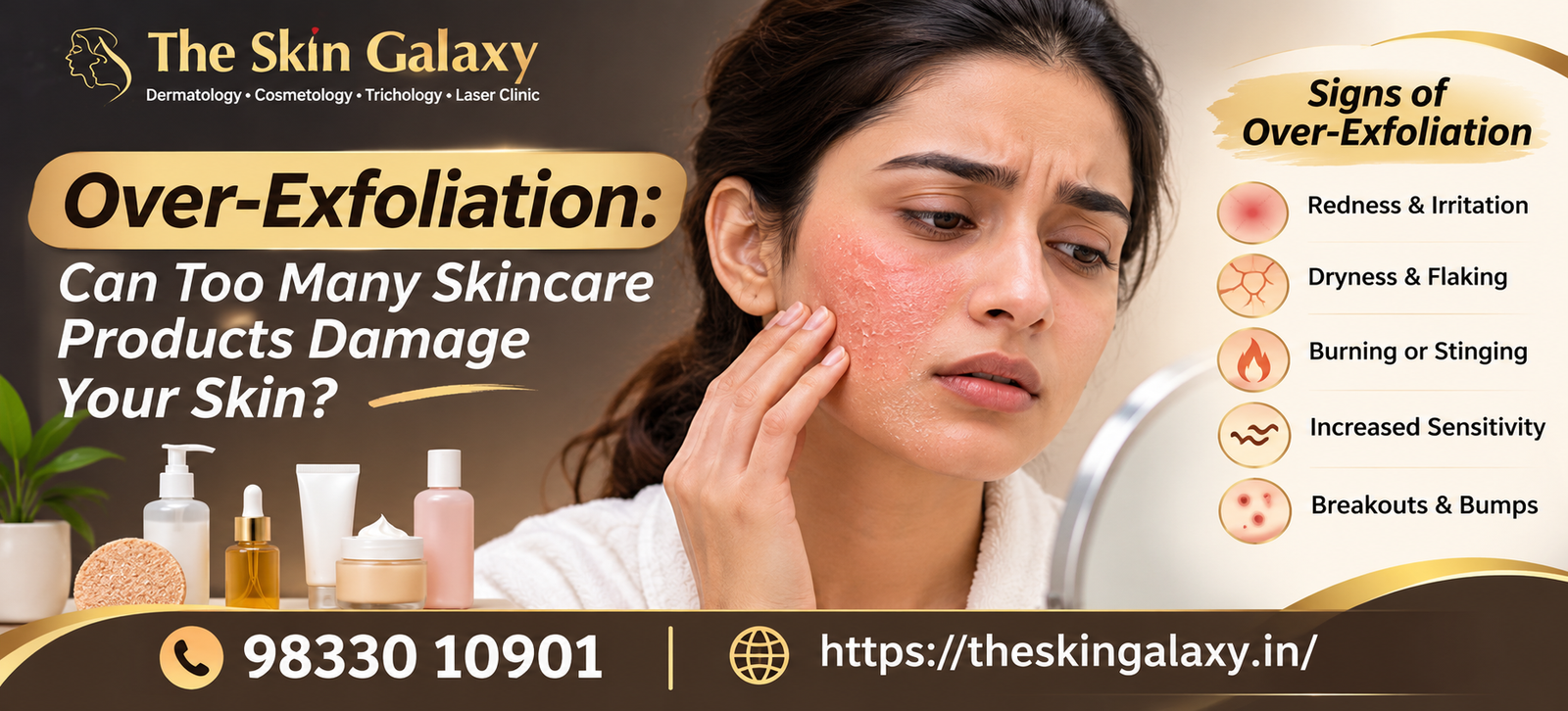
Over-Exfoliation: Can Too Many Skincare Products Damage Your Skin? – The Skin Galaxy
Healthy, glowing skin is something everyone desires. With countless skincare products available today, many people follow elaborate routines involving cleansers, exfoliating scrubs, serums, toners, retinol, and chemical exfoliants. However, using too many active skincare products or exfoliating too frequently can sometimes do more harm than good.
Over-exfoliation is a common skincare concern that can lead to redness, irritation, dryness, sensitivity, and damage to the skin’s protective barrier. Understanding over exfoliation symptoms and recognizing when your skin needs a break is essential for maintaining healthy skin.
At The Skin Galaxy, we believe that effective skincare is not about using more products but about choosing the right products for your individual skin needs.
In this article, we explain what over-exfoliation is, its common causes, warning signs, effects on the skin barrier, treatment options, and ways to prevent future skin irritation.
What Is Over-Exfoliation?
Exfoliation is the process of removing dead skin cells from the outermost layer of the skin. When performed appropriately, exfoliation can help improve skin texture, reduce the appearance of dullness, and support a smoother complexion.
However, over-exfoliation occurs when the skin is exfoliated too frequently or exposed to exfoliating ingredients that are too strong for its tolerance.
There are two main types of exfoliation:
1. Physical Exfoliation
Physical exfoliation involves manually removing dead skin cells using facial scrubs, exfoliating brushes, cleansing tools, or textured skincare products.
Excessive scrubbing or applying too much pressure can irritate the skin and cause damage to its outer protective layer.
2. Chemical Exfoliation
Chemical exfoliation uses active ingredients such as:
- Alpha Hydroxy Acids (AHAs), including glycolic acid and lactic acid
- Beta Hydroxy Acids (BHAs), including salicylic acid
- Polyhydroxy Acids (PHAs)
- Exfoliating peels and resurfacing products
These ingredients can be beneficial when used correctly. However, combining multiple exfoliating products or using high concentrations without professional guidance may increase the risk of irritation.
Common Over Exfoliation Symptoms You Should Not Ignore
Recognizing the early signs of over-exfoliation can help prevent further irritation and skin barrier damage.
1. Persistent Redness and Skin Irritation
One of the most noticeable over exfoliation symptoms is redness that continues after using skincare products.
The skin may appear inflamed, feel warm, or become unusually sensitive to touch.
2. Excessive Dryness and Flaky Skin
Over-exfoliation can disrupt the skin’s ability to retain moisture, resulting in dry patches, flaking, peeling, and rough texture.
Even people with naturally oily skin may experience dehydration when the skin barrier becomes irritated.
3. Burning or Stinging Sensation
If your moisturizer, cleanser, or sunscreen suddenly causes burning or stinging, your skin may be experiencing increased sensitivity.
Products that were previously comfortable may begin causing discomfort.
4. Tight and Uncomfortable Skin
Over-exfoliated skin may feel unusually tight, particularly after washing the face.
This sensation can indicate moisture loss or disruption of the skin’s protective barrier.
5. Increased Skin Sensitivity
Excessive exfoliation may make the skin more reactive to sunlight, environmental conditions, fragrances, and certain skincare ingredients.
6. Breakouts and Small Bumps
Some people develop small bumps, acne-like eruptions, or increased breakouts after using too many active skincare products.
However, breakouts can have several causes, including acne, irritation, or allergic reactions. A dermatologist can help identify the underlying problem.
7. Shiny but Dehydrated Skin
Skin that appears unusually shiny, tight, and uncomfortable may be irritated rather than healthy and glowing.
A glossy appearance alone does not confirm over-exfoliation, but it may be a warning sign when accompanied by redness, dryness, or stinging.
Can Too Many Skincare Products Damage Your Skin?
Yes. Using too many skincare products, particularly those containing strong active ingredients, can increase the risk of irritation and skin barrier disruption.
Not every multi-step skincare routine is harmful. Problems are more likely when products contain overlapping active ingredients, are applied too frequently, or are unsuitable for an individual’s skin type.
Combining Too Many Active Ingredients
Using glycolic acid, salicylic acid, exfoliating toners, retinoids, and strong acne treatments together may increase dryness and irritation.
Retinoids are not primarily exfoliants, but they can cause irritation, especially when combined with exfoliating acids.
Using Exfoliating Products Every Day
Some exfoliating products may be formulated for frequent use, but daily exfoliation is not appropriate for everyone.
The ideal frequency depends on skin type, product strength, concentration, and individual tolerance.
Frequently Changing Skincare Products
Introducing several new products at the same time makes it difficult to identify which ingredient is causing irritation.
A gradual skincare approach is generally safer.
Following Social Media Skincare Trends
Popular skincare routines may not be suitable for every individual.
A product that works well for one person may cause irritation, dryness, or breakouts in another.
How Over-Exfoliation Affects Your Skin Barrier
The skin barrier is the outer protective layer of the skin, primarily formed by the stratum corneum.
It helps retain moisture while protecting the body from environmental irritants and other external substances.
When excessive exfoliation disrupts this barrier, the skin may experience increased transepidermal water loss, dryness, and sensitivity.
Common signs of a compromised skin barrier include:
- Persistent dryness and dehydration
- Redness and irritation
- Burning or stinging after applying products
- Increased sensitivity
- Rough or flaky patches
- Difficulty tolerating regular skincare products
A weakened skin barrier may also aggravate existing conditions such as eczema or rosacea.
Recognizing these changes early and simplifying your skincare routine can help support recovery.
Over-Exfoliation vs Skin Purging: What’s the Difference?
Many people confuse over-exfoliation with skin purging, particularly when introducing products containing retinoids or exfoliating acids.
| Over-Exfoliation | Skin Purging |
|---|---|
| Often causes redness, burning, and irritation | May involve a temporary increase in acne lesions |
| Can produce dryness, flaking, and sensitivity | Typically occurs in acne-prone areas |
| Often associated with excessive product use | May occur after starting certain acne treatments |
| Usually requires reducing irritating products | Requires assessment of product tolerance and acne response |
Important: Not every breakout after starting a new product is skin purging. Persistent irritation, painful breakouts, or worsening symptoms should be evaluated by a dermatologist.
How to Repair Over-Exfoliated Skin
If you suspect over-exfoliation, the first step is to reduce further irritation and support the skin’s natural protective barrier.
1. Stop Exfoliating Temporarily
Pause facial scrubs, exfoliating acids, peeling solutions, and other potentially irritating products until your skin has recovered.
If you are using prescribed acne or skin treatments, consult your dermatologist before changing the treatment plan.
2. Switch to a Gentle Cleanser
Choose a mild, fragrance-free cleanser that removes dirt and impurities without leaving the skin feeling excessively dry or tight.
Avoid harsh scrubbing and repeated washing.
3. Use a Barrier-Supporting Moisturizer
Moisturizers containing ingredients such as ceramides, glycerin, hyaluronic acid, and petrolatum can help support hydration and reduce moisture loss.
Choose a formulation suitable for your skin type and sensitivity.
4. Apply Sunscreen Daily
Irritated skin may be more vulnerable to discomfort from sun exposure.
Use a broad-spectrum sunscreen with SPF 30 or higher, and follow appropriate reapplication guidance when outdoors.
5. Avoid Introducing New Active Ingredients
During recovery, avoid experimenting with multiple new serums, acids, or treatments.
A simple routine can make it easier to identify and avoid irritating products.
6. Give Your Skin Time to Recover
Mild irritation may improve within several days after stopping the triggering products, while more significant barrier disruption can take longer.
Recovery time varies depending on the severity of irritation and any underlying skin conditions.
If symptoms persist or worsen, consult a qualified dermatologist.
Simple Skincare Routine for Over-Exfoliated Skin
A basic routine may help minimize irritation while supporting the skin barrier.
Morning Routine
- Wash with a gentle cleanser, if needed.
- Apply a fragrance-free moisturizer.
- Use broad-spectrum SPF 30+ sunscreen.
Night Routine
- Cleanse gently.
- Apply a barrier-supporting moisturizer.
- Avoid unnecessary exfoliating products until irritation improves.
Once your skin has recovered, active ingredients can be reintroduced gradually, based on your skin’s needs and professional advice.
How Often Should You Exfoliate Your Face?
There is no single exfoliation schedule suitable for everyone.
The appropriate frequency depends on skin type, sensitivity, the product being used, and other treatments in your routine.
Dry or Sensitive Skin: May require infrequent exfoliation or may not tolerate exfoliation at all.
Oily Skin: May tolerate some exfoliating ingredients, but excessive use can still cause irritation.
Acne-Prone Skin: Certain exfoliating ingredients, such as salicylic acid, may be helpful, but treatment should be selected according to acne severity and skin tolerance.
Combination Skin: Different facial areas may respond differently to exfoliation.
Rather than following a fixed schedule, pay attention to how your skin responds and consult a dermatologist when needed.
Skincare Ingredients That May Help Support Skin Barrier Recovery
Certain moisturizing ingredients can be helpful when the skin feels irritated or dehydrated.
Ceramides: Help replenish lipids that contribute to the skin barrier.
Hyaluronic Acid: Acts as a humectant that helps attract and retain moisture.
Glycerin: Supports hydration by attracting water into the outer skin layer.
Panthenol: Can help moisturize and soothe dry, irritated skin.
Petrolatum: Helps reduce moisture loss by forming a protective layer.
Even gentle ingredients can occasionally cause reactions, so choose products carefully and discontinue anything that worsens irritation.
When Should You Visit a Dermatologist for Over-Exfoliation?
Over-exfoliation can sometimes cause mild skin irritation that improves with a gentle skincare routine. However, if you experience persistent redness, excessive dryness, burning sensations, peeling, or increased skin sensitivity, it may be time to consult a dermatologist. These over exfoliation symptoms can indicate that your skin’s protective barrier has become irritated or damaged. Ignoring these warning signs and continuing to use harsh exfoliating products may worsen inflammation and discomfort.
You should also seek professional dermatological advice if your skin becomes unusually sensitive to moisturizers, cleansers, or sunscreen, or if you develop recurring breakouts, painful patches, or severe flaking. Symptoms such as swelling, blistering, oozing, or crusting require prompt medical evaluation because they may indicate a more serious reaction or infection. A dermatologist can assess whether your symptoms are caused by over-exfoliation, skin barrier damage, contact dermatitis, or another underlying skin condition.
At The Skin Galaxy, professional skin consultations can help individuals understand their skin concerns and choose appropriate skincare routines. Depending on the severity of irritation, a dermatologist may recommend temporarily stopping exfoliating products, using gentle cleansers, applying barrier-repair moisturizers, or considering suitable medical treatments. Early identification of over exfoliation symptoms and timely dermatological guidance can help reduce irritation, support skin barrier recovery, and maintain healthier skin over time.
How to Prevent Over-Exfoliation in the Future
Maintaining healthy skin requires consistency, appropriate products, and an understanding of your skin’s tolerance.
Follow these practical skincare tips:
- Introduce one new active skincare product at a time.
- Avoid layering multiple strong exfoliating acids without guidance.
- Follow product instructions and recommended application frequency.
- Use gentle cleansing methods instead of aggressive scrubbing.
- Moisturize regularly to support skin hydration.
- Apply sunscreen consistently.
- Reduce or discontinue products that cause persistent irritation.
- Seek professional advice before using high-strength chemical peels or complex active-ingredient routines.
Remember that healthy skin does not require an excessive number of skincare products.
Conclusion
Over-exfoliation is an increasingly common skincare concern, especially among people using multiple active skincare products without understanding their combined effects.
Although exfoliation can be beneficial when used appropriately, excessive exfoliation may lead to redness, dryness, sensitivity, breakouts, and disruption of the skin barrier.
Recognizing over exfoliation symptoms early, simplifying your skincare routine, using gentle products, and seeking professional guidance when necessary can help protect your skin.
At The Skin Galaxy, we encourage a personalized approach to skincare that focuses on maintaining healthy skin rather than following every new skincare trend.
Healthy skin begins with the right care, not more skincare products.
Over Exfoliation Symptoms Over Exfoliation Symptoms Over Exfoliation Symptoms Over Exfoliation Symptoms Over Exfoliation Symptoms Over Exfoliation Symptoms Over Exfoliation Symptoms Over Exfoliation Symptoms Over Exfoliation Symptoms Over Exfoliation Symptoms Over Exfoliation Symptoms Over Exfoliation Symptoms Over Exfoliation Symptoms Over Exfoliation Symptoms Over Exfoliation Symptoms