
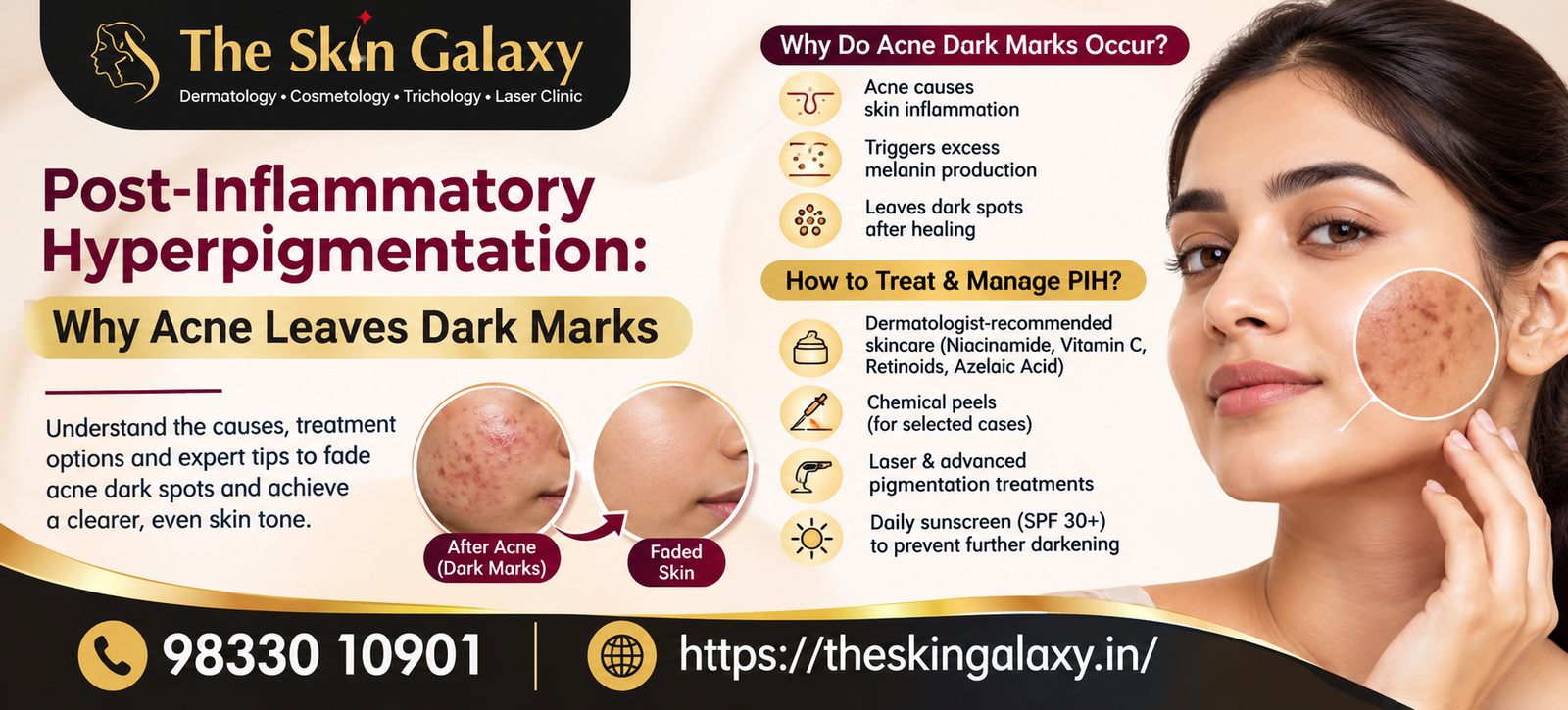
Post-Inflammatory Hyperpigmentation: Why Acne Leaves Dark Marks – The Skin Galaxy
Acne may disappear after a few days or weeks, but the dark marks it leaves behind can remain visible for months. Many people struggle with uneven skin tone, brown spots, and stubborn discoloration even after their active acne has healed. This condition is commonly known as Post Acne Hyperpigmentation, or post-inflammatory hyperpigmentation (PIH).
Although these marks are often called acne scars, they are not always true scars. Post-inflammatory hyperpigmentation develops when inflammation triggers excess melanin production, leaving darker patches on the skin. The marks may gradually fade, but factors such as sun exposure, repeated breakouts, and improper skincare can make them more persistent.
At The Skin Galaxy, understanding the causes of acne-related pigmentation is an important step toward choosing suitable skincare and dermatological treatment options. With appropriate acne management, sun protection, and evidence-based pigmentation treatments, many people can achieve gradual improvement in skin tone.
This comprehensive guide explains why acne leaves dark marks, how post-inflammatory hyperpigmentation develops, which treatments may help, and how to prevent future discoloration.
1. What Is Post-Inflammatory Hyperpigmentation?
Post-inflammatory hyperpigmentation (PIH) is a common skin condition characterized by darkened patches or spots that develop after inflammation or injury to the skin. When the skin experiences inflammation from acne, eczema, irritation, burns, or other conditions, pigment-producing cells called melanocytes may become more active. This increased activity can lead to excess melanin production, causing the affected area to appear darker than the surrounding skin.
In acne-related PIH, the dark marks typically appear where pimples, pustules, or inflammatory acne lesions have healed. These marks may look light brown, dark brown, grey-brown, or nearly black, depending on the depth of pigmentation and the individual’s natural skin tone.
Post Acne Hyperpigmentation can affect anyone, but it is particularly common and may be more persistent in people with medium to deeper skin tones.
Unlike permanent textural acne scars, PIH is a pigmentary change that can gradually improve over time. However, fading may take several months or longer, particularly when pigmentation is deeper or new acne continues to develop.
2. Why Does Acne Leave Dark Marks?
Acne causes inflammation within the skin, particularly when pores become blocked by excess oil, dead skin cells, and other material.
During the inflammatory response, the skin releases chemical signals that can stimulate melanocytes, the cells responsible for producing melanin.
Melanin is the natural pigment that determines skin, hair, and eye color. When excess melanin is produced or deposited in an area affected by inflammation, visible dark marks may develop after the acne lesion heals.
Several factors can influence how noticeable these marks become.
Severity of Acne Inflammation
Inflamed pimples, pustules, nodules, and cystic acne lesions may increase the likelihood of post-inflammatory pigmentation.
More intense or prolonged inflammation can result in more noticeable discoloration.
Picking or Squeezing Pimples
Repeatedly touching, picking, or squeezing acne lesions can damage the skin and worsen inflammation.
This increases the likelihood of both pigmentation changes and permanent acne scarring.
Sun Exposure
Ultraviolet radiation and visible light can worsen pigmentation, particularly in individuals prone to hyperpigmentation.
Without appropriate sun protection, existing marks may become darker or take longer to fade.
Skin Tone
People with medium to deep skin tones often have a greater tendency to develop PIH following inflammation.
This does not mean that lighter skin tones are unaffected, but the appearance and persistence of pigmentation may differ.
Repeated Acne Breakouts
When new pimples continue to develop, additional dark marks may appear before older ones have faded.
This can create persistent uneven pigmentation across the face, chest, shoulders, or back.
3. Post Acne Hyperpigmentation vs Acne Scars: What Is the Difference?
Many people use the terms acne marks and acne scars interchangeably. However, they are different skin concerns and may require different treatments.
| Feature | Post Acne Hyperpigmentation | Acne Scars |
|---|---|---|
| Main problem | Excess pigmentation following inflammation | Structural changes in the skin |
| Appearance | Flat brown, grey, or dark marks | Depressed or raised areas |
| Skin texture | Usually unchanged | May be uneven or irregular |
| Cause | Inflammation-related pigment changes | Damage and altered collagen repair |
| Natural improvement | Often fades gradually | Usually persists without treatment |
| Treatment | Sunscreen, topical treatments, selected procedures | Microneedling, laser, subcision, or other scar-specific treatments |
A useful distinction is that PIH is generally flat, whereas true acne scars involve changes in skin texture.
Red or pink marks remaining after acne may represent post-inflammatory erythema (PIE), which is primarily related to blood vessel changes rather than excess melanin.
A dermatologist can help distinguish these conditions and recommend appropriate treatment.
4. Common Areas Affected by Post Acne Hyperpigmentation
Although post-acne pigmentation is frequently associated with the face, it can occur anywhere acne develops.
Cheeks
Inflammatory acne on the cheeks can leave multiple dark spots, resulting in uneven skin tone.
Forehead
Repeated breakouts along the forehead and hairline may contribute to visible pigmentation.
Chin and Jawline
Acne around the chin and jawline, including hormonally influenced breakouts, may leave persistent dark marks.
Back and Shoulders
Body acne can cause widespread pigmentation, particularly when lesions are repeatedly irritated by friction or picking.
Chest
Inflammatory acne on the chest may also result in dark marks that remain after the lesions heal.
5. Types of Post-Inflammatory Hyperpigmentation
PIH can be classified according to the depth at which pigment is located in the skin.
Epidermal Hyperpigmentation
Epidermal pigmentation occurs when excess melanin is concentrated mainly in the outer layers of the skin.
It commonly appears light brown to dark brown.
Epidermal PIH generally responds more readily to suitable topical treatments and sun protection than deeper pigmentation.
Dermal Hyperpigmentation
Dermal pigmentation occurs when pigment is deposited deeper within the skin.
It may appear grey, blue-grey, or dark brown.
Dermal PIH can be more persistent and may respond less predictably to topical treatments.
Mixed Hyperpigmentation
Some individuals have pigmentation affecting both superficial and deeper skin layers.
A dermatologist may recommend a combination of treatments depending on the type, severity, and skin sensitivity.
6. How Long Does Post Acne Hyperpigmentation Take to Fade?
Post Acne Hyperpigmentation may take several weeks to several months to fade, depending on the severity and depth of pigmentation. Mild, superficial acne marks often improve within 3–6 months, while deeper dark spots may take a year or longer. Factors such as skin type, sun exposure, repeated acne breakouts, and skincare habits can influence the healing process. Consistent sunscreen use, gentle skincare, and dermatologist-recommended treatments may help improve pigmentation gradually. Avoiding skin irritation and controlling active acne are essential for achieving better long-term results.
7. Best Skincare Ingredients for Post Acne Hyperpigmentation
Several skincare ingredients may help improve acne-related pigmentation when used appropriately.
Niacinamide
Niacinamide is a form of vitamin B3 commonly used in skincare formulations.
It may help support the skin barrier and improve the appearance of uneven skin tone.
Niacinamide is often suitable for individuals who prefer a relatively gentle skincare approach.
Vitamin C
Vitamin C is an antioxidant that may help reduce the appearance of hyperpigmentation and support a brighter, more even-looking complexion.
Its effectiveness depends on the formulation, concentration, and stability of the product.
Some formulations may irritate sensitive skin.
Azelaic Acid
Azelaic acid is commonly used in the management of acne and pigmentation.
It has anti-inflammatory properties and may help reduce excess pigment production.
It can be particularly useful when acne and PIH occur together.
Retinoids
Topical retinoids, such as adapalene or prescription tretinoin, help regulate skin cell turnover and are widely used in acne management.
Some retinoids can also improve the appearance of post-inflammatory pigmentation over time.
However, they may cause dryness and irritation, particularly when first introduced.
Certain retinoids should be avoided during pregnancy or when planning pregnancy unless specifically advised by a qualified clinician.
Alpha Hydroxy Acids (AHAs)
Ingredients such as glycolic acid and lactic acid exfoliate the skin’s surface.
They may improve the appearance of superficial pigmentation, but excessive exfoliation can damage the skin barrier and worsen PIH.
Tranexamic Acid
Topical tranexamic acid is used in some pigmentation treatments.
Although evidence is stronger for certain other pigmentary conditions, it may be considered in selected cases of PIH.
The suitability of any active ingredient depends on the patient’s skin condition and treatment history.
8. Dermatological Treatments for Post Acne Hyperpigmentation
When dark marks remain persistent despite appropriate skincare, dermatological treatments may be considered.
Chemical Peels
Chemical peels use carefully selected exfoliating agents to remove superficial skin layers and promote skin renewal.
Depending on the formulation, they may help improve certain types of pigmentation.
However, aggressive peels can cause irritation or worsen PIH, especially in individuals with deeper skin tones.
Professional assessment is important before treatment.
Prescription Pigmentation Creams
Dermatologists may prescribe medications containing ingredients such as azelaic acid, retinoids, or hydroquinone in appropriate cases.
Hydroquinone should be used under medical supervision because prolonged or inappropriate use can cause adverse effects.
Laser and Light-Based Treatments
Certain laser or light-based procedures may be considered for selected patients with persistent pigmentation.
However, these procedures can sometimes worsen PIH, particularly in darker skin tones.
Treatment selection requires careful evaluation, suitable device settings, and realistic expectations.
Combination Treatment
For some patients, a dermatologist may recommend a combination of acne management, topical pigmentation treatment, sun protection, and selected in-clinic procedures.
The treatment plan should be individualized rather than based solely on the appearance of dark spots.
9. Daily Skincare Routine for Post Acne Hyperpigmentation
A consistent skincare routine can help reduce irritation and support gradual pigmentation improvement.
-
Cleanse with a gentle face wash.
-
Apply a suitable treatment such as niacinamide, vitamin C, or azelaic acid if tolerated.
-
Use a non-comedogenic moisturizer.
-
Apply broad-spectrum SPF 30 or higher sunscreen. A tinted sunscreen containing iron oxides may be helpful for people whose pigmentation worsens with visible light.
-
Cleanse gently to remove sunscreen, oil, and impurities.
-
Apply a dermatologist-recommended treatment, such as a suitable retinoid or pigmentation cream.
-
Use a moisturizer to support the skin barrier.
-
Avoid combining multiple strong exfoliating ingredients without professional guidance.
Introduce active ingredients gradually and avoid using every treatment simultaneously.
10. Importance of Sunscreen in Treating Acne Dark Marks
Sun protection is one of the most important steps in managing post-inflammatory hyperpigmentation.
UV radiation can stimulate melanin production and darken existing pigmentation.
Visible light may also worsen pigmentation in some individuals, particularly those with deeper skin tones.
For daily protection:
-
Choose broad-spectrum SPF 30 or higher sunscreen.
-
Apply an adequate amount to exposed skin.
-
Reapply approximately every two hours when outdoors, and after swimming or heavy sweating.
-
Consider tinted sunscreen containing iron oxides for additional visible-light protection.
-
Use hats and shade to reduce direct sun exposure.
Sunscreen does not instantly remove existing pigmentation, but it helps prevent additional darkening and supports the effectiveness of other treatments.
11. Common Mistakes That Make Post Acne Hyperpigmentation Worse
Certain skincare habits can prolong pigmentation or create new dark marks.
Picking Pimples
Squeezing or scratching acne increases inflammation and the risk of both pigmentation and scarring.
Over-Exfoliating
Using strong exfoliating acids, scrubs, or peeling products too frequently can irritate the skin.
This may worsen pigmentation instead of improving it.
Skipping Sunscreen
Inconsistent sun protection may slow the improvement of existing dark spots.
Using Harsh Home Remedies
Applying lemon juice, baking soda, or other irritating substances can damage the skin barrier and potentially cause additional pigmentation.
Using Too Many Active Ingredients
Combining retinoids, acids, and other strong products without proper guidance may lead to dryness, redness, and irritation.
Ignoring Active Acne
Treating pigmentation without managing ongoing acne can result in new dark marks appearing repeatedly.
12. Can Post Acne Hyperpigmentation Be Prevented?
Although Post Acne Hyperpigmentation cannot always be prevented completely, proper skincare and early acne treatment can significantly reduce the risk of developing dark marks. Avoid squeezing or picking pimples, as this increases inflammation and can worsen pigmentation. Using broad-spectrum SPF 30 or higher sunscreen daily helps protect the skin from UV-induced darkening. Gentle cleansing, regular moisturizing, and avoiding harsh exfoliating products can also support healthy skin. Consulting a dermatologist for persistent acne can help prevent repeated breakouts and minimize the formation of new pigmentation marks.
13. Post Acne Hyperpigmentation in Indian Skin
Post-inflammatory hyperpigmentation is particularly relevant for many people with Indian skin tones because medium to deeper complexions may be more prone to visible and persistent pigmentary changes following inflammation.
However, skin tone alone does not determine the severity of pigmentation.
The degree of inflammation, genetic factors, sun exposure, skincare habits, and treatment-related irritation also influence outcomes.
Individuals with deeper skin tones may have a greater risk of pigmentation changes following aggressive peels, certain laser procedures, or unsuitable topical treatments.
Therefore, pigmentation treatment should be selected carefully, with attention to skin sensitivity and the risk of additional inflammation.
A dermatologist experienced in treating diverse skin tones can help recommend suitable options.
14. When Should You Visit a Dermatologist for Acne Dark Marks?
Although mild Post Acne Hyperpigmentation may gradually fade with consistent skincare and sun protection, professional dermatological evaluation is recommended when dark marks remain persistent, become increasingly noticeable, or occur alongside frequent acne breakouts. If pigmentation does not improve after several months of appropriate skincare, a dermatologist can assess whether the discoloration is superficial, deeper within the skin, or associated with another condition such as melasma or true acne scarring. Individuals experiencing painful cystic acne, widespread pigmentation, skin irritation from over-the-counter products, or uneven skin tone affecting their confidence may also benefit from professional guidance. At The Skin Galaxy, patients can seek an individualized skin assessment to understand the possible causes of acne-related pigmentation and discuss suitable treatment options. Depending on the diagnosis, a dermatologist may recommend prescription creams, acne treatment, carefully selected chemical peels, or other appropriate procedures. Early management of active acne and consistent sun protection are particularly important for preventing additional marks. A personalized treatment plan can help improve pigmentation gradually while minimizing unnecessary irritation and protecting long-term skin health.
Conclusion
Post Acne Hyperpigmentation is a common concern that can remain visible long after acne lesions have healed. These dark marks develop because inflammation stimulates excess melanin production, resulting in uneven skin tone and discoloration.
Although many acne-related marks gradually fade, factors such as sun exposure, repeated breakouts, skin irritation, and inappropriate skincare can make pigmentation more persistent.
The most effective approach generally involves controlling active acne, maintaining a gentle skincare routine, using daily sunscreen, and selecting appropriate pigmentation treatments based on individual skin needs.
At The Skin Galaxy, patients concerned about acne dark marks and uneven pigmentation can seek professional dermatological guidance to explore suitable treatment options.
With consistent care, realistic expectations, and appropriate medical support, many individuals can achieve gradual improvement in the appearance of acne-related pigmentation.
Post Acne Hyperpigmentation Post Acne Hyperpigmentation Post Acne Hyperpigmentation Post Acne Hyperpigmentation Post Acne Hyperpigmentation Post Acne Hyperpigmentation Post Acne Hyperpigmentation Post Acne Hyperpigmentation Post Acne Hyperpigmentation Post Acne Hyperpigmentation Post Acne Hyperpigmentation Post Acne Hyperpigmentation Post Acne Hyperpigmentation Post Acne Hyperpigmentation Post Acne Hyperpigmentation Post Acne Hyperpigmentation Post Acne Hyperpigmentation Post Acne Hyperpigmentation Post Acne Hyperpigmentation Post Acne Hyperpigmentation Post Acne Hyperpigmentation