
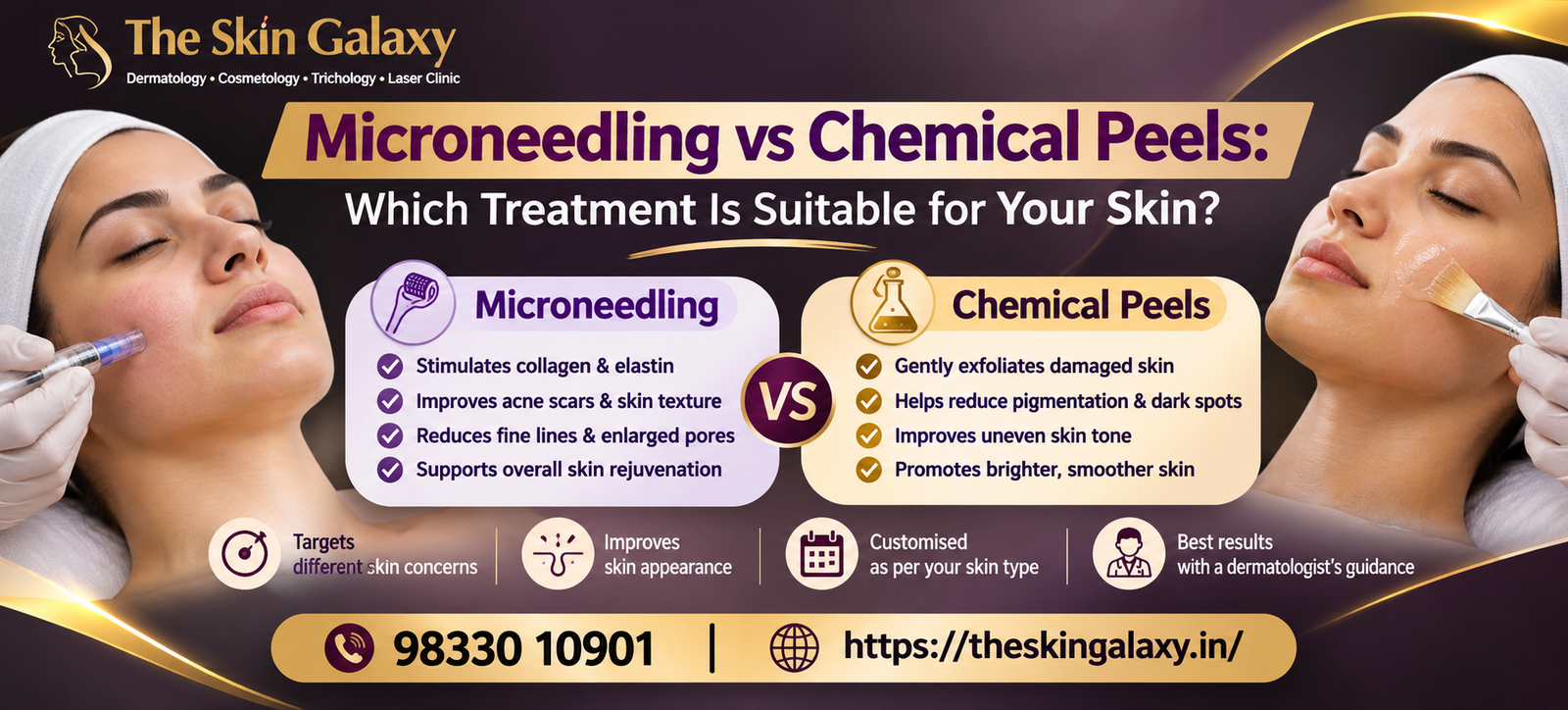
Microneedling vs Chemical Peels: Which Treatment Is Suitable for Your Skin? – The Skin Galaxy
Healthy, smooth, and radiant skin is something many people desire. However, acne scars, pigmentation, fine lines, enlarged pores, and uneven skin texture can affect the appearance of your skin. Modern dermatological treatments offer several ways to address these concerns, with microneedling and chemical peels being two popular options.
When comparing Microneedling vs Chemical Peel, understanding how each treatment works, its benefits, and its suitability for different skin concerns is essential. While microneedling primarily stimulates collagen production, chemical peels promote skin renewal through controlled exfoliation.
At The Skin Galaxy, understanding your individual skin concerns is the first step towards choosing an appropriate skin rejuvenation treatment.
What Is Microneedling?
Microneedling, also known as collagen induction therapy, is a minimally invasive dermatological procedure that uses fine, sterile needles to create controlled micro-injuries in the skin. These micro-injuries stimulate the body’s natural healing response and encourage collagen and elastin production.
Over time, this process can improve skin texture, reduce the appearance of certain acne scars, and make the skin appear smoother.
Microneedling works by encouraging natural skin repair rather than simply exfoliating the outer surface of the skin.
Benefits of Microneedling
-
Reduces the appearance of depressed acne scars.
-
Stimulates collagen and elastin production.
-
Improves uneven skin texture.
-
Reduces the appearance of fine lines and wrinkles.
-
Makes enlarged pores less noticeable.
-
Supports overall skin rejuvenation.
-
Can be suitable for different skin tones when professionally performed.
What Is a Chemical Peel?
A chemical peel is a dermatological treatment that involves applying a specially formulated chemical solution to the skin. This solution promotes controlled exfoliation and encourages the renewal of damaged skin layers.
Chemical peels are commonly used to address pigmentation, sun damage, acne, dullness, and uneven skin tone. The type and strength of the chemical peel depend on the patient’s skin condition, sensitivity, and treatment goals.
Types of Chemical Peels
1. Superficial Chemical Peel
Superficial peels work mainly on the outermost layer of the skin. They are generally used for mild pigmentation, dull skin, minor acne concerns, and uneven skin tone. They typically require less recovery time than stronger peels.
2. Medium Chemical Peel
Medium-depth chemical peels penetrate deeper into the skin and may help improve certain acne scars, pigmentation, sun damage, and fine lines. These treatments generally require more recovery time.
3. Deep Chemical Peel
Deep chemical peels penetrate deeper skin layers and may be recommended for selected cases of significant sun damage or wrinkles. They require careful medical assessment, longer recovery, and professional supervision because of their greater potential risks.
Benefits of Chemical Peels
-
Helps reduce certain types of pigmentation and dark spots.
-
Improves uneven skin tone.
-
Removes damaged surface skin cells.
-
Helps manage certain types of acne.
-
Improves dull and rough skin.
-
Reduces the appearance of superficial fine lines.
-
Promotes a brighter-looking complexion.
Microneedling vs Chemical Peel: Key Differences
Both treatments can improve the appearance of the skin, but their methods and treatment objectives differ.
| Features | Microneedling | Chemical Peel |
|---|---|---|
| Treatment method | Fine, sterile needles | Chemical solution |
| Primary action | Collagen stimulation | Controlled exfoliation |
| Common applications | Depressed acne scars and uneven texture | Pigmentation and surface irregularities |
| Skin penetration | Depends on needle depth | Depends on peel strength |
| Recovery time | Generally a few days | Varies from a few days to several weeks |
| Discomfort | Mild to moderate | Tingling or burning sensation |
| Results | Gradual improvement | Depends on peel type and skin healing |
| Treatment sessions | Multiple sessions may be required | Depends on skin condition and peel strength |
| Potential side effects | Redness, swelling and infection | Peeling, irritation and pigmentation changes |
Understanding the differences between Microneedling vs Chemical Peel can help patients make more informed decisions about their skin treatment.
Microneedling vs Chemical Peel for Different Skin Concerns
1. Acne Scars
Microneedling is often considered for depressed acne scars because collagen stimulation can improve the appearance of uneven skin. Chemical peels may also help with selected scars and surface irregularities. The most suitable treatment depends on the type and severity of scarring. Research has not established that either treatment is consistently superior for all depressed acne scars.
2. Pigmentation and Dark Spots
Superficial chemical peels may be suitable for certain pigmentation concerns, including post-acne dark spots and uneven skin tone. However, choosing the correct peel strength is essential because inappropriate treatment can worsen pigmentation, particularly in darker skin tones.
3. Fine Lines and Wrinkles
Microneedling encourages collagen production, which may gradually soften fine lines. Chemical peels can also improve superficial wrinkles by promoting skin renewal. Treatment selection depends on the depth of wrinkles and overall skin condition.
4. Enlarged Pores
Microneedling may help minimize the appearance of enlarged pores by improving the surrounding skin structure. Chemical peels may also be beneficial when excess oil and clogged pores contribute to their appearance.
5. Dull and Uneven Skin
Chemical peels can help improve dullness by removing damaged surface cells and encouraging skin renewal. Microneedling may be more appropriate when uneven texture is a major concern.
6. Active Acne
Certain superficial chemical peels may help manage mild acne and clogged pores. Microneedling is generally postponed when painful, inflamed, or pus-filled acne is present. A dermatologist should evaluate active acne before recommending either procedure.
Which Treatment Is Suitable for Your Skin Type?
Choosing between Microneedling vs Chemical Peel requires consideration of your skin type, medical history, and individual concerns.
| Skin concern or type | Potential treatment option |
|---|---|
| Oily and acne-prone skin | Selected superficial chemical peels |
| Depressed acne scars | Microneedling or combination treatment |
| Dull and uneven skin | Chemical peel |
| Fine lines and rough texture | Microneedling or chemical peel |
| Sensitive skin | Dermatologist assessment required |
| Dry or dehydrated skin | Skin barrier assessment before treatment |
| Pigmentation-prone skin | Carefully selected professional treatment |
Individuals with sensitive skin, active infections, healing disorders, or a history of abnormal scarring require careful evaluation before undergoing cosmetic procedures.
Can Microneedling and Chemical Peels Be Combined?
Yes, microneedling and chemical peels may be combined as part of a professionally planned skin treatment programme. Microneedling encourages collagen remodelling, while chemical peels promote skin renewal.
Research suggests that combination treatment may offer additional benefits for certain depressed acne scars. However, treatment strength, timing, and session intervals must be carefully planned to avoid excessive skin irritation and damage.
Patients should never attempt to combine professional-strength chemical peels and microneedling at home.
Recovery Time and Aftercare
Proper aftercare plays an important role in skin recovery and treatment outcomes.
Following microneedling, patients may experience temporary redness, swelling, dryness, or skin sensitivity. Chemical peels may cause redness, flaking, or peeling, depending on their strength and depth.
Essential Skin Treatment Aftercare
-
Use a broad-spectrum SPF 30 or higher sunscreen.
-
Avoid excessive sun exposure.
-
Apply a gentle moisturizer recommended by your dermatologist.
-
Avoid harsh scrubs and exfoliating products.
-
Do not scratch or peel healing skin.
-
Avoid retinol and strong skincare acids until medically advised.
-
Follow all post-treatment instructions.
-
Consult your dermatologist if you experience worsening pain, swelling, blistering, or signs of infection.
Common Mistakes to Avoid When Choosing Skin Treatments
Many individuals select cosmetic skin treatments based on social media trends, pricing, or recommendations from friends without understanding their actual skin requirements. Using unsuitable chemical peels or performing microneedling without professional supervision can result in irritation, infection, scarring, and pigmentation changes.
Another common mistake is expecting immediate or permanent results after a single treatment session. Skin improvement takes time, and multiple sessions may be necessary. Choosing a dermatologist-guided treatment plan and maintaining a consistent skincare routine can help support better outcomes.
Why Professional Skin Consultation Is Important
Every individual’s skin responds differently to dermatological treatments. Factors such as skin sensitivity, pigmentation history, acne severity, age, and existing medical conditions influence treatment suitability.
A professional consultation helps identify the underlying skin concern and determine whether microneedling, chemical peels, or another treatment option is appropriate.
At The Skin Galaxy, patients can discuss their skin concerns, treatment expectations, and suitable options for achieving healthier-looking skin.
Frequently Asked Questions (FAQs)
1. Is microneedling better than a chemical peel?
Neither treatment is universally better. Microneedling is often considered for collagen stimulation and depressed acne scars, while chemical peels may be suitable for surface pigmentation and dullness.
2. Which treatment is better for acne scars?
Both treatments may improve certain acne scars. A dermatologist can recommend microneedling, chemical peels, or combination therapy based on the scar type and severity.
3. Are chemical peels painful?
Patients may experience temporary tingling, warmth, or burning during a chemical peel. The level of discomfort depends on the peel strength and individual skin sensitivity.
4. How many microneedling sessions are required?
Many patients undergoing acne scar treatment may require three to five sessions. However, the exact number depends on the skin condition and treatment response.
5. Can chemical peels damage the skin?
Improperly selected or administered chemical peels can cause burns, irritation, pigmentation changes, and scarring. Professional supervision helps reduce these risks.
6. Is microneedling suitable for Indian skin?
Microneedling can be suitable for Indian skin tones when performed by a qualified professional. Individual skin sensitivity and pigmentation risks should be assessed before treatment.
7. Are microneedling and chemical peel results permanent?
Results vary depending on the skin condition, treatment method, lifestyle, sun exposure, and skincare routine. Maintenance treatments may be recommended.
Conclusion
When comparing Microneedling vs Chemical Peel, the right choice depends on your skin type, specific concerns, treatment goals, and expected recovery time. Microneedling focuses on collagen stimulation and skin texture improvement, while chemical peels primarily address surface irregularities, pigmentation, and dullness.
Both treatments offer potential benefits when selected and performed appropriately under professional supervision.
Schedule a skin consultation with The Skin Galaxy to discover a suitable treatment for your individual skin concerns and take the first step towards healthier-looking skin.
Microneedling vs Chemical Peel Microneedling vs Chemical Peel Microneedling vs Chemical Peel Microneedling vs Chemical Peel Microneedling vs Chemical Peel Microneedling vs Chemical Peel Microneedling vs Chemical Peel Microneedling vs Chemical Peel Microneedling vs Chemical Peel Microneedling vs Chemical Peel Microneedling vs Chemical Peel Microneedling vs Chemical Peel Microneedling vs Chemical Peel Microneedling vs Chemical Peel Microneedling vs Chemical Peel Microneedling vs Chemical Peel Microneedling vs Chemical Peel Microneedling vs Chemical Peel Microneedling vs Chemical Peel Microneedling vs Chemical Peel