Foods That May Help Reduce Acne Breakouts | Acne treatment in Bhandup – The Skin Galaxy
Acne is one of the most common skin conditions among teenagers and adults. It develops when excess oil, dead skin cells, and inflammation affect the hair follicles, resulting in blackheads, whiteheads, pimples, pustules, or deeper painful acne.
Hormonal changes, genetics, stress, skincare products, certain medicines, and lifestyle habits may all contribute to breakouts. Diet does not cause every case of acne, and no individual food can cure it. However, research suggests that certain eating patterns may influence acne severity in some people.
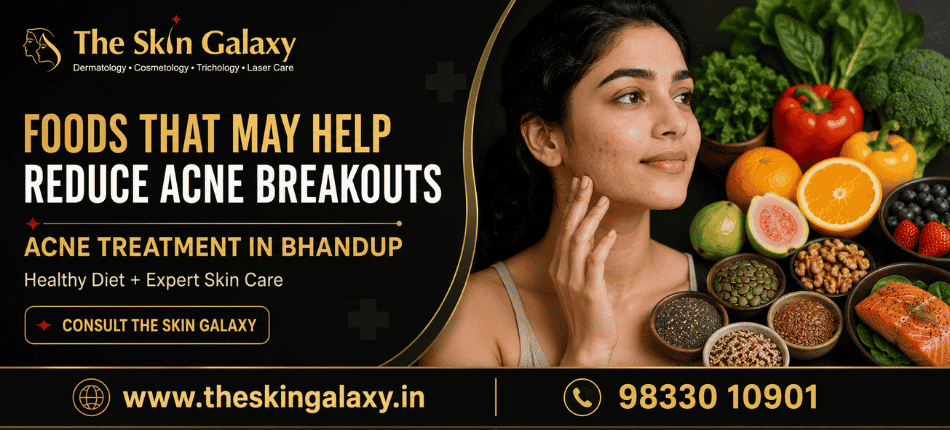
Discover foods that may help reduce acne breakouts and support healthier skin. Get personalized acne treatment in Bhandup.
Can Diet Really Affect Acne?
The connection between diet and acne varies between individuals. High-glycemic foods can cause blood glucose and insulin levels to rise rapidly. These changes may influence hormonal signalling, inflammation, and oil production.
Research suggests that people following a low-glycemic-load diet may experience a reduction in acne lesions. However, dietary changes should be viewed as supportive care rather than a replacement for medical treatment.
1. Low-Glycemic Whole Grains
Low-glycemic whole grains are digested more slowly than refined carbohydrates, helping maintain steadier blood sugar and insulin levels. High insulin levels may influence oil production, inflammation, and hormonal activity associated with acne in some individuals. Oats, brown rice, barley, quinoa, dalia, whole-wheat roti, jowar, bajra, and ragi are healthier alternatives to white bread, sugary cereals, biscuits, and maida-based foods. These grains also provide fibre, which supports digestion and helps make meals more satisfying.
2. Green Leafy Vegetables
Green leafy vegetables contain fibre, vitamins, minerals, and antioxidant compounds that support overall skin health. Spinach, fenugreek leaves, amaranth leaves, drumstick leaves, lettuce, kale, and coriander can be included regularly in meals. These vegetables contribute nutrients that help the body manage inflammation and oxidative stress. They can be added to dal, sabzi, soup, salads, parathas, or whole-grain wraps. For maximum nutritional value, avoid overcooking or regularly preparing them with excessive oil.
3. Colourful Vegetables
Colourful vegetables provide a broad range of vitamins, minerals, antioxidants, and plant nutrients. Carrots, tomatoes, pumpkin, bell peppers, beetroot, broccoli, cucumber, cauliflower, and sweet potatoes are excellent choices for a balanced diet. Each colour group provides different nutrients, so eating a variety is more beneficial than depending on one “miracle” vegetable. Although these foods cannot directly cure acne, they support normal skin function, tissue repair, and overall health.
4. Whole Fruits
Whole fruits provide natural vitamins, antioxidants, water, and dietary fibre. Guava, apples, pears, oranges, papaya, pomegranate, berries, and kiwi can be included as part of an acne-friendly diet. Whole fruits are generally preferable to juices because their fibre slows digestion and makes them more filling. Packaged or sweetened juices may contain large amounts of sugar. People with diabetes, PCOS, or insulin resistance should follow personalized advice about fruit selection and portion sizes.
5. Omega-3-Rich Foods
Omega-3 fatty acids support heart health and help the body regulate inflammatory processes. Since acne is an inflammatory skin condition, omega-3-rich foods may be a useful part of a balanced diet, although they cannot replace acne treatment. Fatty fish such as sardines, salmon, and mackerel are good sources. Vegetarian options include walnuts, flaxseeds, chia seeds, and soybeans. These foods should be consumed in suitable portions because nuts and seeds are nutrient-rich but also calorie-dense.
6. Nuts and Seeds
Nuts and seeds contain healthy fats, protein, zinc, vitamin E, and other nutrients that support general skin health. Almonds, walnuts, pumpkin seeds, sunflower seeds, sesame seeds, flaxseeds, and chia seeds can be consumed in moderate quantities. They make healthier snack options than packaged chips, biscuits, or sweets. Choose unsalted, uncoated, or lightly roasted varieties instead of sugar-coated or heavily fried products. Nuts do not normally need to be avoided unless there is an allergy or a consistent individual trigger.
7. Protein-Rich Foods
Protein supports normal tissue repair and helps keep meals satisfying. Healthy protein sources include dal, pulses, chickpeas, rajma, soybeans, tofu, eggs, fish, and lean chicken. Unsweetened curd may also be included if dairy does not appear to worsen breakouts. Some individuals notice increased acne after starting whey-based protein supplements. If breakouts consistently worsen after using a supplement, consult a dermatologist or qualified nutrition professional before selecting an alternative.
8. Zinc-Containing Foods
Zinc is an important mineral that supports immune function, wound healing, and normal skin repair. Natural sources include pumpkin seeds, chickpeas, lentils, cashews, eggs, seafood, and lean meat. Including these foods in a balanced diet may help meet the body’s regular nutritional requirements. However, high-dose zinc supplements should not be taken for acne without medical guidance. Excessive zinc intake may cause nausea and interfere with the absorption of copper and other essential minerals.
9. Vitamin C-Rich Foods
Vitamin C supports collagen production, normal wound healing, and antioxidant protection. Amla, guava, oranges, mosambi, bell peppers, tomatoes, broccoli, kiwi, and strawberries are useful dietary sources. Regularly including these foods may support skin recovery and general health. However, vitamin C-rich foods cannot independently remove active acne, dark marks, or permanent scars. They should be combined with suitable skincare, sun protection, and dermatologist-recommended treatment.
10. Fermented and Probiotic Foods
Fermented and probiotic foods may support digestive health and the balance of beneficial gut microorganisms. Options include plain curd, unsweetened buttermilk, idli, dosa, and traditionally fermented vegetables. The relationship between gut health and acne is still being studied, so these foods should not be presented as a cure for pimples. People who suspect that dairy worsens their acne can maintain a food diary and discuss their observations with a dermatologist instead of unnecessarily eliminating an entire food group.
11. Adequate Water
Drinking enough water supports hydration, digestion, circulation, and other normal body functions. Water is a healthier daily choice than sugary soft drinks, packaged juices, or energy drinks. Proper hydration may help the skin maintain its normal barrier function, but drinking excessive water will not flush pimples or toxins out of the skin. Water requirements vary according to weather, physical activity, diet, pregnancy, and medical conditions, so intake should be adjusted accordingly.
Foods That May Worsen Acne in Some People
High-Glycemic Foods
Sugary beverages, sweets, refined cereals, white bread, biscuits, and desserts may rapidly increase blood glucose. High-glycemic dietary patterns have been associated with acne in some studies. The NHS also identifies high-GI diets as a possible acne trigger. NHS
Milk and Certain Dairy Products
Some observational studies have found an association between milk consumption and acne. However, this does not mean milk causes breakouts in everyone.
Before eliminating dairy, consider its contribution to protein, calcium, and other nutrients. A dermatologist or dietitian can help identify appropriate alternatives if required.
Whey Protein
Whey-based protein supplements may appear to worsen acne in certain individuals. Observe whether breakouts consistently follow supplement use and seek professional guidance before changing your nutrition plan.
Sugary and Highly Processed Foods
Frequently consuming packaged snacks, fast food, sweetened beverages, and refined bakery products may create an overall high-glycemic dietary pattern. Reducing these foods can support general health even when their effect on acne is limited.
Why Diet Alone May Not Clear Acne
Diet is only one of the factors that may influence acne. Breakouts develop through a combination of excess oil production, clogged follicles, bacterial activity, inflammation, hormonal changes, genetics, stress, certain medicines, and unsuitable skincare products. Therefore, even a healthy diet may not completely clear moderate, severe, hormonal, nodular, or cystic acne. These conditions may require prescription creams, oral medicines, hormonal evaluation, chemical peels, or other dermatologist-supervised procedures. Early professional treatment is especially important when pimples are painful, recurring, or leaving persistent dark marks and scars.
When Should You Consult a Dermatologist?
Consult a dermatologist if:
- Acne is painful, deep, or widespread
- Breakouts are leaving scars
- Dark marks remain after every pimple
- Over-the-counter products are not helping
- Acne suddenly becomes severe
- Breakouts occur with irregular periods or excess facial hair
- Acne is affecting confidence or emotional well-being
- You need safe treatment during pregnancy
Acne Treatment at The Skin Galaxy
At The Skin Galaxy, acne treatment is planned according to the patient’s skin type, acne severity, sensitivity, previous treatments, and possible hormonal or lifestyle triggers.
Instead of following restrictive diets or unreliable home remedies, patients can receive a structured treatment plan that combines appropriate skincare, medication, procedures, and practical lifestyle advice.
Acne treatment in Bhandup Acne treatment in Bhandup Acne treatment in Bhandup Acne treatment in Bhandup Acne treatment in Bhandup Acne treatment in Bhandup Acne treatment in Bhandup Acne treatment in Bhandup Acne treatment in Bhandup Acne treatment in Bhandup Acne treatment in Bhandup Acne treatment in Bhandup Acne treatment in Bhandup Acne treatment in Bhandup