
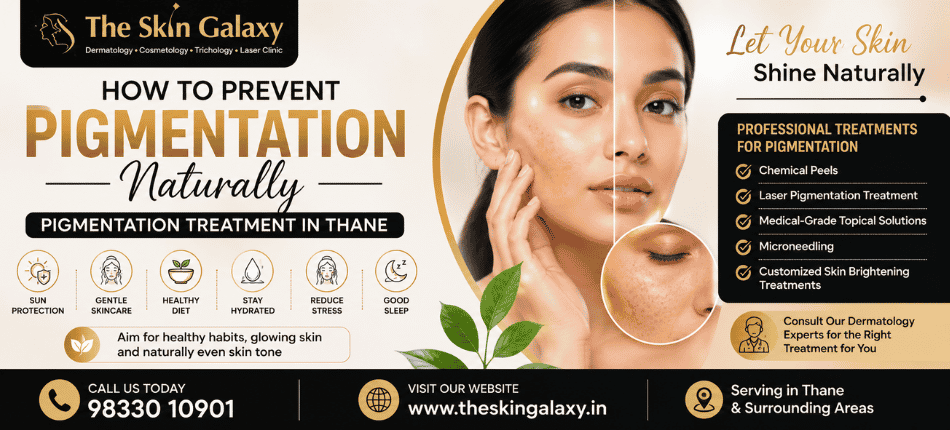
How to Prevent Pigmentation Naturally | Pigmentation Treatment in Thane – The Skin Galaxy
Healthy, glowing skin is something everyone desires, but pigmentation can often make the skin appear uneven and dull. Pigmentation is a common skin concern that affects people of all ages and skin types. It occurs when excess melanin, the pigment responsible for skin color, is produced in certain areas, leading to dark patches, spots, or discoloration. While several medical treatments are available, adopting healthy skincare habits and preventive measures can significantly reduce the risk of pigmentation and help maintain an even complexion naturally.
Learn how to prevent pigmentation naturally with expert skincare tips and discover effective Pigmentation Treatment in Thane at The Skin Galaxy.
What Is Skin Pigmentation?
Skin pigmentation refers to changes in the natural color of the skin due to excess or uneven production of melanin. It often appears as dark spots, patches, freckles, melasma, or post-inflammatory marks after acne or skin injuries. Pigmentation can develop on the face, neck, hands, and other sun-exposed areas. While most pigmentation is harmless, it may affect confidence and, in some cases, indicate an underlying skin condition that requires professional evaluation.
Common Causes of Pigmentation
Pigmentation develops when the skin produces excess melanin, the natural pigment responsible for skin color. One of the most common causes is prolonged exposure to ultraviolet (UV) rays, which stimulates melanin production and leads to sunspots or tanning. Hormonal changes during pregnancy, menopause, or while taking oral contraceptives can trigger melasma, a common form of pigmentation. Other contributing factors include acne scars, skin injuries, inflammation, aging, certain medications, genetic predisposition, and underlying medical conditions. Repeated friction, harsh cosmetic treatments, and improper skincare products can also damage the skin and result in uneven pigmentation. Identifying the underlying cause is essential for choosing the most effective prevention and treatment plan.
Signs and Symptoms of Pigmentation
Pigmentation usually appears as darkened areas of skin that differ from the surrounding complexion. These may include brown, black, or gray patches on the face, neck, hands, or other sun-exposed areas. People may notice freckles, age spots, melasma, or dark marks left behind after acne or skin injuries. Uneven skin tone, dullness, and persistent discoloration that does not fade over time are also common signs of pigmentation. While most pigmentation is harmless, rapidly changing spots, irregular borders, or unusual skin discoloration should always be evaluated by a dermatologist to rule out other skin conditions.
How to Prevent Pigmentation Naturally
Preventing pigmentation naturally begins with protecting your skin from daily damage and maintaining healthy skincare habits.
1. Use Sunscreen Every Day
Applying a broad-spectrum sunscreen with SPF 30 or higher protects the skin from harmful UV rays that trigger melanin production. Sunscreen should be applied daily, even on cloudy days.
2. Follow a Gentle Skincare Routine
Use mild cleansers and moisturizers suitable for your skin type. Avoid harsh scrubbing or aggressive products that may irritate the skin and worsen pigmentation.
3. Stay Hydrated
Drinking enough water keeps your skin hydrated, improves skin barrier function, and supports natural skin repair.
4. Eat a Healthy Diet
A balanced diet rich in fruits, vegetables, Vitamin C, Vitamin E, antioxidants, and healthy fats promotes healthy skin and helps reduce oxidative damage.
5. Avoid Picking Pimples
Picking or squeezing acne can lead to post-inflammatory hyperpigmentation, leaving dark marks that may persist for months.
6. Wear Protective Clothing
Using hats, sunglasses, umbrellas, and protective clothing minimizes direct sun exposure and reduces the risk of pigmentation.
7. Manage Hormonal Changes
Women experiencing hormonal pigmentation should consult a dermatologist for appropriate advice and treatment options.
Natural Remedies That May Help Reduce Pigmentation
Certain natural ingredients may support healthy skin when used carefully as part of a regular skincare routine. Aloe vera is known for its soothing properties and may help improve skin healing, while vitamin C-rich foods support collagen production and skin repair. Antioxidant-rich fruits and vegetables help protect the skin from free radical damage. Green tea extracts, turmeric, and licorice extract are also commonly used in skincare for their skin-brightening properties. However, natural remedies may not be effective for all types of pigmentation, and professional treatment is recommended for persistent or severe discoloration.
Skincare Habits That Prevent Pigmentation
Maintaining a consistent skincare routine is one of the most effective ways to prevent pigmentation. Applying a broad-spectrum sunscreen with SPF 30 or higher every day protects the skin from harmful UV rays, which are a leading cause of pigmentation. Cleansing the face gently, using a suitable moisturizer, and avoiding harsh scrubs or chemical products help preserve the skin’s natural barrier. It is also important to avoid picking pimples, as this can lead to post-inflammatory hyperpigmentation. Staying hydrated, eating antioxidant-rich foods, getting adequate sleep, and following a dermatologist-recommended skincare routine further support healthy, even-toned skin. These daily habits not only help prevent pigmentation but also improve overall skin health and radiance.
When Should You Consult a Dermatologist?
While mild pigmentation may improve with proper skincare, persistent or worsening pigmentation requires professional evaluation. You should consult a dermatologist if dark patches continue to spread, become darker, recur frequently, or do not improve despite using sunscreen and skincare products. Pigmentation accompanied by itching, bleeding, irregular borders, or sudden changes in appearance should also be examined promptly. A dermatologist can accurately diagnose the underlying cause and recommend advanced treatment options tailored to your skin type.
Professional Treatments for Pigmentation
When pigmentation does not improve with home care or natural remedies, professional dermatological treatments can provide faster and more effective results. Depending on the type and severity of pigmentation, a dermatologist may recommend chemical peels, laser pigmentation treatment, medical-grade topical creams, microneedling, or customized skin-brightening procedures. These treatments work by reducing excess melanin, promoting skin cell renewal, and improving overall skin texture and tone. Since every individual’s skin type and pigmentation pattern are different, a personalized treatment plan ensures safe, targeted, and long-lasting results while minimizing the risk of recurrence.
Benefits of Early Pigmentation Treatment
Seeking treatment at an early stage offers several advantages. Early intervention helps prevent pigmentation from becoming deeper and more difficult to treat while improving overall skin tone and texture. It reduces the appearance of dark spots more effectively, minimizes the risk of permanent discoloration, and restores confidence by enhancing the skin’s natural radiance. Early treatment also allows dermatologists to identify any underlying medical or hormonal causes, ensuring a more targeted and successful treatment plan with long-lasting results.
Why Choose The Skin Galaxy for Pigmentation Treatment in Thane?
The Skin Galaxy offers comprehensive diagnosis and advanced treatment for all types of pigmentation using evidence-based dermatological care. Our experienced dermatologists evaluate the root cause of pigmentation and create personalized treatment plans based on your skin type and specific concerns. We provide advanced laser treatments, chemical peels, medical skincare, and customized solutions designed to safely reduce pigmentation while improving overall skin health. With modern technology, expert care, and a patient-focused approach, The Skin Galaxy is a trusted destination for Pigmentation Treatment in Thane, helping patients achieve clearer, healthier, and more radiant skin.
Conclusion
Pigmentation is a common but manageable skin concern. By following healthy skincare habits, protecting your skin from sun damage, maintaining a balanced lifestyle, and seeking timely dermatological advice, you can significantly reduce the risk of pigmentation and maintain an even skin tone naturally. If pigmentation persists despite preventive measures, professional treatment can provide safe and effective results. Consulting an experienced dermatologist ensures accurate diagnosis and a customized treatment plan that helps restore healthy, glowing skin.
Pigmentation Treatment in Thane Pigmentation Treatment in Thane Pigmentation Treatment in Thane Pigmentation Treatment in Thane Pigmentation Treatment in Thane Pigmentation Treatment in Thane Pigmentation Treatment in Thane Pigmentation Treatment in Thane Pigmentation Treatment in Thane Pigmentation Treatment in Thane Pigmentation Treatment in Thane Pigmentation Treatment in Thane