
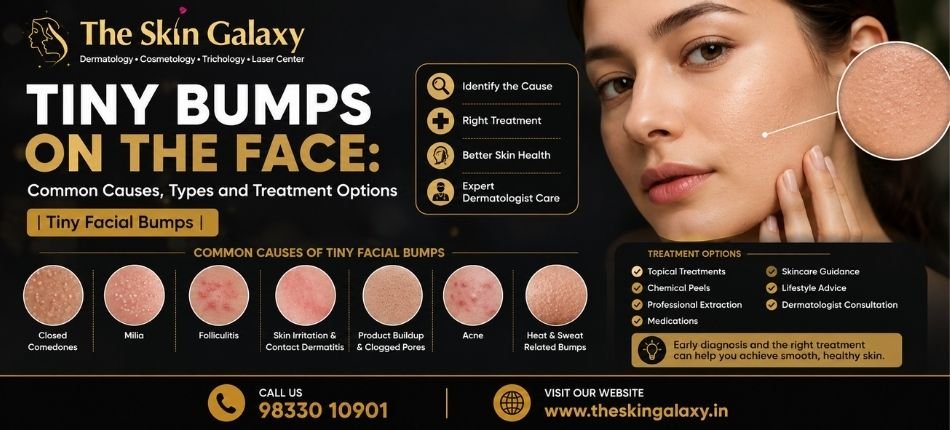
Tiny Bumps on the Face: Common Causes, Types and Treatment Options | Tiny Facial Bumps – The Skin Galaxy
Have you noticed tiny bumps on your face that make your skin feel rough or uneven even though they don’t look like typical pimples? Tiny facial bumps are common and can occur on the forehead, cheeks, chin, around the eyes, or along the jawline.
These bumps can have several possible causes. Some are related to clogged pores, while others may be due to milia, irritation, folliculitis, or certain skin conditions. Because different conditions can look similar, identifying the cause is important before starting treatment.
Using strong acne products on every type of bump can sometimes irritate the skin rather than improve it.
This guide from The Skin Galaxy explains common causes of tiny facial bumps, treatment approaches, skincare tips, and when you should consider consulting a dermatologist.
What Are Tiny Facial Bumps?
Tiny facial bumps are small raised areas that change the smooth texture of the skin. Depending on their cause, they may be skin-coloured, white, red, itchy, inflamed, or barely noticeable.
They can appear individually or as clusters and may occur with other symptoms such as:
- Rough or uneven skin texture
- Redness
- Itching
- Dryness
- Oiliness
- Blackheads or whiteheads
- Occasional inflammation
The appearance and location of the bumps can provide useful clues, but professional evaluation may sometimes be needed for an accurate diagnosis.
1. Closed Comedones – A Common Cause of Tiny Bumps
Closed comedones, commonly called whiteheads, develop when pores become blocked with excess oil and dead skin cells while the pore opening remains closed. They often appear as small, skin-coloured or whitish bumps on the forehead, cheeks, chin, and jawline. Ingredients such as salicylic acid or topical retinoids may help in appropriate cases. Avoid squeezing them, as this can lead to inflammation, pigmentation, or scarring.
What Can Help Closed Comedones?
Depending on your skin type and severity, treatment may involve ingredients such as salicylic acid or topical retinoids under appropriate guidance.
Avoid repeatedly squeezing the bumps because this can increase irritation, inflammation, and the risk of marks.
2. Milia
Milia are tiny, firm, white or yellowish bumps caused by keratin becoming trapped beneath the surface of the skin. They commonly appear around the eyes, cheeks, and nose and are different from acne or ordinary whiteheads. Some milia may disappear naturally, while persistent ones can be professionally removed by a dermatologist. Avoid trying to pierce or squeeze milia at home, as this can damage the skin.
How Are Milia Treated?
Some milia may disappear naturally. Persistent lesions can be evaluated and, when appropriate, removed by a dermatologist using professional techniques.
Trying to squeeze or pierce milia yourself can injure the skin and increase the risk of infection or scarring.
3. Folliculitis
Folliculitis refers to inflammation of hair follicles. It can sometimes produce clusters of small bumps that may resemble acne.
Depending on the underlying cause, bumps may be red, itchy, tender, or occasionally contain pus.
Because folliculitis can have different causes—including bacterial, fungal/yeast-related, or irritation-related factors—treatment should be based on the correct diagnosis.
Using random antifungal or antibacterial products without diagnosis is not recommended.
4. Skin Irritation and Contact Dermatitis
Tiny facial bumps can sometimes develop due to irritation or an allergic reaction to skincare, makeup, fragrances, or haircare products. The bumps may occur along with redness, itching, dryness, burning, or increased skin sensitivity. If symptoms begin after introducing a new product, discontinue the suspected product and keep your skincare routine gentle. Persistent or severe reactions should be evaluated by a dermatologist.
5. Acne
Not all acne appears as large red pimples.
Early or comedonal acne can present as numerous small bumps, blackheads, and whiteheads.
Factors that can contribute to acne include increased sebum production, follicular blockage, inflammation, hormones, and certain cosmetic or hair products.
Treatment should be selected according to the type and severity of acne rather than simply trying multiple products simultaneously.
6. Heat and Sweat-Related Bumps
Hot and humid conditions, sweating, friction, and occlusive clothing or products can sometimes contribute to small facial bumps or irritation.
People who exercise frequently or spend long periods outdoors may notice symptoms becoming worse with sweating.
Gentle cleansing after heavy sweating and avoiding unnecessarily heavy or occlusive products may help some people.
7. Products That May Be Clogging Your Pores
Certain heavy skincare, makeup, sunscreen, or haircare products may contribute to clogged pores and tiny facial bumps, particularly in acne-prone skin. Hair oils and styling products can sometimes affect the forehead and hairline. Choose products suited to your skin type and observe how your skin responds. If bumps repeatedly appear after using a particular product, consider discussing suitable alternatives with a dermatologist.
Why Is My Forehead Covered in Tiny Bumps?
The forehead is a particularly common area for tiny facial bumps.
Possible contributing factors include clogged pores, acne, sweating, hair products, dandruff-related conditions, friction, or folliculitis.
If forehead bumps persist despite a simple skincare routine, a dermatologist can help distinguish between these possibilities.
How Are Tiny Facial Bumps Diagnosed?
A dermatologist will typically assess the:
- Appearance of the bumps
- Location and distribution
- Presence of itching or pain
- Duration of symptoms
- Skin type
- Current skincare routine
- Cosmetic and haircare products
- Medical and medication history where relevant
Because several skin conditions can resemble one another, diagnosis is important before choosing prescription treatment.
Treatment Options for Tiny Facial Bumps
Treatment depends entirely on the underlying cause.
Salicylic Acid
Salicylic acid is a beta-hydroxy acid commonly used for acne-prone and congested skin. It can help remove excess dead skin cells and reduce pore blockage.
However, excessive use may cause dryness or irritation.
Topical Retinoids
Topical retinoids can help normalize skin-cell turnover and are commonly used for comedonal acne.
They can cause irritation, particularly when first introduced, and some retinoids require special precautions during pregnancy. Professional guidance is advisable.
Professional Extraction
For certain persistent lesions such as milia, professional extraction may be appropriate.
Avoid attempting extraction with needles or other tools at home.
Chemical Peels
Dermatologist-supervised chemical peels may be considered for selected patients with acne, congestion, or uneven texture.
The type and strength of peel should be chosen according to skin type and condition.
Treatment for Folliculitis or Dermatitis
When bumps are caused by folliculitis, dermatitis, or another condition, targeted treatment may be necessary.
This is why diagnosing the bumps before treating them is so important.
Skincare Routine for Bumpy Facial Skin
A complicated 10-step routine isn’t necessary.
A simple routine may include:
Morning: Gentle cleanser → appropriate moisturizer → broad-spectrum sunscreen.
Evening: Gentle cleanser → dermatologist-recommended active treatment if required → moisturizer.
Introduce active ingredients gradually instead of starting several acids, scrubs, and treatments at once.
What Should You Avoid?
Avoid picking, squeezing, aggressive scrubbing, and excessive exfoliation, as these can irritate the skin and increase the risk of marks or scars. Don’t introduce several strong acids, retinoids, or acne treatments at the same time without proper guidance. Avoid DIY extraction and frequently switching skincare products. A simple, consistent routine based on the actual cause of the bumps is generally a safer approach.
When Should You See a Dermatologist?
Consider consulting a dermatologist when tiny facial bumps:
- Persist for several weeks
- Continue to spread
- Become painful or significantly itchy
- Frequently become inflamed
- Leave dark marks or scars
- Do not improve despite appropriate basic skincare
- Suddenly appear after a medication or product
- Are difficult to identify
Professional diagnosis can prevent unnecessary trial-and-error treatment.
Conclusion
Tiny facial bumps can look similar but have very different causes. Closed comedones, milia, acne, folliculitis, irritation, and product-related congestion are among the possibilities.
Instead of treating every bump as acne, focus on identifying the cause and maintaining a simple, consistent skincare routine.
If the bumps persist, spread, itch, become inflamed, or do not respond to basic skincare, consult a dermatologist for an accurate diagnosis and personalized treatment plan.
Tiny Facial Bumps Tiny Facial Bumps Tiny Facial Bumps Tiny Facial Bumps Tiny Facial Bumps Tiny Facial Bumps Tiny Facial Bumps Tiny Facial Bumps Tiny Facial Bumps Tiny Facial Bumps Tiny Facial Bumps Tiny Facial Bumps Tiny Facial Bumps Tiny Facial Bumps