
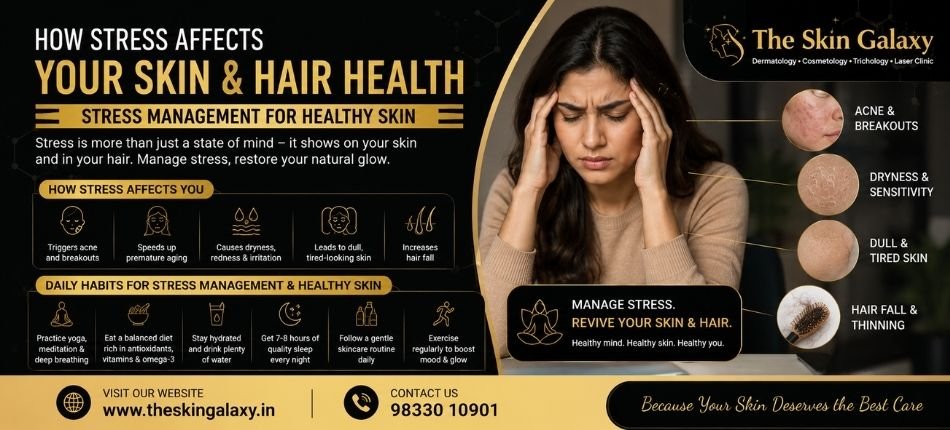
How Stress Affects Your Skin and Hair Health | Stress Management for Healthy Skin – The Skin Galaxy
Introduction
In today’s fast-paced lifestyle, stress has become a common part of daily life. While occasional stress is normal, chronic stress can have a significant impact on your overall health, including your skin and hair. Many people notice increased acne breakouts, premature aging, dull skin, hair fall, and scalp issues during stressful periods. Understanding the connection between stress and skin health is essential for maintaining a healthy appearance and preventing long-term damage.
Stress can impact your skin and hair health. Learn proven Stress Management for Healthy Skin techniques to reduce acne, premature aging, dull skin, and hair fall naturally.
The Science Behind Stress and Skin Health
When you experience stress, your body releases stress hormones such as cortisol and adrenaline. While these hormones help the body respond to challenging situations, prolonged elevation of cortisol can negatively affect various bodily functions, including skin repair, hydration, and hair growth cycles.
Excess cortisol can increase oil production, weaken the skin barrier, trigger inflammation, and disrupt normal hair growth patterns. Over time, this can contribute to several dermatological conditions.
Common Skin Problems Caused by Stress
1. Acne Breakouts
Stress stimulates the sebaceous glands to produce more oil, which can clog pores and lead to acne breakouts. Individuals who already have acne-prone skin may notice more frequent and severe breakouts during stressful periods.
Stress-related acne commonly appears on the face, jawline, chin, chest, and back. Increased inflammation also makes existing acne lesions more noticeable and slower to heal.
2. Premature Aging
Chronic stress accelerates the aging process by increasing oxidative stress in the body. Elevated cortisol levels can break down collagen and elastin, which are essential proteins responsible for maintaining skin firmness and elasticity.
As collagen production decreases, fine lines, wrinkles, and sagging skin become more noticeable, causing the skin to appear older than its actual age.
3. Dry and Sensitive Skin
Chronic stress can weaken the skin’s natural protective barrier, making it more difficult for the skin to retain moisture and defend itself against environmental irritants. As cortisol levels increase, the skin may lose hydration, resulting in dryness, flakiness, redness, and irritation. Individuals who already suffer from skin conditions such as eczema, psoriasis, or rosacea may notice more frequent flare-ups during stressful periods. Sensitive skin can also become more reactive to skincare products, weather changes, and pollution. Managing stress effectively, staying hydrated, and following a gentle skincare routine can help restore the skin barrier and reduce sensitivity.
4. Dull and Tired-Looking Skin
Stress can significantly affect blood circulation and reduce the delivery of oxygen and essential nutrients to skin cells. As a result, the skin may lose its natural radiance and appear dull, tired, and uneven in tone. Additionally, stress often disrupts sleep patterns, preventing the skin from undergoing its normal nighttime repair process. Lack of quality sleep can lead to dark circles, puffiness, and a fatigued appearance. Over time, prolonged stress can make the complexion look lifeless and aged. Incorporating stress-management techniques, maintaining a healthy lifestyle, and following a proper skincare regimen can help restore a healthy glow and improve overall skin vitality.
How Stress Affects Hair Health
1. Increased Hair Fall
One of the most common effects of stress on hair is excessive hair shedding, known as Telogen Effluvium. Stress pushes a large number of hair follicles into the resting phase, causing noticeable hair loss several weeks or months later.
Many individuals experience significant hair thinning after major life events, emotional trauma, illness, or prolonged work-related stress.
2. Slower Hair Growth
Stress can interfere with the normal hair growth cycle. Elevated cortisol levels may reduce nutrient delivery to hair follicles, slowing growth and affecting hair quality.
3. Scalp Problems
Stress may worsen existing scalp conditions such as:
- Dandruff
- Seborrheic Dermatitis
- Scalp Psoriasis
- Itching and Irritation
Inflammation caused by stress often aggravates these conditions and makes them more difficult to manage.
Daily Habits for Stress Management and Healthy Skin
Maintaining healthy skin starts with managing stress through simple daily habits. Begin your day with mindfulness practices such as meditation, deep breathing exercises, or yoga to calm the mind and reduce cortisol levels. Regular physical activity, even a 30-minute walk, helps improve blood circulation and releases endorphins that naturally reduce stress while promoting a healthy glow. Eating a balanced diet rich in fruits, vegetables, lean proteins, and antioxidants nourishes the skin from within and helps combat inflammation. Staying well-hydrated throughout the day keeps the skin moisturized, supports detoxification, and enhances overall skin health.
Equally important is getting 7–8 hours of quality sleep each night, as the skin undergoes repair and regeneration during sleep. Establishing a consistent skincare routine that includes cleansing, moisturizing, and sun protection helps maintain the skin barrier and prevent stress-related skin issues. Limiting excessive caffeine, processed foods, and screen time can also contribute to better mental well-being and healthier skin. By incorporating these simple habits into your daily routine, you can effectively manage stress, improve your overall health, and maintain radiant, youthful-looking skin.
Conclusion
Stress affects much more than your mental health—it can significantly impact your skin and hair. From acne breakouts and premature aging to excessive hair fall and scalp issues, chronic stress can create noticeable changes in your appearance.
By managing stress effectively and seeking professional care when needed, you can protect your skin and hair health while maintaining a youthful and radiant appearance.
Stress Management for Healthy Skin Stress Management for Healthy Skin Stress Management for Healthy Skin Stress Management for Healthy Skin Stress Management for Healthy Skin Stress Management for Healthy Skin Stress Management for Healthy Skin Stress Management for Healthy Skin Stress Management for Healthy Skin Stress Management for Healthy Skin