
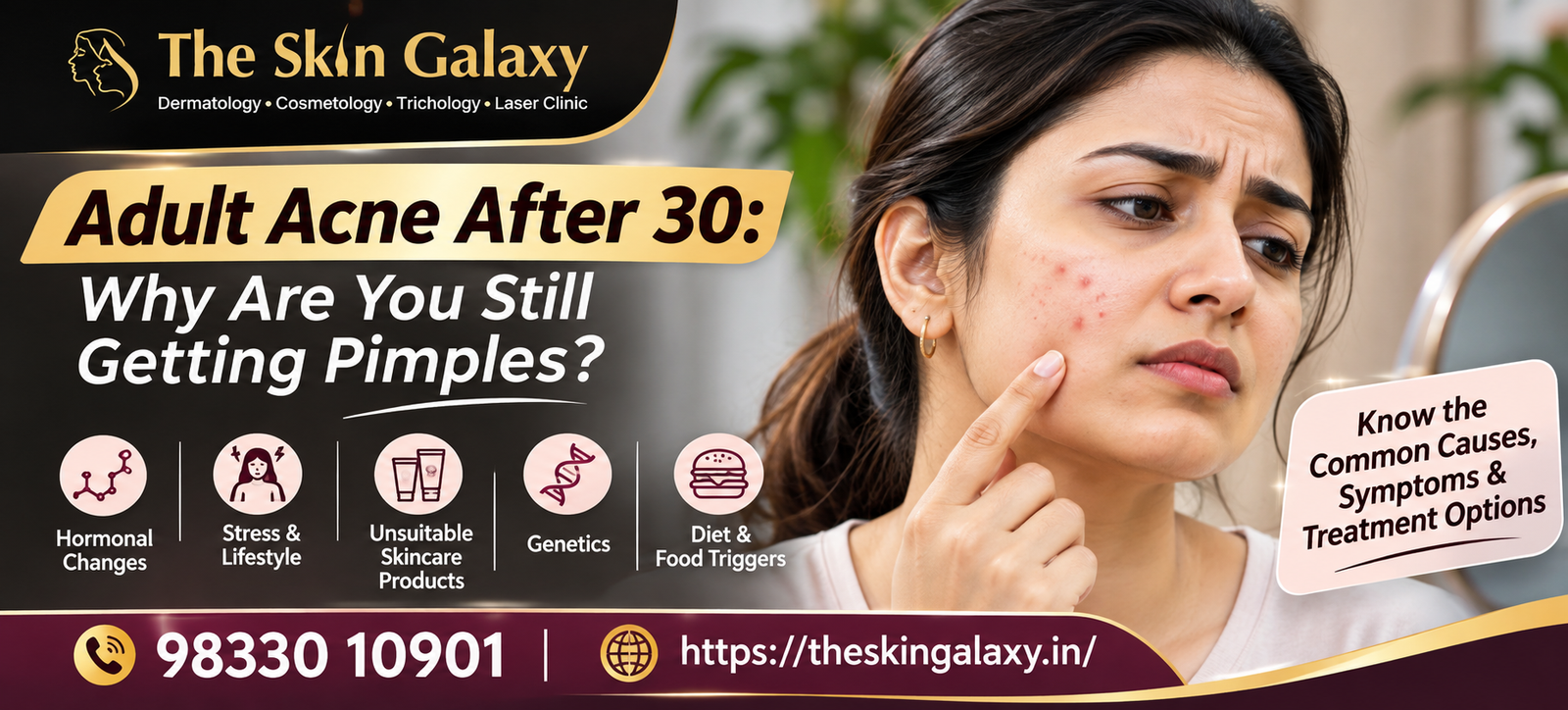
Adult Acne After 30: Why Are You Still Getting Pimples? – The Skin Galaxy
Acne is often associated with teenage years, but many adults continue to experience pimples well into their 30s, 40s, and even 50s. If you thought breakouts would disappear after adolescence, dealing with recurring acne as an adult can feel frustrating.
Adult acne after 30 is a common skin concern that can develop due to hormonal fluctuations, excess oil production, clogged pores, inflammation, genetics, and several lifestyle-related factors.
Unlike teenage acne, adult acne may appear repeatedly around the chin, jawline, cheeks, and lower face. Some people experience occasional breakouts, while others struggle with persistent pimples, painful cystic acne, or dark marks left behind after inflammation.
Understanding the underlying adult acne causes is essential for choosing appropriate skincare products, preventing unnecessary irritation, and identifying when professional dermatological treatment may be needed.
In this article, The Skin Galaxy explains why acne can continue after 30, the common triggers behind adult breakouts, effective treatment options, and practical ways to maintain healthier skin.
What Is Adult Acne?
Adult acne refers to acne that persists beyond adolescence or develops for the first time during adulthood. It commonly affects people aged 25 and above.
Adult acne can be classified into two main types:
1. Persistent Adult Acne
This occurs when acne begins during adolescence and continues into adulthood. Individuals may experience recurring pimples, blackheads, whiteheads, or inflammatory lesions over several years.
2. Late-Onset Adult Acne
Late-onset acne develops for the first time during adulthood, even in people who previously had relatively clear skin.
Both types can affect the face, chest, shoulders, and back. Adult acne can occur in men and women, although hormonal influences make it particularly common among adult women.
10 Common Adult Acne Causes After 30
Understanding the factors contributing to breakouts can help you make informed decisions about skincare and treatment.
1. Hormonal Imbalances and Fluctuations
Hormonal changes are among the most important adult acne causes, particularly in women.
Androgens can stimulate sebaceous glands to produce more oil. Excess sebum, combined with dead skin cells, can clog hair follicles and contribute to acne development.
Hormonal fluctuations may occur during:
-
Menstrual cycles
-
Pregnancy and the postpartum period
-
Perimenopause
-
Changes in hormonal contraception
-
Certain endocrine conditions, including PCOS
Hormonal acne frequently appears around the chin and jawline, although its location alone cannot confirm a hormonal cause.
2. Chronic Stress and Emotional Pressure
Stress does not directly cause every case of acne, but it can contribute to worsening existing breakouts.
During stressful periods, hormonal and inflammatory changes may influence oil production and skin inflammation.
Adults experiencing demanding work schedules, inadequate sleep, or ongoing emotional stress may notice more frequent acne flare-ups.
Stress can also indirectly affect acne through changes in skincare habits, sleep quality, and behaviours such as touching or picking at the skin.
3. Excess Sebum Production
Sebum is the natural oil produced by the skin’s sebaceous glands. It helps maintain the skin barrier and prevents excessive moisture loss.
However, increased sebum production can contribute to blocked pores.
When excess oil mixes with dead skin cells inside hair follicles, it creates conditions that encourage acne formation.
Adults with oily or combination skin may experience blackheads, whiteheads, and inflammatory pimples, although acne can also develop in people with dry skin.
4. Using Unsuitable Skincare Products
Certain skincare and cosmetic products may contribute to clogged pores or skin irritation.
Heavy moisturisers, oily makeup, and some haircare products can aggravate acne in susceptible individuals.
Common skincare mistakes include using too many active ingredients, frequently changing products, and applying harsh exfoliating scrubs.
Choosing non-comedogenic products and maintaining a consistent skincare routine may help reduce product-related breakouts.
5. Genetics and Family History
Genetics can influence an individual’s susceptibility to acne.
If your parents or close family members experienced persistent adult acne, you may have an increased likelihood of developing similar skin concerns.
Genetic factors can affect skin oil production, inflammatory responses, and the tendency of hair follicles to become blocked.
Although genetics cannot be changed, suitable treatment can help manage acne and reduce the risk of complications.
6. Diet and Certain Food Triggers
Diet may contribute to acne in some individuals, although the relationship varies from person to person.
Research suggests that high-glycaemic diets may worsen acne in susceptible people. Some studies have also identified associations between dairy milk consumption and acne.
Foods that may be relevant for some individuals include sugary beverages, refined carbohydrates, and certain dairy products.
However, there is no universal acne diet, and unnecessary food restrictions are not recommended.
A balanced diet containing vegetables, fruits, whole grains, and adequate protein supports overall health.
7. Inadequate Sleep and Lifestyle Habits
Poor sleep can influence stress regulation, hormonal balance, and general health.
Although insufficient sleep is not an established direct cause of acne, it may contribute indirectly to breakouts in some individuals.
Irregular routines, inadequate rest, and inconsistent skincare habits can make acne management more challenging.
Maintaining regular sleep patterns and a manageable daily routine may support overall skin health.
8. Over-Exfoliation and Skin Barrier Irritation
Exfoliation can help remove dead skin cells, but excessive exfoliation may irritate the skin.
Using strong exfoliating acids, harsh scrubs, or multiple acne treatments simultaneously can cause redness, dryness, burning, and sensitivity.
An irritated skin barrier may make existing acne harder to manage and reduce tolerance to effective treatments.
Gentle cleansing, moisturising, and introducing active ingredients gradually can help minimise irritation.
9. Medications and Underlying Medical Conditions
Certain medications can trigger acne or acne-like eruptions.
Examples include some corticosteroids, testosterone-containing treatments, and certain other prescription medications.
Underlying conditions such as polycystic ovary syndrome may also contribute to acne through hormonal changes.
If acne begins suddenly after starting medication or occurs alongside irregular periods, excessive facial hair growth, or scalp hair thinning, medical evaluation may be appropriate.
Do not discontinue prescribed medication without consulting your healthcare professional.
10. Environmental and Occupational Factors
Heat, humidity, friction, and exposure to certain oils or workplace substances can aggravate acne.
Wearing tight masks, helmets, or equipment that repeatedly rubs against the skin may contribute to acne mechanica.
In humid environments, sweat and friction can make existing breakouts more uncomfortable.
Gentle cleansing after sweating and avoiding unnecessary friction may help manage these triggers.
Signs and Symptoms of Adult Acne
Adult acne can appear in different forms depending on skin type, severity, and underlying factors.
1. Whiteheads and Blackheads
Whiteheads develop when pores become blocked and remain closed, while blackheads occur when clogged pores remain open. Blackheads appear dark because the material inside the pore undergoes oxidation, not because of dirt.
2. Red and Inflamed Pimples
Inflammatory acne can produce red, tender bumps known as papules and pus-filled lesions called pustules. These may appear on the cheeks, forehead, chin, and jawline.
3. Painful Nodules and Cysts
Severe acne may cause deep, painful lumps beneath the skin. These lesions can persist for weeks and carry a greater risk of permanent scarring.
4. Recurring Chin and Jawline Acne
Some adults experience breakouts concentrated around the lower face, particularly near their menstrual cycle. Although this pattern may suggest hormonal influences, a dermatologist must consider other possible causes.
5. Post-Acne Dark Spots and Scarring
After pimples heal, they may leave dark marks known as post-inflammatory hyperpigmentation (PIH). This is particularly noticeable in skin tones prone to pigmentation. Severe or prolonged inflammation may also cause permanent acne scars.
Adult Acne vs Teenage Acne: What’s the Difference?
| Factor | Teenage Acne | Adult Acne |
|---|---|---|
| Age | Usually during puberty | Commonly after 25 |
| Common triggers | Puberty-related hormonal changes | Hormonal fluctuations, genetics, stress, products |
| Affected areas | Forehead, nose, cheeks, back | Face, jawline, chin, chest, back |
| Skin concerns | Oiliness and clogged pores | Acne with dryness, sensitivity, or pigmentation |
| Duration | May improve after adolescence | Can persist or recur for years |
| Treatment | Based on acne severity | Based on severity, skin tolerance, and individual factors |
Both teenage and adult acne involve similar biological processes, but treatment choices may differ because of age, pregnancy considerations, skin sensitivity, and other health conditions.
Effective Adult Acne Treatment Options
The most suitable adult acne treatment depends on acne severity, skin sensitivity, previous treatments, and possible contributing conditions.
1. Topical Retinoids
Topical retinoids such as adapalene and tretinoin help prevent clogged pores and reduce the formation of new acne lesions.
They may be particularly useful for blackheads, whiteheads, and recurring acne. Some retinoids can also improve post-acne pigmentation.
However, retinoids can initially cause dryness, irritation, and peeling. They should be introduced according to professional advice.
Important: Topical retinoids should not be used during pregnancy or when planning pregnancy.
2. Benzoyl Peroxide
Benzoyl peroxide is commonly recommended for inflammatory acne.
It helps reduce acne-associated bacteria and can improve red, inflamed pimples. It is available in different strengths and formulations.
Some individuals experience dryness or irritation, so selecting an appropriate concentration and frequency is important.
3. Salicylic Acid
Salicylic acid is a beta-hydroxy acid that helps exfoliate inside pores and reduce congestion.
It may benefit people experiencing oily skin, blackheads, and whiteheads.
However, using salicylic acid alongside several other strong active ingredients without guidance can increase irritation.
4. Azelaic Acid
Azelaic acid offers anti-inflammatory and acne-fighting benefits.
It may help reduce mild to moderate acne while also improving post-inflammatory dark marks.
It can be particularly useful for adults concerned about both active pimples and uneven skin tone.
5. Hormonal Acne Treatment
For some women with persistent hormonally influenced acne, a dermatologist may consider hormonal treatments.
Options can include certain combined oral contraceptive pills or spironolactone, depending on medical history and suitability.
These treatments require medical assessment and are not appropriate for everyone. Spironolactone must be avoided during pregnancy.
6. Oral Medications for Moderate to Severe Acne
Moderate to severe inflammatory acne may require prescription oral medication in combination with topical treatment.
Dermatologists may prescribe a limited course of oral antibiotics in selected cases.
For severe, scarring, or treatment-resistant acne, oral isotretinoin may be considered under specialist supervision.
Isotretinoin requires careful monitoring and strict pregnancy-prevention precautions because it can cause serious harm to a developing baby.
Current acne treatment guidelines support several of these approaches, with treatment selection based on severity, individual needs, and safety considerations.
A Simple Daily Skincare Routine for Adult Acne After 30
A consistent skincare routine can help reduce unnecessary irritation and support prescribed acne treatment.
-
Cleanse your face with a gentle, non-comedogenic cleanser.
-
Apply prescribed morning acne treatment, if applicable.
-
Use a lightweight, non-comedogenic moisturiser.
-
Apply broad-spectrum SPF 30 or higher sunscreen.
-
Remove makeup and cleanse gently.
-
Apply prescribed acne medication as directed.
-
Follow with a suitable moisturiser.
-
Avoid harsh scrubs and unnecessary additional actives.
Consistency matters more than using numerous skincare products. Most acne treatments require several weeks before noticeable improvement occurs, and a treatment review is commonly recommended after approximately 12 weeks.
How to Prevent Recurring Adult Acne
Although not every breakout can be prevented, certain habits may help reduce acne flare-ups.
-
Choose non-comedogenic skincare: Select products less likely to clog pores.
-
Avoid picking pimples: Squeezing acne lesions can increase inflammation, pigmentation, and scarring.
-
Cleanse gently: Avoid aggressive scrubbing or washing the face excessively.
-
Manage stress: Maintain regular sleep, physical activity, and manageable routines.
-
Review possible triggers: Notice whether particular skincare products or habits consistently worsen breakouts.
-
Follow prescribed treatment: Continue maintenance therapy when recommended by your dermatologist.
-
Protect against sun exposure: Daily sunscreen can help prevent acne-related dark marks from becoming more noticeable.
When Should You Visit a Dermatologist for Adult Acne?
Occasional mild pimples may respond to appropriate skincare, but recurring or persistent acne deserves professional evaluation.
Consider consulting a dermatologist if:
-
Acne continues despite consistent treatment.
-
You develop painful, deep, or cystic pimples.
-
Breakouts leave dark spots or permanent scars.
-
Acne suddenly becomes severe.
-
Pimples occur alongside irregular menstrual cycles or other hormonal symptoms.
-
Skin irritation makes it difficult to tolerate acne products.
-
Acne affects your confidence or emotional well-being.
Early evaluation can help identify whether the condition is acne vulgaris or another skin disorder that resembles acne, such as rosacea or folliculitis.
Why Consider The Skin Galaxy for Adult Acne Concerns?
At The Skin Galaxy, adult acne can be approached through an individualised dermatological assessment that considers the patient’s skin type, breakout pattern, medical history, and previous skincare routine.
A suitable acne management plan may involve identifying contributing factors, recommending appropriate topical treatments, evaluating whether prescription medication is needed, and addressing concerns such as post-acne pigmentation and scarring.
Rather than repeatedly experimenting with products, seeking professional advice can help patients choose a more structured approach to managing persistent acne.
Conclusion
Adult acne after 30 is common, and understanding adult acne causes is the first step towards effective management. Hormonal changes, genetics, stress, excess sebum, skincare products, and certain medical conditions can all influence recurring breakouts.
Rather than relying on harsh skincare products or repeatedly changing treatments, a gentle routine and evidence-based dermatological care can help manage acne and reduce the risk of pigmentation and scarring.
If you are experiencing persistent pimples, painful acne, or recurring breakouts after 30, consider consulting The Skin Galaxy for an individualised skin assessment and appropriate treatment guidance.
Healthy skin at every age begins with understanding your skin’s needs.
Adult Acne Causes Adult Acne Causes Adult Acne Causes Adult Acne Causes Adult Acne Causes Adult Acne Causes Adult Acne Causes Adult Acne Causes Adult Acne Causes Adult Acne Causes Adult Acne Causes Adult Acne Causes Adult Acne Causes Adult Acne Causes Adult Acne Causes Adult Acne Causes Adult Acne Causes Adult Acne Causes Adult Acne Causes Adult Acne Causes Adult Acne Causes Adult Acne Causes Adult Acne Causes