
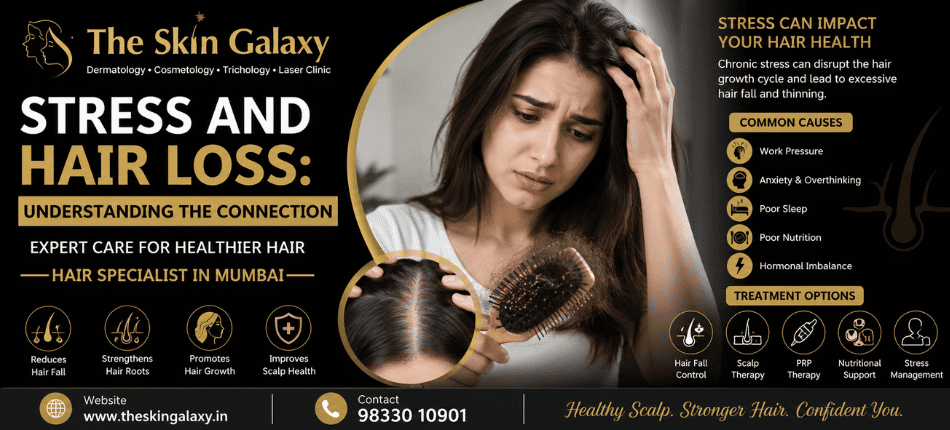
Stress and Hair Loss: Understanding the Connection | Hair Specialist in Mumbai – The Skin Galaxy
Hair is often considered a reflection of overall health, and when excessive hair fall begins, it can be both physically and emotionally distressing. While genetics, hormonal imbalances, nutritional deficiencies, and scalp conditions are common causes of hair loss, chronic stress is another major factor that can significantly affect hair health. Emotional stress, work pressure, illness, surgery, or major life changes can interrupt the normal hair growth cycle, causing increased hair shedding and thinning.
The good news is that stress-related hair loss is usually reversible when diagnosed and treated early. By understanding how stress affects the scalp and hair follicles, individuals can take proactive steps to reduce hair fall and restore healthy hair growth. Consulting an experienced Hair Specialist in Mumbai can help identify the underlying cause and recommend personalized treatment.
What Is Stress-Induced Hair Loss?
Stress-induced hair loss occurs when physical or emotional stress disrupts the natural cycle of hair growth. Normally, hair follicles pass through three stages: growth (anagen), resting (telogen), and shedding (exogen). During periods of intense or prolonged stress, a large number of hair follicles prematurely enter the resting phase. A few weeks or months later, these hairs begin to shed excessively, leading to noticeable thinning. This condition is commonly known as telogen effluvium and is one of the most frequent forms of temporary hair loss associated with stress.
How Stress Affects Hair Growth
Stress causes the body to release hormones such as cortisol, which can negatively affect the normal functioning of hair follicles. High cortisol levels may shorten the active growth phase of hair and increase the number of follicles entering the shedding phase. Stress can also reduce blood circulation to the scalp, impair nutrient delivery to hair roots, and worsen inflammatory scalp conditions. Additionally, chronic stress may aggravate existing hair disorders such as androgenetic alopecia and alopecia areata, resulting in more severe hair thinning.
Common Causes of Stress-Related Hair Loss
Stress-related hair loss can be triggered by both physical and emotional factors that disrupt the normal hair growth cycle. Common causes include work pressure, anxiety, emotional trauma, surgery, severe illness, high fever, childbirth, rapid weight loss, poor nutrition, and lack of sleep. Chronic stress increases cortisol levels, which can weaken hair follicles and cause excessive hair shedding. Identifying and managing these underlying triggers is essential for reducing hair fall and promoting healthy hair regrowth.
Signs and Symptoms of Stress-Related Hair Loss
Stress-induced hair loss often develops gradually and may become noticeable several weeks after a stressful event. Common symptoms include increased hair shedding while washing or combing, thinning hair across the scalp, widening of the hair part, reduced hair volume, and excessive hair strands on pillows or clothing. Some individuals may also notice slower hair growth, brittle hair, or increased scalp visibility. Although the condition usually does not cause pain, persistent or severe hair loss should be evaluated by a dermatologist.
Types of Hair Loss Linked to Stress
Stress can contribute to different forms of hair loss. Telogen effluvium is the most common type and results in diffuse hair shedding across the scalp. Alopecia areata, an autoimmune condition, may be triggered or worsened by emotional stress and leads to patchy bald spots. Another condition known as trichotillomania involves compulsive hair pulling caused by psychological stress or anxiety. Identifying the specific type of hair loss is important because each condition requires a different treatment approach.
Who Is More Likely to Experience Stress-Related Hair Loss?
Stress-related hair loss can affect anyone, but certain individuals are at greater risk. People recovering from surgery, childbirth, severe illness, or rapid weight loss often experience temporary hair shedding. Individuals dealing with chronic workplace stress, anxiety disorders, depression, or major life events such as divorce or bereavement may also notice increased hair fall. Those with poor nutrition, hormonal imbalances, thyroid disorders, or existing scalp diseases are more susceptible because stress can further weaken hair follicles.
How Is Stress-Related Hair Loss Diagnosed?
Diagnosis begins with a detailed consultation regarding your medical history, lifestyle, stress levels, medications, diet, and recent illnesses. A dermatologist performs a thorough scalp examination to assess the pattern and severity of hair loss. Additional investigations such as blood tests may be recommended to identify iron deficiency, thyroid disorders, vitamin deficiencies, or hormonal imbalances. In some cases, dermoscopy or scalp imaging is used to evaluate hair follicles more closely. Accurate diagnosis helps determine whether stress is the primary cause or if other medical conditions are contributing to the problem.
Treatment Options for Stress-Related Hair Loss
Treatment for stress-related hair loss focuses on addressing both the underlying stress and improving scalp health. Dermatologists may recommend stress management techniques, a balanced diet, nutritional supplements, topical hair growth solutions, PRP therapy, or medications depending on the severity of hair loss. Regular exercise, adequate sleep, and relaxation practices like yoga or meditation also play an important role in recovery. With timely diagnosis and personalized treatment, most people can successfully control hair fall and restore healthy hair growth.
Lifestyle Tips to Reduce Stress and Improve Hair Health
Healthy lifestyle habits play an important role in preventing stress-related hair loss. Regular exercise improves blood circulation and reduces stress hormones, while adequate sleep supports healthy hair growth. A balanced diet rich in protein, iron, zinc, biotin, and vitamins helps strengthen hair follicles. Practicing yoga, meditation, deep breathing exercises, and mindfulness techniques can effectively reduce chronic stress. Avoiding smoking, limiting excessive heat styling, using mild shampoos, and protecting the scalp from environmental damage also contribute to healthier hair.
When Should You See a Hair Specialist?
You should consult a hair specialist if hair shedding continues for more than two to three months, if you notice sudden bald patches, severe thinning, persistent scalp itching, redness, or pain. Individuals with a family history of hair loss or underlying medical conditions should seek professional evaluation early. Timely diagnosis helps prevent further hair damage and allows for more effective treatment with better long-term results.
Why Choose The Skin Galaxy for Hair Loss Treatment in Mumbai?
The Skin Galaxy offers advanced diagnosis and personalized treatment for various hair and scalp disorders. Our experienced dermatologists identify the root cause of hair loss through comprehensive clinical evaluation and recommend evidence-based treatments tailored to each patient’s needs. From stress-induced hair loss and dandruff to androgenetic alopecia and PRP therapy, we provide modern solutions using the latest dermatological techniques. Our patient-centered approach focuses on restoring healthy hair growth, improving scalp health, and delivering long-lasting results with safe and effective treatment options.
Conclusion
Stress can significantly affect hair health, but understanding its impact makes early diagnosis and treatment possible. Most stress-related hair loss is temporary and improves with proper medical care, stress management, and healthy lifestyle habits. If you experience persistent hair fall, thinning, or scalp concerns, consulting an experienced Hair Specialist in Mumbai can help identify the cause and restore healthy hair growth. Taking action early is the best way to protect your hair and maintain long-term scalp health.
Hair Specialist in Mumbai Hair Specialist in Mumbai Hair Specialist in Mumbai Hair Specialist in Mumbai Hair Specialist in Mumbai Hair Specialist in Mumbai Hair Specialist in Mumbai Hair Specialist in Mumbai Hair Specialist in Mumbai Hair Specialist in Mumbai