
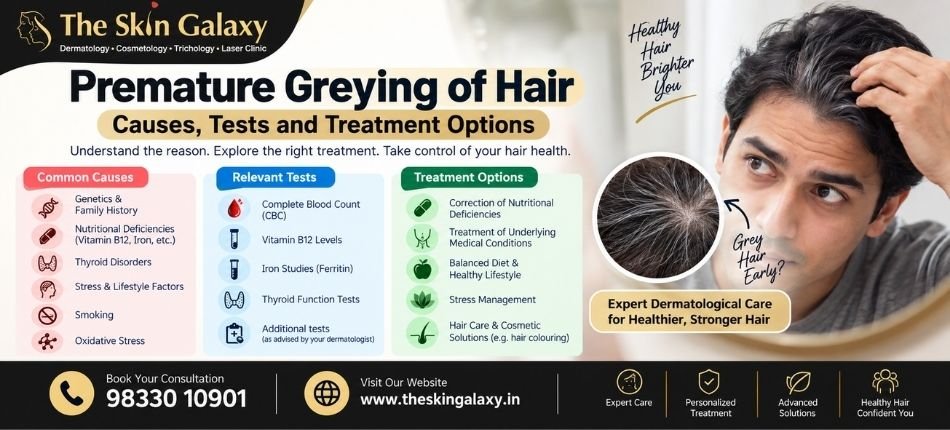
Premature Greying of Hair : Causes, Tests and Treatment Options – The Skin Galaxy
Introduction
Noticing grey or white strands at a young age can be surprising and sometimes concerning. Although greying is a natural part of ageing, some people experience it much earlier than expected. This is commonly referred to as Premature Greying of Hair.
Hair colour is determined primarily by a pigment called melanin, which is produced by specialized cells associated with the hair follicle. When pigment production decreases, new hair can grow with less colour and eventually appear grey or white.
Genetics is an important contributor, but premature greying can sometimes be associated with nutritional deficiencies, certain medical conditions and other factors. Understanding the possible cause is therefore important before trying supplements or treatments.
What Is Premature Greying of Hair?
Hair naturally loses pigment with age, but when noticeable greying develops earlier than expected for a person’s age and background, it may be described as premature greying.
The age at which hair begins to grey varies significantly between individuals and populations. Therefore, seeing a few grey hairs does not necessarily indicate a medical problem.
A dermatologist can evaluate the pattern, age of onset, family history and associated symptoms to determine whether further investigation is appropriate.
Why Does Hair Turn Grey?
Hair follicles contain pigment-producing cells called melanocytes. These cells produce melanin, which gives hair its natural colour.
As people age, melanocyte activity and pigment production gradually decrease. Hair produced by the follicle then contains less pigment and appears grey, silver or white.
In premature greying, this process occurs earlier than expected.
Common Causes of Premature Greying of Hair
1. Genetics and Family History
Genetics is one of the strongest factors influencing when a person’s hair starts turning grey.
If your parents or close family members developed grey hair at an early age, you may also have a greater tendency to experience early greying.
Genetic greying cannot necessarily be prevented through diet or cosmetic products.
2. Vitamin B12 Deficiency
Vitamin B12 plays an important role in several normal body functions. Deficiency may sometimes be considered during the medical evaluation of premature greying, particularly when other symptoms or risk factors are present.
However, supplements should ideally be taken when deficiency has been identified or when recommended by a healthcare professional.
3. Iron and Other Nutritional Factors
Nutritional status can influence overall hair health.
Depending on a person’s history and symptoms, a doctor may consider evaluating factors such as iron status or other nutritional deficiencies. This does not mean every patient with premature grey hair has a deficiency.
Taking multiple supplements without evaluation is not recommended.
4. Thyroid Disorders
Thyroid conditions can affect hair in several ways, including changes in texture or shedding.
When premature greying occurs along with symptoms that suggest thyroid dysfunction, appropriate thyroid testing may be considered.
5. Oxidative Stress
Oxidative stress refers to an imbalance between reactive molecules and the body’s antioxidant defence systems.
Research has investigated its potential role in the ageing of hair follicles and loss of pigmentation. However, premature greying is complex and should not be attributed to oxidative stress alone.
6. Smoking
Smoking has been associated in observational research with earlier hair greying.
Avoiding tobacco is beneficial not only for hair and skin but also for overall health.
7. Certain Medical Conditions
In some cases, changes in hair pigmentation may occur alongside autoimmune or other medical conditions.
This is one reason a dermatologist may ask about other symptoms, medications and medical history during evaluation.
Does Stress Cause Grey Hair?
Stress and premature greying are frequently discussed together.
Research suggests that biological stress pathways may influence processes involved in hair pigmentation, but the relationship is more complicated than the idea that one stressful day suddenly turns hair white.
Chronic stress can also affect sleep, nutrition and overall health. Managing stress is beneficial, but persistent or rapidly progressing greying should not simply be assumed to be caused by stress.
What Tests May Be Recommended for Premature Grey Hair?
Not everyone with premature greying needs extensive laboratory testing.
A dermatologist will generally consider the patient’s age, medical history, dietary pattern, family history and other symptoms before deciding whether investigations are necessary.
Depending on the clinical situation, tests may include:
Complete Blood Count (CBC)
A CBC provides information about red blood cells, haemoglobin and other blood components and may help identify certain abnormalities such as anaemia.
Vitamin B12
Vitamin B12 levels may be evaluated when deficiency is suspected based on history, diet or associated symptoms.
Iron Studies
Iron-related tests, such as ferritin, may be considered where iron deficiency is suspected.
Thyroid Function Tests
Thyroid testing may be recommended when symptoms or medical history suggest possible thyroid dysfunction.
Other tests may be considered depending on the individual’s clinical findings.
Treatment Options for Premature Greying of Hair
Treatment depends largely on the underlying cause.
Correcting Identified Nutritional Deficiencies
If laboratory evaluation identifies a specific deficiency, appropriate dietary changes or supplementation may be recommended.
Supplements are unlikely to provide the same benefit when no deficiency exists and should not be used excessively without professional advice.
Treating an Underlying Medical Condition
If a medical condition is contributing to hair changes, appropriate treatment of that condition becomes an important part of management.
Healthy Diet
A balanced diet supports overall hair health.
Include adequate:
- Protein
- Fruits
- Vegetables
- Whole grains
- Nuts and seeds
- Appropriate sources of vitamins and minerals
No single food can reliably restore natural pigment to genetically grey hair.
Lifestyle Modification
Regular exercise, adequate sleep, stress management and avoiding smoking contribute to overall health and may support healthy hair.
Can Grey Hair Turn Black Again?
This is one of the most common questions patients ask.
When greying is primarily due to genetics or natural loss of pigment-producing capacity, there is currently no guaranteed treatment that permanently restores every grey strand to its original colour.
If greying is associated with a correctable underlying factor, treating that factor may support overall hair health, but reversal should not be promised.
Be cautious of products claiming to permanently reverse grey hair within days or weeks.
Should You Pluck Grey Hair?
Plucking one grey hair does not cause multiple grey hairs to grow in its place.
However, repeatedly pulling hairs can traumatize the follicle and scalp. Cutting the strand or using appropriate cosmetic colouring methods is generally preferable to habitual plucking.
When Should You Consult a Dermatologist?
Consider consulting a dermatologist when:
- Greying begins unusually early
- Grey hair increases rapidly
- You also experience significant hair fall
- There are changes in scalp or skin pigmentation
- You have symptoms suggesting nutritional deficiency
- You have symptoms associated with thyroid problems
- You are considering supplements or medical treatments
Professional assessment can help distinguish normal genetic greying from situations where further evaluation may be useful.
Conclusion
Premature Greying of Hair can occur due to several factors, with genetics playing an important role. Nutritional deficiencies, thyroid disorders, smoking and certain health conditions may also be relevant in some individuals.
Instead of relying on home remedies or taking supplements without testing, an appropriate dermatological evaluation can help identify whether there is an underlying treatable factor.
Although genetically determined grey hair may not always be reversible, proper diagnosis, healthy nutrition and appropriate hair care can help maintain overall hair and scalp health.
The Skin Galaxy provides professional dermatological evaluation and individualized guidance for hair and scalp concerns.
Premature Greying of Hair Premature Greying of Hair Premature Greying of Hair Premature Greying of Hair Premature Greying of Hair Premature Greying of Hair Premature Greying of Hair Premature Greying of Hair Premature Greying of Hair Premature Greying of Hair Premature Greying of Hair Premature Greying of Hair Premature Greying of Hair Premature Greying of Hair