
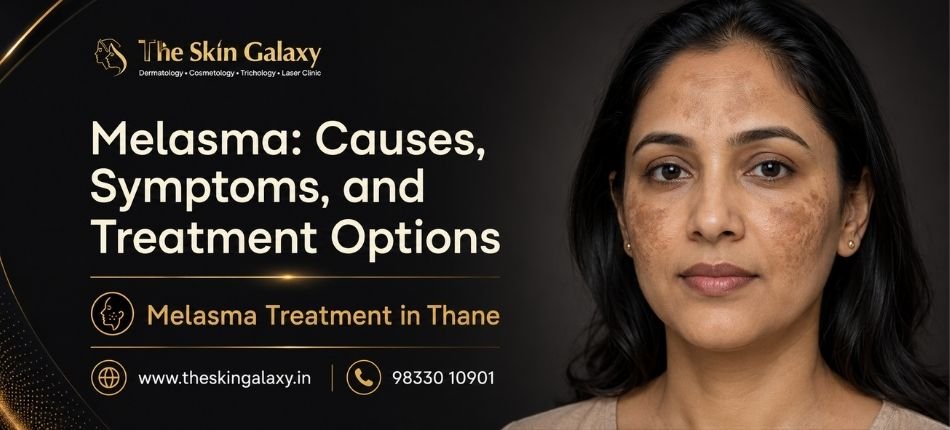
Melasma: Causes, Symptoms, and Treatment Options | Melasma Treatment in Thane – The Skin Galaxy
Dark or uneven patches on the cheeks, forehead, nose, or upper lip can affect the way you feel about your skin. One of the most common reasons for this type of facial pigmentation is melasma. Although melasma is harmless and does not spread from one person to another, it can be persistent and may become darker after sun exposure, hormonal changes, heat, or skin irritation.
The good news is that melasma can often be managed with the right combination of daily sun protection, suitable skincare, prescription medicines, and carefully selected clinical procedures. If you are searching for melasma treatment in Thane, a dermatologist can first confirm the diagnosis and then prepare a personalised plan based on your skin type and the depth and pattern of pigmentation.
What Is Melasma?
Melasma is a common pigmentation condition in which excess melanin—the pigment that gives skin its colour—creates flat, irregular brown, grey-brown, or darker patches. It usually appears on areas of the face that receive frequent sunlight.
Melasma is seen more often in women, especially during the reproductive years, but men can also develop it. It is particularly common in people with medium to deeper skin tones because their pigment-producing cells are naturally more active.
The condition may improve over time in some people, especially when it is related to pregnancy or hormonal medicines. In others, it may last for months or years and can return even after successful treatment. For this reason, melasma is usually managed as a long-term condition rather than treated with the expectation of an instant, permanent cure.
What Does Melasma Look Like?
The main symptom of melasma is the gradual development of discoloured patches that are darker than the surrounding skin. These patches are generally:
- Flat rather than raised
- Brown, tan, grey-brown, or dark brown
- Irregular in shape
- Usually present on both sides of the face in a similar pattern
- Not painful, itchy, or contagious
Common areas affected by melasma include:
- Cheeks and cheekbones
- Forehead
- Bridge of the nose
- Upper lip
- Chin and jawline
Less commonly, pigmentation may appear on the neck or forearms, especially in areas regularly exposed to sunlight.
Not every dark patch is melasma. Post-acne marks, sunspots, irritation-related pigmentation, certain fungal conditions, medication-related pigmentation, and other skin disorders can sometimes resemble it. A dermatologist’s assessment is therefore important before beginning treatment.
Common Causes and Triggers of Melasma
Melasma does not usually have one single cause. It develops through a combination of genetic, hormonal, and environmental factors.
1. Sun exposure
Ultraviolet radiation is one of the strongest triggers of melasma. Sunlight stimulates melanocytes, the cells that produce pigment. Even short or repeated exposure can darken existing patches and encourage them to return after treatment.
Visible light may also contribute to pigmentation, particularly in people with deeper skin tones. This is why dermatologists may recommend a tinted, broad-spectrum sunscreen containing iron oxides in addition to standard UV protection.
2. Hormonal changes
Melasma is sometimes called the “mask of pregnancy” because pregnancy-related hormonal changes can trigger it. It may also be associated with oral contraceptive pills, hormone-replacement treatment, or other hormonal changes. However, not every person with melasma has a detectable hormonal problem.
Do not stop prescribed hormonal medicines on your own. Discuss the timing of the pigmentation with both your treating doctor and dermatologist.
3. Family tendency and skin type
A family history of melasma may increase a person’s likelihood of developing it. People with Indian and other Asian, Middle Eastern, Latin American, African, or Mediterranean backgrounds may be more susceptible because pigmentation responds more strongly to light and inflammation.
4. Heat and repeated exposure
Heat may aggravate melasma in some individuals. Regular exposure to hot kitchens, steam, outdoor heat, or certain occupational environments may make pigmentation harder to control, even when sunscreen is used consistently.
5. Skin irritation
Harsh scrubs, strong home peels, bleaching products, unprescribed combination creams, waxing-related irritation, and unsuitable cosmetic procedures can inflame the skin. Inflammation may then increase pigmentation, especially in deeper skin tones.
6. Certain medicines or medical factors
Some medicines can make skin more sensitive to light or contribute to pigmentation. Thyroid and other medical associations have also been studied, but they are not the cause in every patient. Your dermatologist may ask about your health history and current medicines when assessing facial pigmentation.
Types of Melasma
Melasma may be described according to where most of the pigment is located:
Epidermal melasma
The pigment is concentrated closer to the surface of the skin. It may appear more clearly defined and can respond better to topical treatment.
Dermal melasma
The pigment lies deeper in the skin. It may look more grey or bluish-brown and can be slower or more difficult to treat.
Mixed melasma
This common form contains both superficial and deeper pigmentation. A combination approach may be required.
This classification is useful, but real-life melasma can be complex. A dermatologist may examine the skin in normal light and use tools such as a dermatoscope or Wood’s lamp when appropriate.
How Is Melasma Diagnosed?
Melasma is usually diagnosed through a detailed examination by a dermatologist. The doctor evaluates the colour, pattern, location, and depth of the pigmentation and asks about pregnancy, hormonal medicines, sun exposure, skincare products, family history, and previous treatments. A Wood’s lamp or dermatoscope may sometimes be used to assess whether the pigment is superficial or deeper in the skin. Proper diagnosis is important because acne marks, sunspots, medication-related pigmentation, and other skin conditions can resemble melasma and may require different treatment.
Melasma Treatment Options
There is no single treatment that works equally well for everyone. The most effective plans usually combine pigment control with strict protection from light and irritation.
1. Daily Sun and Visible-Light Protection
Daily protection from sunlight and visible light is the foundation of melasma treatment. UV radiation and visible light can stimulate pigment-producing cells, making existing patches darker and increasing the risk of recurrence. Dermatologists generally recommend applying a broad-spectrum sunscreen with SPF 30 or higher every morning. A tinted sunscreen containing iron oxides may provide additional visible-light protection. Sunscreen should be reapplied during prolonged outdoor exposure, after sweating, or after wiping the face. Using an umbrella, wearing a wide-brimmed hat, and seeking shade can further protect melasma-prone skin.
2. Prescription Creams
Prescription creams help control excess melanin production and gradually lighten melasma patches. Depending on the patient’s skin type and pigmentation, a dermatologist may prescribe hydroquinone, azelaic acid, kojic acid, retinoids, cysteamine, vitamin C, or a triple-combination cream. These medicines should be used only for the recommended duration because incorrect or prolonged use can cause irritation, skin thinning, acne-like eruptions, or rebound pigmentation. Pregnant or breastfeeding women should always inform their dermatologist, as certain ingredients—especially retinoids and hydroquinone—are generally avoided during pregnancy.
3. Chemical peels
Superficial chemical peels may help selected patients by accelerating the removal of pigmented surface cells. Glycolic, lactic, salicylic, mandelic, or other carefully selected peeling agents may be considered.
Peels are not suitable for every patient or every stage of melasma. If the peel is too strong or the skin is not prepared correctly, inflammation can worsen pigmentation. The procedure should therefore be planned and performed under professional supervision.
4. Laser and light-based procedures
Certain laser or light procedures may be considered for stubborn melasma, but they require great care. Melasma can worsen, rebound, or develop uneven pigmentation after an unsuitable device or aggressive settings, especially in Indian skin tones.
A dermatologist will consider the type and depth of melasma, previous treatment response, skin tone, and risk of post-inflammatory hyperpigmentation before recommending a procedure. Clinical treatment must still be combined with sunscreen and maintenance skincare.
5. Tranexamic acid and other advanced options
Topical, oral, or procedure-based tranexamic acid may be considered in selected cases. Oral tranexamic acid is not appropriate for everyone because it can increase concern about blood clots in susceptible individuals. It should never be started without a dermatologist’s prescription and a proper review of personal and family medical history.
Other newer approaches may be used selectively, but evidence and suitability vary. “Advanced” does not automatically mean safer or more effective for every patient.
How Long Does Melasma Treatment Take?
Melasma treatment requires patience because pigmentation usually improves gradually. Some patients may notice early lightening within several weeks, while more noticeable results may take two to four months or longer. The treatment duration depends on the depth and severity of pigmentation, skin type, hormonal triggers, sun exposure, and consistency of treatment. Since melasma can return, a dermatologist may recommend long-term sunscreen use and maintenance skincare even after the patches have improved.
Common Mistakes That Can Make Melasma Worse
- Skipping sunscreen on cloudy days or while travelling
- Applying too little sunscreen
- Expecting a peel or laser to provide a permanent one-session cure
- Using steroid-mixed fairness creams without medical guidance
- Scrubbing or rubbing the patches
- Layering several strong acids and retinoids
- Frequently changing products before they have time to work
- Using home remedies that sting, burn, or inflame the skin
- Stopping treatment immediately after improvement
If a product causes marked burning, swelling, blistering, or sudden darkening, stop experimenting and consult a dermatologist.
Everyday Care Tips for Melasma-Prone Skin
Keep the routine gentle and consistent:
- Cleanse with a mild, non-abrasive cleanser.
- Apply prescribed treatment exactly as directed.
- Use a suitable moisturiser to support the skin barrier.
- Apply broad-spectrum sunscreen every morning.
- Add a hat, umbrella, or shade during extended exposure.
- Avoid rubbing, harsh scrubs, and unplanned home peels.
- Reapply sunscreen when outdoors for long periods or after heavy sweating.
When Should You Consult a Dermatologist?
You should consult a dermatologist if facial pigmentation is increasing, spreading, recurring, or not improving with basic skincare. Professional evaluation is also recommended if you are unsure whether the patches are melasma, are pregnant or breastfeeding, have developed pigmentation after starting a medicine, or have experienced irritation from fairness creams or home remedies. A dermatologist should also be consulted before undergoing chemical peels, laser procedures, or taking oral medicines for melasma. Early and accurate diagnosis can prevent inappropriate treatment from making the pigmentation worse.
Melasma Treatment in Thane at The Skin Galaxy
At The Skin Galaxy, melasma care begins with understanding your pigmentation, triggers, skin type, current routine, and previous treatment history. Rather than relying on a one-size-fits-all fairness solution, the aim is to build a medically appropriate plan that may include sun protection, home-care products, prescription treatment, and selected clinical procedures.
If you are looking for a dermatologist for melasma treatment in Thane, schedule a consultation with The Skin Galaxy for a personalised assessment and realistic treatment plan.
Melasma Treatment in Thane Melasma Treatment in Thane Melasma Treatment in Thane Melasma Treatment in Thane Melasma Treatment in Thane Melasma Treatment in Thane Melasma Treatment in Thane Melasma Treatment in Thane Melasma Treatment in Thane Melasma Treatment in Thane Melasma Treatment in Thane Melasma Treatment in Thane Melasma Treatment in Thane Melasma Treatment in Thane Melasma Treatment in Thane