
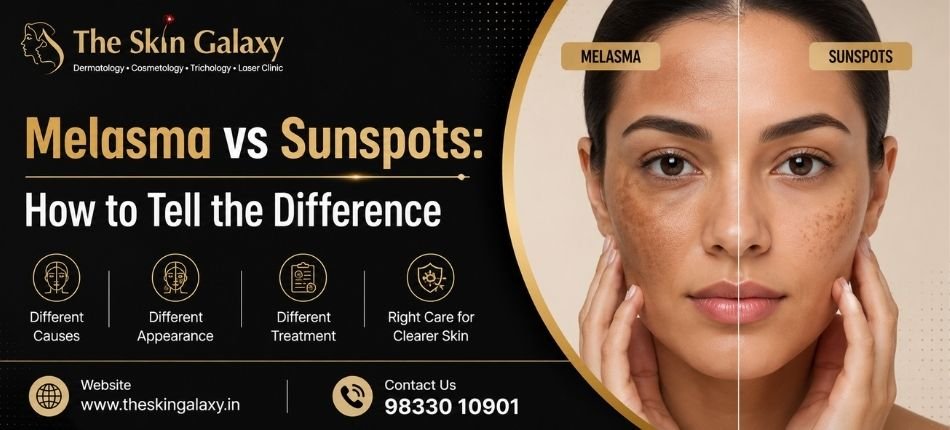
Melasma vs Sunspots: How to Tell the Difference – The Skin Galaxy
Dark patches or spots on your face can be frustrating and often affect your confidence. Many people assume all facial pigmentation is the same, but that’s not true. Two of the most common pigmentation concerns are melasma and sunspots. While they may appear similar, they have different causes, patterns, and treatment approaches.
Understanding the difference between Melasma vs Sunspots is essential because using the wrong treatment can delay results or even worsen pigmentation. At The Skin Galaxy, our dermatologists accurately diagnose your skin condition and recommend personalized treatments for long-lasting improvement.
What Is Melasma?
Melasma is a common skin pigmentation disorder that causes large, symmetrical brown or grey-brown patches on the face. It usually appears on the cheeks, forehead, nose, upper lip, and chin.
Unlike ordinary dark spots, melasma develops due to increased melanin production triggered by internal and external factors.
Women are more likely to develop melasma, especially during pregnancy or while taking hormonal medications. It is also common among people with medium to darker skin tones living in sunny climates like Mumbai.
Melasma usually affects both sides of the face equally, giving it a characteristic symmetrical appearance.
What Are Sunspots?
Sunspots, also known as solar lentigines or age spots, are flat, brown, black, or tan spots that develop on the skin after prolonged exposure to the sun’s ultraviolet (UV) rays. They most commonly appear on areas that receive the most sunlight, such as the face, hands, shoulders, neck, and arms. Unlike melasma, which forms larger patches, sunspots are usually small, well-defined, and appear individually. Although they are harmless and non-cancerous, sunspots can make the skin look older and uneven. Many people seek treatment for cosmetic reasons to achieve a clearer, more youthful complexion.
Melasma vs Sunspots: Key Differences
| Feature | Melasma | Sunspots |
|---|---|---|
| Appearance | Large patches | Small individual spots |
| Shape | Irregular but symmetrical | Round or oval |
| Cause | Hormones + sun exposure | UV damage |
| Common Age | 20-50 years | Usually after 40 |
| Location | Cheeks, forehead, upper lip | Face, hands, shoulders |
| Pattern | Symmetrical | Random |
| Trigger | Hormonal changes | Long-term sunlight |
| Treatment | Combination therapy | Pigmentation removal treatments |
Knowing these differences helps dermatologists recommend the most effective treatment.
What Causes Melasma?
Several factors contribute to melasma, including:
Hormonal Changes
Pregnancy, birth control pills, hormone replacement therapy, and hormonal imbalance are major triggers.
Sun Exposure
Even a few minutes of unprotected sunlight can worsen melasma because UV rays stimulate melanin production.
Genetics
If your family members have melasma, your chances of developing it are higher.
Heat
Excessive heat from cooking, hot weather, or steam can also aggravate melasma.
Certain Medications
Some medications increase skin sensitivity, making pigmentation more noticeable.
What Causes Sunspots?
Sunspots develop when years of exposure to ultraviolet (UV) radiation stimulate the skin to produce excess melanin, the pigment responsible for skin color. Over time, this excess melanin accumulates in certain areas, creating dark spots on the skin. People who spend long hours outdoors without sunscreen, frequently tan, or have fair skin are more likely to develop sunspots. Aging also increases the likelihood of sunspots because the skin has been exposed to sunlight for many years. While they are a natural result of sun damage, consistent sun protection can significantly reduce the risk of developing new spots.
Best Treatments for Melasma
Melasma usually requires a combination approach.
Prescription Creams
Dermatologists may recommend creams containing ingredients that reduce melanin production.
Chemical Peels
Professional chemical peels remove pigmented skin cells and improve skin tone.
Laser Treatment
Certain laser treatments target pigmentation safely under expert supervision.
Oral Medications
In selected patients, oral medications may help control recurring melasma.
Medical Sunscreen
Daily sunscreen is one of the most important parts of melasma treatment.
How to Identify Melasma at Home
Although only a dermatologist can accurately diagnose melasma, there are several signs that may help you recognize it at home. Melasma usually appears as large, symmetrical brown or grey-brown patches on both sides of the face, particularly on the cheeks, forehead, bridge of the nose, upper lip, and chin. These patches often become darker after spending time in the sun and may gradually increase in size over time. Unlike acne scars or isolated dark spots, melasma typically has blurred borders and affects larger areas of the skin. If your pigmentation follows this pattern, it is advisable to consult a dermatologist for proper evaluation and treatment.
How to Identify Sunspots
Sunspots are generally easy to recognize because they appear as small, flat, well-defined brown or black spots on areas that receive frequent sun exposure. They are commonly found on the face, hands, shoulders, and arms, especially in people over the age of 40, although younger individuals with significant sun exposure can also develop them. Unlike melasma, sunspots are usually scattered randomly rather than appearing symmetrically. They do not cause pain, itching, or irritation and often remain the same size for years unless additional sun exposure causes more spots to develop. If you notice changes in the size, shape, or color of any spot, consult a dermatologist to rule out more serious skin conditions.
Why Proper Diagnosis Is Important
Melasma and sunspots may look similar, but they require different treatment approaches. Self-diagnosing pigmentation can lead to the use of incorrect skincare products or over-the-counter creams that may not work or could even worsen the condition. A dermatologist can accurately identify the type, depth, and cause of pigmentation using a detailed skin examination and, if necessary, specialized diagnostic tools. Proper diagnosis ensures that you receive the most effective treatment plan, reduces the risk of recurring pigmentation, and helps achieve faster and longer-lasting results while protecting your skin from unnecessary damage.
Best Treatments for Sunspots
Sunspots can often be treated successfully with professional dermatological procedures and medical-grade skincare. Depending on the severity of the pigmentation, treatments may include laser pigmentation removal, chemical peels, cryotherapy, microdermabrasion, or prescription creams containing skin-brightening ingredients. These treatments help reduce excess melanin and promote the growth of healthier, more even-toned skin. In addition to professional treatments, daily use of a broad-spectrum sunscreen with SPF 30 or higher is essential to prevent new sunspots from forming and to maintain treatment results. A dermatologist will recommend the most suitable option based on your skin type and pigmentation level.
Can Melasma Become Permanent?
Melasma is a chronic pigmentation condition that can persist for years if left untreated, but it is not always permanent. The condition often improves with the right combination of medical treatments, consistent sun protection, and proper skincare. However, melasma has a tendency to recur, especially after sun exposure, hormonal changes, pregnancy, or certain medications. While complete and permanent removal may not always be possible, early diagnosis and ongoing maintenance can significantly lighten the pigmentation and keep it under control. Regular follow-ups with a dermatologist can help prevent flare-ups and maintain clearer, healthier skin over the long term.
Can Sunspots Be Prevented?
Yes, sunspots are largely preventable by protecting your skin from harmful ultraviolet (UV) rays. The most effective preventive measure is applying a broad-spectrum sunscreen with SPF 30 or higher every day, even on cloudy days. Wearing wide-brimmed hats, sunglasses, and protective clothing while outdoors also helps reduce UV exposure. Limiting time in direct sunlight during peak hours and avoiding tanning beds can further lower the risk of developing sunspots. Incorporating antioxidant-rich skincare products, such as those containing Vitamin C, may also help protect the skin from environmental damage and maintain a brighter, more even complexion over time.
Why Choose The Skin Galaxy?
At The Skin Galaxy, we understand that every pigmentation concern is different. Our dermatologists provide accurate diagnosis and customized treatment plans for melasma, sunspots, and other pigmentation disorders.
Our clinic offers:
- Experienced dermatologists
- Advanced pigmentation analysis
- Customized treatment plans
- Chemical peels
- Laser pigmentation treatments
- Medical-grade skincare guidance
- Long-term pigmentation management
Our goal is to help you achieve clearer, healthier, and more even-toned skin safely.
Conclusion
When comparing Melasma vs Sunspots, the biggest difference lies in their cause. Melasma is largely influenced by hormones and sunlight, while sunspots result from years of UV damage.
Since both conditions require different treatment approaches, professional diagnosis is the key to successful results. If you notice persistent pigmentation on your face, consult the experts at The Skin Galaxy for a personalized skin evaluation and effective treatment plan.
Melasma vs Sunspots Melasma vs Sunspots Melasma vs Sunspots Melasma vs Sunspots Melasma vs Sunspots Melasma vs Sunspots Melasma vs Sunspots Melasma vs Sunspots Melasma vs Sunspots Melasma vs Sunspots Melasma vs Sunspots Melasma vs Sunspots