
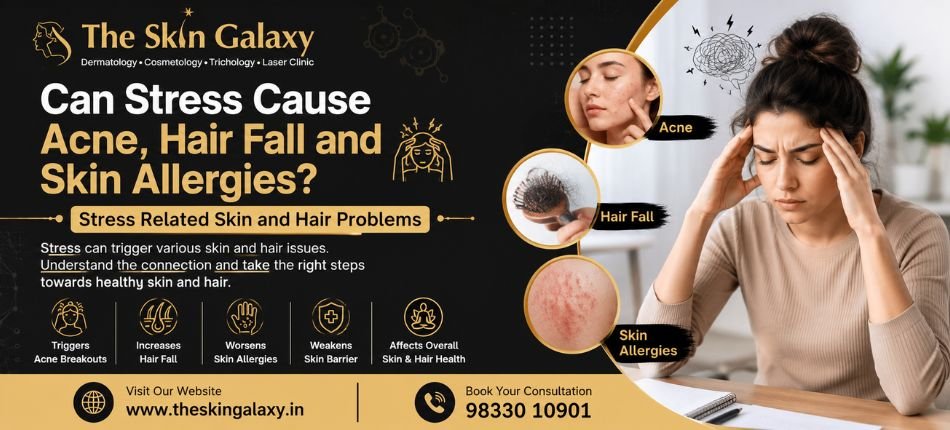
Can Stress Cause Acne, Hair Fall and Skin Allergies? | Stress Related Skin and Hair Problems – The Skin Galaxy
Stress is a normal part of life, but when it becomes persistent, its effects may extend beyond mood and sleep. Some people notice that their acne becomes worse during stressful periods, their hair shedding increases, or existing skin conditions become more difficult to manage.
The relationship between stress, skin, and hair is complex. Stress does not necessarily cause every skin or hair condition directly, but it can influence hormones, inflammation, immune responses, sleep, and everyday habits—all of which may affect skin and hair health.
Understanding Stress Related Skin and Hair Problems can help you recognize possible triggers and know when professional evaluation may be appropriate.
How Does Stress Affect Your Skin and Hair?
When the body experiences stress, it activates physiological responses involving hormones and the nervous system. Cortisol and other stress-related chemicals may influence inflammation, oil production, immune function, and the hair-growth cycle.
At the same time, stress can affect sleep, eating patterns, skincare habits, and behaviours such as touching or picking the skin. These indirect effects may further contribute to certain skin and hair concerns.
However, symptoms should not automatically be attributed to stress. Acne, hair loss, itching, and rashes can have several possible causes, making proper evaluation important when symptoms persist.
Can Stress Cause Acne?
Stress does not necessarily create acne from nothing, but it may contribute to worsening breakouts in people who are already prone to acne.
During periods of stress, hormonal and inflammatory changes may influence sebaceous glands and skin inflammation. Stress can also lead to poor sleep, changes in routine, and increased face-touching or picking, which may aggravate existing acne.
Some people notice more pimples around the forehead, cheeks, chin, or jawline during stressful periods, although the pattern differs between individuals.
Therefore, managing stress can be one supportive part of acne care, but persistent acne may still require appropriate dermatological treatment.
Stress and Increased Oil Production
Sebum is the natural oil produced by sebaceous glands. Excessive oil production can contribute to clogged pores in acne-prone individuals.
Stress-related hormonal responses may influence sebaceous activity in some people. When increased oil production combines with clogged pores, inflammation, and acne-associated bacteria, breakouts may become more noticeable.
Using harsh cleansers to remove excess oil can sometimes irritate the skin further. A suitable skincare routine should therefore focus on gentle cleansing and products appropriate for your skin type.
Can Stress Cause Hair Fall?
Stress can be associated with increased hair shedding. One commonly discussed condition is telogen effluvium, in which a larger-than-usual number of hairs enter the resting phase of the hair-growth cycle and subsequently shed.
Importantly, increased shedding may not always begin immediately after the stressful event. It can appear weeks or months later.
Physical stressors such as illness, surgery, significant weight changes, nutritional problems, or other physiological events may also contribute to telogen effluvium.
Because several medical and nutritional conditions can cause hair loss, persistent or significant hair fall should be professionally evaluated instead of being assumed to be caused solely by emotional stress.
How Can You Recognize Stress-Related Hair Shedding?
Stress-associated shedding may sometimes appear as increased hair coming out while washing, brushing, or running your fingers through your hair. Some individuals may notice an overall reduction in hair volume rather than a single clearly defined bald patch.
However, different types of hair loss can look similar in the early stages.
Hair fall may also be associated with nutritional deficiencies, thyroid problems, hormonal changes, genetic hair loss, scalp disorders, certain medications, and other medical conditions.
A dermatologist can help determine the likely cause and recommend appropriate investigations when required.
Can Stress Cause Skin Allergies?
The term “skin allergy” covers several different conditions, and stress itself is not necessarily the underlying allergen.
However, stress can aggravate certain inflammatory or itchy skin conditions in susceptible individuals. Some people may experience worsening itching, redness, hives, or eczema during periods of increased stress.
Stress can also make the sensation of itching more noticeable, and scratching can further damage the skin barrier, creating a cycle of irritation and discomfort.
If you develop a new or unexplained rash, professional assessment is important because infections, allergies, medications, environmental exposures, and other conditions may produce similar symptoms.
Stress and Hives
Hives, medically known as urticaria, appear as raised, itchy welts on the skin. They may appear and disappear quickly and can vary in size and location.
There are many potential triggers for urticaria. In some individuals, emotional stress may aggravate symptoms, but it is not the only possible factor.
Recurring or persistent hives should be medically evaluated to determine an appropriate management approach.
Stress and Eczema
Eczema can cause dry, itchy, inflamed, and irritated skin. Several factors may contribute to flare-ups, including environmental exposures, skin-barrier disruption, and individual triggers.
Stress may worsen eczema symptoms in some people. Increased itching may then lead to scratching, which can further irritate the skin.
Treatment generally involves appropriate skincare, identifying relevant triggers, and medication when clinically indicated.
Stress and the Itch-Scratch Cycle
Stress, itching, and scratching can sometimes reinforce one another.
Stress may increase awareness of itching. Scratching provides temporary relief but can damage the skin barrier, leading to greater irritation and potentially more itching.
Breaking this cycle may require treating the underlying skin condition while also reducing behaviours that worsen irritation.
Signs Stress May Be Affecting Your Skin or Hair
Possible changes noticed during stressful periods may include:
- Increased acne breakouts
- Excessive hair shedding
- Increased scalp discomfort
- Worsening itching
- Recurring hives
- Eczema flare-ups
- Increased skin sensitivity
- Poorer sleep alongside skin symptoms
These signs do not prove that stress is the cause. They simply indicate that stress may be one factor worth considering during evaluation.
How Are Stress Related Skin and Hair Problems Diagnosed?
There is no single test that diagnoses all Stress Related Skin and Hair Problems.
A dermatologist may ask about the timing of symptoms, recent illnesses, medications, diet, lifestyle changes, hair-care and skincare routines, menstrual or hormonal history where relevant, and periods of significant physical or emotional stress.
Depending on the symptoms, examination of the skin, scalp, hair, and nails may be performed. Blood tests or other investigations may sometimes be advised when an underlying medical or nutritional cause is suspected.
Can Better Sleep Help?
Sleep supports many normal physiological processes, and persistent sleep deprivation can affect overall wellbeing.
Maintaining a consistent sleep schedule may therefore be useful as part of a healthy lifestyle. However, improving sleep should complement rather than replace appropriate treatment for an established skin or hair condition.
Don’t Over-Treat Your Skin During Stress Breakouts
When acne suddenly worsens, some people start using multiple strong products at once. This can cause dryness, irritation, or damage to the skin barrier.
Instead, maintain a simple routine appropriate for your skin:
Gentle cleanser → Recommended treatment → Moisturizer → Sunscreen during daytime
Products should be selected according to your individual skin type and condition.
When Should You Consult a Dermatologist?
Consider seeking professional evaluation when:
- Acne is persistent or leaving marks/scars
- Hair shedding is excessive or prolonged
- Bald patches develop
- The scalp becomes painful or inflamed
- Rashes repeatedly return
- Itching affects sleep or everyday life
- Skin symptoms are rapidly worsening
- Home skincare is not helping
Early evaluation can help identify the actual cause rather than relying on assumptions.
Conclusion
Stress can influence skin and hair health in several ways and may aggravate acne, increase hair shedding, or worsen certain itchy and inflammatory skin conditions.
However, not every breakout, episode of hair fall, or rash is caused by stress. Stress Related Skin and Hair Problems should be evaluated in the context of your overall health, symptoms, lifestyle, and other potential causes.
If your acne, hair fall, itching, or skin allergy symptoms persist or worsen, consider consulting The Skin Galaxy for an appropriate dermatological evaluation and personalized management plan.
Stress Related Skin and Hair Problems Stress Related Skin and Hair Problems Stress Related Skin and Hair Problems Stress Related Skin and Hair Problems Stress Related Skin and Hair Problems Stress Related Skin and Hair Problems Stress Related Skin and Hair Problems Stress Related Skin and Hair Problems Stress Related Skin and Hair Problems Stress Related Skin and Hair Problems