
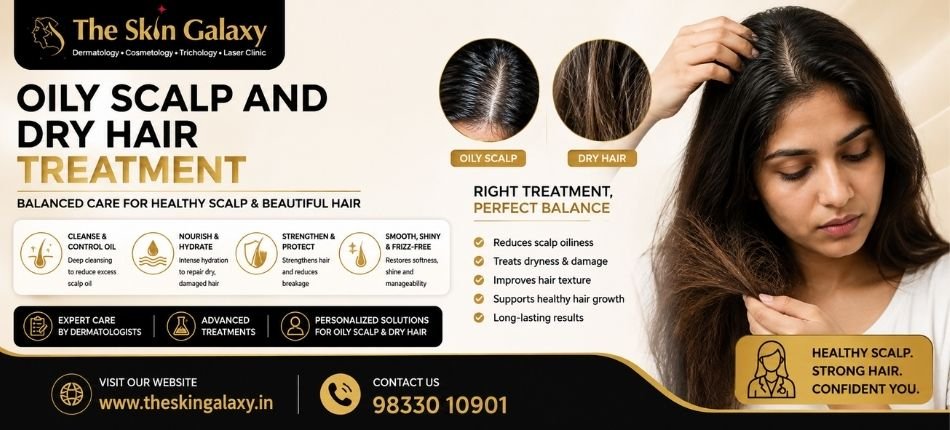
Oily Scalp and Dry Hair Treatment – The Skin Galaxy
Having an oily scalp with dry hair can be confusing. Your roots may start looking greasy soon after washing, while the lengths and ends remain rough, frizzy or difficult to manage. Washing more frequently may make the hair feel drier, while delaying shampooing can leave the scalp excessively oily.
The reason for this combination is that your scalp and hair lengths have different needs. Sebaceous glands in the scalp naturally produce sebum, while the hair shaft—especially longer or chemically treated hair—can lose moisture and become dry.
Understanding why this imbalance develops is the first step toward creating an appropriate hair care routine.
Discover effective oily scalp and dry hair treatment to manage greasy roots, dryness, frizz and dandruff with the right scalp and hair care routine.
What Does an Oily Scalp with Dry Hair Mean?
An oily scalp with dry hair means that the scalp produces or accumulates noticeable amounts of sebum, making the roots look greasy or flat, while the mid-lengths and ends remain dry, rough, frizzy, or brittle. This happens because the scalp and hair shaft have different needs. The scalp contains sebaceous glands that naturally produce oil, whereas the hair shaft cannot produce its own moisture. As a result, it is completely possible to experience oily roots and dry ends at the same time. Managing this combination requires a balanced routine that cleanses the scalp effectively while protecting and conditioning the drier hair lengths.
Why Does the Scalp Become Oily?
Sebaceous glands located in the skin produce sebum, a natural oily substance that helps protect the scalp and hair.
Some people naturally produce more sebum than others.
Several factors may influence scalp oiliness, including genetics, hormones, climate, sweating, hair care habits and certain scalp conditions.
Having an oily scalp does not necessarily mean that your scalp is dirty.
Why Can Hair Lengths Remain Dry?
Natural oils produced by the scalp do not always travel evenly from the roots to the ends, particularly in people with long, curly, wavy, coloured, chemically treated, or heat-damaged hair. The ends are also the oldest part of the hair and have experienced more washing, brushing, styling, sunlight, and environmental exposure than newly grown hair near the scalp. Chemical treatments such as colouring, bleaching, straightening, and rebonding can further affect the hair shaft and increase dryness. Therefore, even when the scalp produces plenty of oil, the lengths may still require appropriate conditioning and protection to remain smooth and manageable.
Common Causes of Oily Scalp with Dry Hair
1. Overwashing the Hair
People with oily scalps sometimes wash their hair very aggressively or use harsh cleansing products in an attempt to remove all oil.
While cleansing the scalp is important, repeated harsh washing can leave the hair lengths feeling rough and dry.
The goal should be appropriate cleansing—not stripping the hair excessively.
2. Applying Shampoo to the Entire Hair Length
Shampoo is primarily intended to cleanse the scalp.
Repeatedly scrubbing shampoo directly into already-dry lengths and ends can contribute to additional dryness.
During rinsing, shampoo naturally passes through the lengths and can usually provide sufficient cleansing for them unless there is significant product buildup.
3. Skipping Conditioner Because the Scalp Is Oily
A common mistake is avoiding conditioner entirely because the roots become greasy.
However, oily roots do not necessarily mean that the hair ends have enough moisture.
Conditioner can be applied mainly to the mid-lengths and ends, avoiding the scalp if it becomes oily easily.
4.Excessive Heat Styling
Frequent use of hair straighteners, curling irons, blow dryers, and heated styling brushes can contribute to dryness and damage along the hair shaft. Repeated exposure to high temperatures can make hair appear rough, dull, frizzy, and more susceptible to breakage. This can make the contrast between an oily scalp and dry ends even more noticeable. If heat styling is necessary, try to reduce its frequency and avoid unnecessarily high temperatures. Using an appropriate heat-protection product and allowing the hair to air-dry when practical can also help minimize additional damage. Hair that is already chemically treated or severely dry generally requires extra care when using heated styling tools.
5. Chemical Hair Treatments
Hair colouring, bleaching, straightening, rebonding and other chemical procedures can alter the hair shaft.
The scalp may continue producing normal or increased amounts of oil while chemically processed lengths become progressively drier.
6. Product Buildup
Heavy oils, styling creams, serums and other products may accumulate around the scalp.
This can make hair feel greasy even when the underlying issue is not excessive sebum production.
Choosing products according to your scalp and hair type is therefore important.
Choosing products according to your scalp and hair type is therefore important.
7. Hormonal Factors
Sebum production can be influenced by hormones.
Changes associated with puberty and other hormonal fluctuations may affect scalp oiliness in some people.
Persistent or sudden changes in oil production, particularly when accompanied by other symptoms, may warrant professional evaluation.
8. Dandruff or Seborrheic Dermatitis
An oily scalp accompanied by persistent flakes, redness or itching may sometimes be associated with dandruff or seborrheic dermatitis.
In such situations, simply changing cosmetic hair products may not be enough. A dermatologist can determine whether a scalp condition requires specific treatment.
The Correct Hair Care Routine for Oily Scalp with Dry Hair
Managing this combination requires treating the scalp and hair lengths differently.
Step 1: Cleanse the Scalp Properly
Choose a shampoo suitable for your scalp condition and concentrate cleansing around the roots.
Massage gently with your fingertips rather than aggressively scratching the scalp.
The frequency of washing should depend on how oily your scalp becomes, your activity level and your dermatologist’s recommendations if you have a scalp disorder.
Step 2: Be Gentle With the Hair Lengths
Avoid aggressively rubbing shampoo into dry ends.
Allow the shampoo and water to rinse through the lengths while washing.
This can help reduce unnecessary stripping of already-dry hair.
Step 3: Condition the Mid-Lengths and Ends
Apply conditioner primarily from the middle of the hair shaft toward the ends.
This can improve softness, manageability and detangling without unnecessarily weighing down oily roots.
Step 4: Use Clarifying Products Carefully
If styling products frequently build up on the scalp, occasional deeper cleansing may be useful for some people.
However, clarifying shampoos can be drying when overused.
People with sensitive scalps, colour-treated hair or scalp conditions should be especially cautious.
Step 5: Reduce Excessive Heat
Limit unnecessary heat styling.
When using a blow dryer, straightener or curling tool, avoid excessively high temperatures and consider an appropriate heat-protectant product.
Step 6: Handle Wet Hair Carefully
Wet hair can be more vulnerable to mechanical damage.
Avoid aggressive towel rubbing.
Instead, gently blot excess water and detangle carefully using an appropriate comb or brush.
Step 7: Apply Hair Serum Strategically
If the ends remain frizzy or rough, a lightweight serum or leave-in product may improve manageability.
Apply it primarily to the lengths and ends rather than directly to an oily scalp.
Should You Apply Hair Oil to an Oily Scalp?
Hair oiling preferences vary, but adding large amounts of oil to an already oily scalp is not necessarily beneficial.
If you enjoy using hair oil, consider applying it mainly to the lengths when dryness is the primary concern.
People experiencing dandruff, significant itching or an inflammatory scalp condition should discuss scalp oiling with a dermatologist because some practices may aggravate certain conditions.
How Often Should You Wash an Oily Scalp?
There is no single washing schedule that works for everyone with an oily scalp. The ideal frequency depends on factors such as natural sebum production, hair texture, exercise, sweating, climate, styling-product use, and the presence of scalp conditions such as dandruff. Some people may need more frequent washing to keep their scalp comfortable and clean, while others may require less frequent cleansing. Instead of deliberately delaying washing or repeatedly using harsh shampoos, focus on cleansing according to your scalp’s needs with a suitable product. Apply shampoo mainly to the scalp and roots while protecting dry lengths from unnecessary cleansing. If excessive oiliness continues despite an appropriate routine, a dermatologist can help determine whether an underlying scalp condition is contributing to it.
Ingredients to Look for in Hair Products
The appropriate ingredients depend on the exact problem.
For oily scalps, dermatologists may sometimes recommend products containing ingredients designed to control buildup or dandruff when these conditions are present.
For dry lengths, conditioning ingredients can help improve softness and reduce friction.
Instead of choosing products only because they are labelled “for oily hair” or “for dry hair,” consider that your scalp and ends may require different products.
Common Hair Care Mistakes to Avoid
People with oily roots and dry ends should avoid repeatedly:
- Using very harsh shampoos
- Scrubbing the scalp aggressively
- Applying heavy conditioner directly to oily roots
- Skipping conditioner completely
- Using excessive heat
- Overusing chemical treatments
- Applying too many styling products
- Picking or scratching an itchy scalp
- Ignoring persistent dandruff
- Changing multiple products simultaneously
A simpler and more targeted routine is often easier to evaluate.
When Should You Consult a Dermatologist?
Consider consulting a dermatologist for oily scalp and dry hair when the problem remains persistent despite appropriate hair care or is accompanied by other scalp or hair symptoms. Warning signs can include persistent dandruff, severe itching, redness, inflammation, scalp bumps or sores, pain, thick scaling, excessive hair shedding, noticeable thinning, or sudden changes in scalp oiliness. These symptoms may sometimes indicate conditions such as dandruff, seborrheic dermatitis, folliculitis, or another scalp disorder that requires targeted treatment rather than routine cosmetic products. A dermatologist can examine the scalp, identify possible contributing factors, and recommend an individualized treatment and hair-care routine based on the underlying problem.
Conclusion
An oily scalp with dry hair requires a balanced approach rather than treating the entire head as either oily or dry.
Focus shampoo primarily on the scalp, condition the lengths and ends, minimize unnecessary heat and chemical damage, and choose products according to the needs of each area.
If excessive oiliness, dandruff, itching, inflammation or hair loss continues despite a suitable routine, consult a dermatologist for an individualized assessment.
Healthy hair care starts by understanding that your scalp and hair lengths may need different care.
Oily Scalp and Dry Hair Treatment Oily Scalp and Dry Hair Treatment Oily Scalp and Dry Hair Treatment Oily Scalp and Dry Hair Treatment Oily Scalp and Dry Hair Treatment Oily Scalp and Dry Hair Treatment Oily Scalp and Dry Hair Treatment Oily Scalp and Dry Hair Treatment Oily Scalp and Dry Hair Treatment Oily Scalp and Dry Hair Treatment Oily Scalp and Dry Hair Treatment Oily Scalp and Dry Hair Treatment Oily Scalp and Dry Hair Treatment Oily Scalp and Dry Hair Treatment Oily Scalp and Dry Hair Treatment Oily Scalp and Dry Hair Treatment Oily Scalp and Dry Hair Treatment