
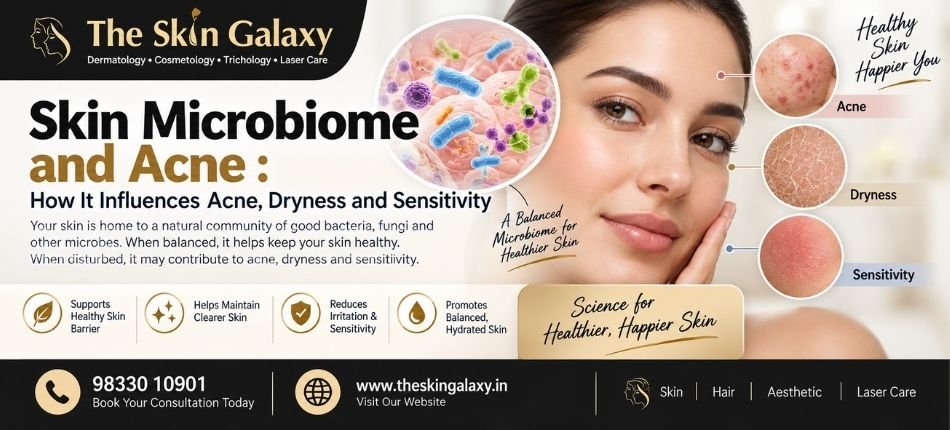
Skin Microbiome and Acne : How It Influences Acne, Dryness and Sensitivity – The Skin Galaxy
Introduction
Our skin is not simply a physical covering. Its surface is home to a complex community of microorganisms, including bacteria, fungi and other microbes. Together, these microorganisms form what is known as the skin microbiome.
When this ecosystem remains balanced, it can contribute to normal skin-barrier function and help the skin respond to environmental challenges. However, changes in the skin environment and microbial balance may be associated with concerns such as acne, dryness, irritation and sensitivity.
Understanding the relationship between the skin microbiome and acne can help explain why skincare is not only about removing oil or bacteria. Maintaining the skin barrier and avoiding unnecessary irritation can also be important.
What Is the Skin Microbiome?
The skin microbiome refers to the collection of microorganisms naturally present on the skin. Different areas of the body can have different microbial communities depending on factors such as moisture, oil production and the local environment.
These microorganisms normally coexist with the skin rather than automatically causing disease. A healthy skin environment involves a complex relationship between microbes, the skin barrier and the immune system.
The microbiome can vary from person to person, which is one reason why the same skincare routine may not work equally well for everyone.
Why Is a Healthy Skin Microbiome Important?
A balanced skin ecosystem can contribute to several normal skin functions. It interacts with the skin barrier and immune system and may help limit the overgrowth of potentially problematic microorganisms.
When the skin barrier becomes damaged or the local environment changes, the balance between different microorganisms may also change.
This does not mean that every skin problem is caused by an unhealthy microbiome. Acne, eczema, rosacea and other conditions have multiple contributing factors. However, microbiome research is helping dermatologists better understand how the skin’s microbial ecosystem interacts with these conditions.
Skin Microbiome and Acne: What Is the Connection?
Acne is a multifactorial condition. Excess sebum production, blocked pores, inflammation, hormonal influences and Cutibacterium acnes all play roles.
Interestingly, C. acnes is normally found on healthy skin as well. Therefore, acne is not simply a matter of having this bacterium on the face.
Research suggests that differences between strains of C. acnes, changes within the follicular environment and the skin’s inflammatory response may all be relevant.
This is why aggressive attempts to eliminate all bacteria from acne-prone skin are not necessarily beneficial. Excessive cleansing, scrubbing or inappropriate products may damage the skin barrier and increase irritation without addressing all the underlying causes of acne.
Can Skin Microbiome Imbalance Make Acne Worse?
Yes, an imbalance in the skin microbiome may contribute to acne by affecting the skin’s natural protective environment and inflammatory response. Changes in certain microorganisms, including Cutibacterium acnes, may be associated with increased inflammation and breakouts. Harsh cleansers, excessive exfoliation, and overuse of active skincare products can also disrupt the skin barrier and microbial balance. Maintaining a gentle skincare routine and seeking dermatological advice for persistent acne can help support healthier skin.
Skin Microbiome and Dry Skin
Dry skin occurs when the skin cannot retain enough moisture or when its protective barrier is compromised.
The outermost layer of skin contains lipids that help reduce water loss. Frequent washing, harsh cleansers, low humidity, hot water and irritating products can disrupt this barrier.
Because the microbiome lives within this skin environment, barrier disruption and microbial changes can influence each other.
People experiencing persistent dryness may notice:
Tightness: The skin may feel uncomfortable after cleansing.
Flaking: Small patches of dry or peeling skin may develop.
Roughness: The skin surface can become uneven.
Itching: Barrier disruption can make the skin more reactive.
Redness: Irritation may accompany significant dryness.
Regular moisturization and gentle cleansing can help support the skin barrier.
How Does the Skin Microbiome Affect Sensitive Skin?
Sensitive skin is generally described as skin that reacts easily to environmental or topical triggers. A person may experience burning, stinging, itching, tightness or redness after using certain products.
Skin-barrier impairment is an important factor in many cases of sensitivity. Changes in microbial communities have also been studied in inflammatory skin conditions.
However, persistent facial sensitivity can have several explanations, including contact dermatitis, eczema, rosacea and reactions to skincare ingredients.
Rather than repeatedly experimenting with new products, persistent symptoms should be evaluated by a dermatologist.
What Can Disturb the Skin Microbiome?
The microbiome is influenced by both internal and external factors. Some everyday practices may alter the skin environment.
These include excessive cleansing, frequent exfoliation, harsh soaps, environmental conditions and the use of multiple irritating skincare ingredients at the same time.
Age, hormones, genetics, lifestyle, body location and certain medical conditions can also influence the microbial communities found on the skin.
The goal of skincare should therefore not be to make the skin completely free of microorganisms. Instead, skincare should help maintain clean, comfortable skin without unnecessarily damaging its protective barrier.
Are You Over-Cleansing Your Skin?
People with oily or acne-prone skin sometimes assume that washing the face repeatedly will prevent breakouts.
In reality, excessive cleansing can cause dryness, irritation and barrier disruption.
For most people, a gentle cleansing routine is more appropriate than repeatedly washing or aggressively scrubbing the face. The right cleansing frequency and products may differ depending on skin type, acne treatment and other dermatological conditions.
If your face feels extremely tight, irritated or flaky after cleansing, your current routine may need adjustment.
Do Probiotic Skincare Products Improve the Skin Microbiome?
The terms probiotic, prebiotic and microbiome-friendly skincare have become increasingly common in cosmetic marketing.
Research into topical probiotics, prebiotics, postbiotics and microbiome-directed skincare is developing, but not every product marketed with these terms has the same evidence.
A “microbiome-friendly” label also does not automatically mean that a product will treat acne, eczema or sensitive skin.
For a specific skin condition, proven treatment should not be replaced solely by products marketed around the microbiome.
How to Support a Healthy Skin Barrier and Microbiome
A simple skincare routine is often easier for irritated or acne-prone skin to tolerate.
Use a gentle cleanser suited to your skin type. Avoid unnecessarily harsh scrubs or repeated exfoliation. Apply an appropriate moisturizer to support the skin barrier, particularly if acne treatments are causing dryness.
Daily broad-spectrum sunscreen is also important because UV exposure can contribute to skin damage and inflammation.
When introducing active ingredients such as retinoids or exfoliating acids, introduce them appropriately rather than using several strong products simultaneously.
When Should You Consult a Dermatologist?
Consider professional evaluation if you have persistent or worsening acne, painful pimples or nodules, acne scars, significant redness, recurring irritation, severe dryness, persistent itching, or reactions to multiple skincare products.
Acne treatment depends on the type and severity of acne rather than the microbiome alone.
A dermatologist can examine your skin, identify possible triggers and recommend a treatment and skincare routine suited to your individual condition.
Conclusion
The skin microbiome is an important part of the skin’s natural ecosystem. Its relationship with the skin barrier and immune system is increasingly being studied in conditions such as acne, dryness and sensitivity.
The connection between the skin microbiome and acne is more complex than simply having “good” or “bad” bacteria. Acne involves oil production, blocked follicles, inflammation, microorganisms and several individual factors.
A gentle skincare routine, appropriate moisturization and evidence-based treatment can help protect the skin barrier while addressing specific concerns.
The Skin Galaxy can provide dermatological evaluation and individualized guidance for acne, dry skin, sensitive skin and other skin concerns.
Skin Microbiome and Acne Skin Microbiome and Acne Skin Microbiome and Acne Skin Microbiome and Acne Skin Microbiome and Acne Skin Microbiome and Acne Skin Microbiome and Acne Skin Microbiome and Acne Skin Microbiome and Acne Skin Microbiome and Acne Skin Microbiome and Acne Skin Microbiome and Acne Skin Microbiome and Acne Skin Microbiome and Acne