
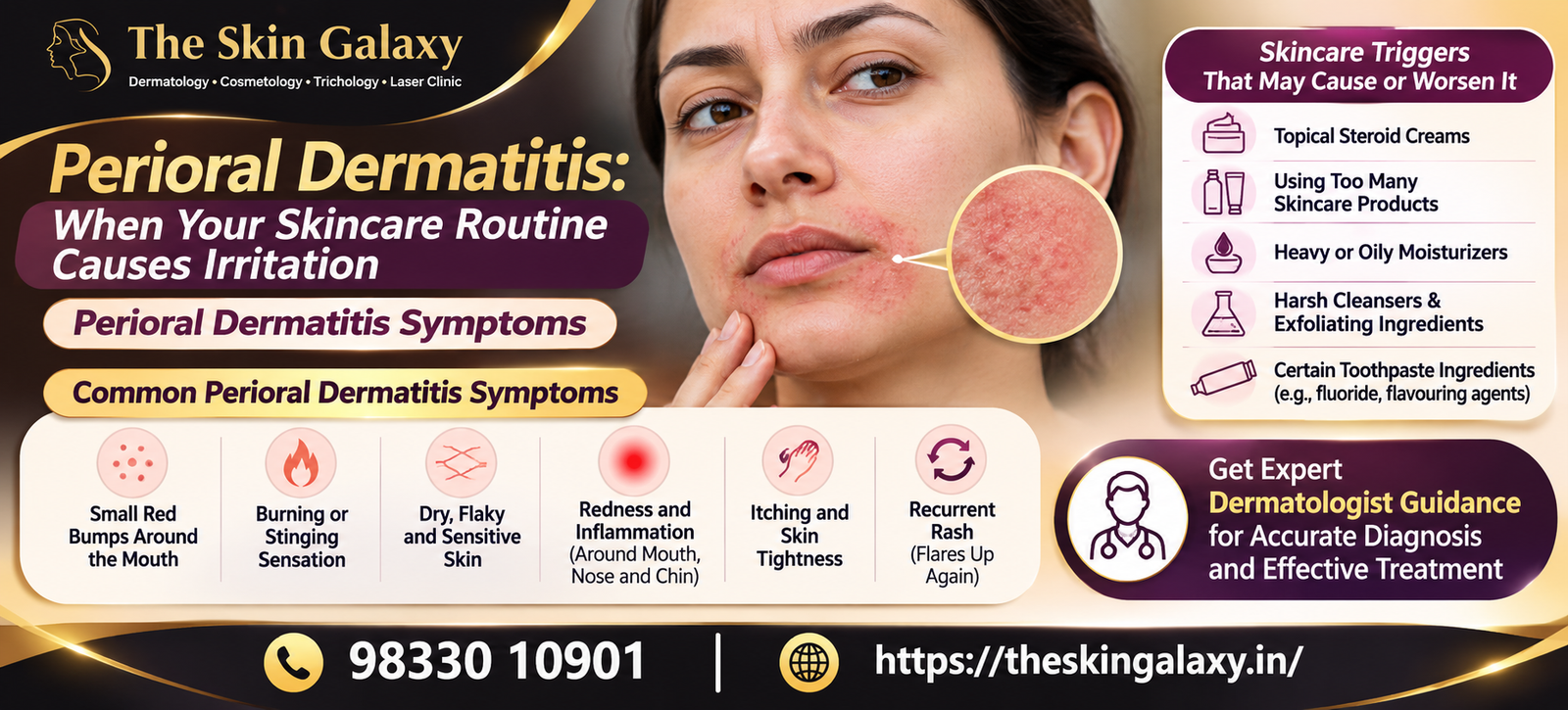
Perioral Dermatitis: When Your Skincare Routine Causes Irritation | Perioral Dermatitis Symptoms – The Skin Galaxy
A good skincare routine is supposed to keep your skin healthy, hydrated, and glowing. However, using too many skincare products, applying harsh active ingredients, or using inappropriate creams can sometimes lead to unexpected skin irritation. One condition that may develop or worsen due to certain skincare products is perioral dermatitis.
Perioral dermatitis is an inflammatory skin condition that commonly causes small bumps, redness, dryness, and irritation around the mouth. Although it may resemble acne, it is a different condition that requires a specific approach to treatment.
Understanding perioral dermatitis symptoms is important because using the wrong skincare products or applying steroid creams without medical guidance may worsen the condition.
At The Skin Galaxy, we believe that understanding your skin condition is the first step toward choosing appropriate skincare and treatment.
In this detailed guide, we will discuss perioral dermatitis symptoms, common triggers, skincare mistakes, treatment options, prevention strategies, and when to consult a dermatologist.
What Is Perioral Dermatitis?
Perioral dermatitis is a facial inflammatory skin condition that primarily affects the area surrounding the mouth. It may also appear around the nose and eyes, in which case it is often referred to as periorificial dermatitis.
The condition commonly appears as clusters of small red, pink, or skin-coloured bumps. These bumps may be accompanied by dryness, flaking, burning, or itching.
One characteristic feature is that the skin immediately next to the lips may remain unaffected, creating a narrow clear area between the lips and the rash.
Perioral dermatitis is not contagious, and it is not caused by poor hygiene. Its exact cause remains unclear, but several skincare products, medications, and environmental factors are associated with flare-ups.
What Are the Common Perioral Dermatitis Symptoms?
Recognizing perioral dermatitis symptoms early can help prevent unnecessary irritation and inappropriate skincare treatments.
1. Small Red or Skin-Coloured Bumps Around the Mouth
One of the most noticeable perioral dermatitis symptoms is the appearance of small, acne-like bumps around the mouth, chin, and folds beside the nose. Depending on skin tone, these bumps may appear red, pink, brownish, or similar to the surrounding skin. Some bumps may contain a small amount of fluid or pus, making the condition easy to confuse with acne. Unlike typical acne, however, perioral dermatitis usually does not produce blackheads or whiteheads known as comedones.
2. Burning or Stinging Sensation
People experiencing perioral dermatitis may notice burning, stinging, or discomfort around the affected area. These sensations can become more noticeable after applying skincare products, washing the face, or being exposed to certain environmental conditions. Even products that previously felt comfortable may cause irritation when the skin is inflamed. Persistent burning or sensitivity around the mouth should not be ignored, particularly when accompanied by visible bumps or redness.
3. Dry, Flaky and Sensitive Skin
Dryness and flaking are common perioral dermatitis symptoms. The affected skin may feel tight, rough, or unusually sensitive, especially after cleansing. Some individuals respond by applying multiple layers of moisturizer, but heavy or occlusive creams may worsen the condition in susceptible people. This can create a frustrating cycle of dryness, increased product use, and further irritation. A dermatologist can recommend a simplified skincare approach suitable for the affected skin.
4. Redness and Inflammation Around the Nose and Chin
Perioral dermatitis commonly affects the skin around the mouth but can extend to the folds beside the nose, chin, and occasionally the area around the eyes. The affected skin may appear inflamed, with small clustered bumps and visible irritation. On darker skin tones, inflammation may not always appear bright red and can instead look darker or more subtly discoloured. The distribution of the rash helps dermatologists distinguish perioral dermatitis from acne, rosacea, and other facial skin conditions.
5. Itching and Skin Tightness
Some people experience mild itching, tightness, or discomfort in areas affected by perioral dermatitis. The symptoms may become more noticeable when the skin is dry or exposed to irritating products. Scratching, rubbing, or repeatedly touching the affected area may increase irritation. However, not everyone experiences itching, and some individuals mainly notice visible bumps or persistent dryness.
6. Recurrent Facial Rash
Another important sign is a rash that repeatedly improves and returns. In some cases, steroid creams temporarily reduce redness but contribute to a cycle of recurring flare-ups. The rash may become more noticeable after the steroid is discontinued. Recurrent symptoms should be assessed by a dermatologist rather than repeatedly treated with over-the-counter creams.
What Causes Perioral Dermatitis?
The exact cause of perioral dermatitis is not fully understood. However, several factors may trigger or worsen the condition.
1. Excessive Use of Skincare Products
Using multiple serums, exfoliants, cleansers, and treatment products at the same time can irritate sensitive facial skin.
When the skin barrier becomes compromised, it may be more vulnerable to external irritants.
Although not every skincare product causes perioral dermatitis, complicated routines can make existing symptoms worse.
2. Topical Steroid Creams
Topical corticosteroids are among the most strongly associated triggers of perioral dermatitis.
Some people apply steroid-containing creams to reduce redness, itching, or facial irritation without realizing that prolonged use may worsen the condition.
Steroid creams may initially improve the rash, but symptoms can return or intensify when treatment is stopped.
Important: Do not use steroid creams on the face without medical advice. If you are already using a prescribed steroid, consult the prescribing doctor before changing or discontinuing it.
3. Heavy Moisturizers and Occlusive Creams
Thick moisturizers, oily creams, and highly occlusive skincare products may aggravate perioral dermatitis in some individuals.
These products can create a heavy layer over the skin and may contribute to irritation in susceptible people.
During active flare-ups, a dermatologist may recommend temporarily simplifying or reducing skincare products.
4. Harsh Cleansers and Exfoliating Ingredients
Strong cleansers, frequent exfoliation, and poorly tolerated active ingredients can increase facial irritation.
Products containing exfoliating acids, retinoids, or strong fragrances may worsen burning and sensitivity during a flare-up.
While these ingredients can be beneficial for certain skin concerns, they may not be suitable for inflamed or highly sensitive skin.
5. Toothpaste and Dental Products
Certain toothpaste ingredients, including fluoride or flavouring agents, have been reported as possible triggers in some individuals.
However, toothpaste is not the cause of every case of perioral dermatitis.
Patients should discuss suspected triggers with a dermatologist before making significant changes to their oral hygiene routine.
6. Hormonal Changes
Hormonal fluctuations may contribute to flare-ups in some individuals.
Changes associated with menstrual cycles, pregnancy, or hormonal medications have been observed in people with perioral dermatitis.
However, hormonal changes are not established as the sole cause of the condition.
7. Environmental Factors
Heat, sunlight, wind, and certain weather conditions may aggravate perioral dermatitis symptoms.
People with sensitive or inflamed skin may notice increased burning or irritation after environmental exposure.
Identifying personal triggers can help reduce repeated flare-ups.
Can Your Skincare Routine Cause Perioral Dermatitis?
Yes, certain skincare products and practices may contribute to perioral dermatitis or worsen an existing rash.
A skincare routine involving multiple active ingredients, heavy moisturizers, steroid creams, or irritating products can sometimes overwhelm sensitive skin.
However, perioral dermatitis is not simply the result of using too many products. It is a distinct inflammatory condition with several possible contributing factors.
Some common skincare mistakes include:
- Applying steroid creams to facial rashes without medical supervision.
- Using several exfoliating products together.
- Continuing irritating skincare products despite burning or stinging.
- Applying heavy creams repeatedly to inflamed skin.
- Frequently switching products without allowing the skin to recover.
- Treating every acne-like bump with strong acne medications.
If a rash develops around the mouth after introducing new skincare products, a dermatologist can help determine whether the problem is perioral dermatitis, contact dermatitis, acne, or another skin condition.
Perioral Dermatitis vs Acne: What Is the Difference?
Perioral dermatitis is frequently mistaken for acne because both conditions may produce small facial bumps.
However, their symptoms and treatment approaches are different.
| Feature | Perioral Dermatitis | Acne |
|---|---|---|
| Common location | Around the mouth, nose, or eyes | Face, chest, shoulders, and back |
| Appearance | Small clustered bumps with irritation | Blackheads, whiteheads, pimples, and sometimes nodules |
| Burning sensation | May occur | Less typical |
| Dryness and flaking | Common | May occur, especially with acne treatment |
| Steroid creams | Can trigger or worsen symptoms | Can also cause steroid-related acneiform eruptions |
| Treatment | Trigger management and dermatologist-prescribed medication | Acne-specific skincare and medical treatments |
Why the difference matters: Using strong acne treatments on perioral dermatitis may increase irritation rather than improve the condition.
Perioral Dermatitis vs Contact Dermatitis
Contact dermatitis occurs when the skin reacts to an irritating substance or allergen.
It may cause redness, itching, swelling, dryness, or scaling.
Perioral dermatitis, on the other hand, commonly produces clusters of small bumps around facial openings.
Both conditions can be associated with skincare products, but they require different diagnostic considerations.
A dermatologist may recommend patch testing if allergic contact dermatitis is suspected.
How Is Perioral Dermatitis Diagnosed?
A dermatologist usually diagnoses perioral dermatitis by examining the skin and reviewing the patient’s medical and skincare history.
During the consultation, the dermatologist may ask about:
- When the rash first appeared
- Products used on the face
- Previous use of steroid creams
- Recent changes in skincare products
- Associated burning, itching, or dryness
- Use of nasal sprays or inhaled corticosteroids
- Previous skin conditions
- Recurrent flare-ups
Most cases can be diagnosed clinically without extensive testing.
However, additional investigations may be considered if the appearance is unusual or another condition is suspected.
What Is the Best Treatment for Perioral Dermatitis?
Perioral dermatitis treatment depends on symptom severity, potential triggers, previous medication use, and individual skin sensitivity.
1. Simplifying the Skincare Routine
A dermatologist may recommend temporarily reducing skincare products and avoiding unnecessary cosmetics.
This approach is sometimes called zero therapy.
It allows the skin to recover without repeated exposure to potentially irritating ingredients.
In mild cases, simplifying the skincare routine and removing triggers may be sufficient.
2. Avoiding Inappropriate Steroid Creams
Stopping the use of facial steroid creams is an important part of managing steroid-associated perioral dermatitis.
However, patients using prescription steroids should discuss the safest withdrawal approach with their doctor.
Some individuals experience temporary worsening after steroid withdrawal, and a supervised plan may be necessary.
3. Topical Medications
Depending on the severity of the condition, a dermatologist may prescribe topical treatments such as:
- Metronidazole
- Erythromycin
- Pimecrolimus in selected cases
These medications may help control inflammation and reduce the rash.
The choice of medication depends on the patient’s clinical condition and medical history.
4. Oral Medications
Moderate, severe, or persistent perioral dermatitis may require oral medication.
Dermatologists sometimes prescribe oral antibiotics such as doxycycline or other suitable alternatives.
These medications are used under medical supervision, and their suitability depends on factors including age, pregnancy status, and medical history.
5. Identifying and Managing Triggers
Successful management also involves identifying factors that may be contributing to the condition.
These may include irritating cosmetics, heavy creams, topical steroids, or other suspected triggers.
A personalized treatment plan can help reduce unnecessary product use and support skin recovery.
How Long Does Perioral Dermatitis Take to Heal?
Perioral dermatitis usually improves gradually rather than disappearing overnight.
Some individuals notice improvement within several weeks, while others require treatment for several months.
The recovery period depends on:
- Severity of the condition
- Duration of symptoms
- Previous steroid use
- Skin sensitivity
- Continued exposure to triggers
- Response to prescribed treatment
Temporary worsening may occur after stopping steroid creams.
Following a dermatologist’s treatment plan consistently is important for long-term improvement.
Skincare Routine for Perioral Dermatitis-Prone Skin
During an active flare-up, the most suitable skincare routine is often a simplified one recommended by a dermatologist.
Morning Skincare Routine
Step 1: Gentle Cleansing
Wash the face gently using lukewarm water or a mild cleanser if recommended.
Avoid harsh soaps, scrubs, and aggressive cleansing brushes.
Step 2: Use Only Necessary Products
Avoid layering multiple serums or treatment creams over irritated skin.
Use prescribed medication according to the dermatologist’s instructions.
Step 3: Sun Protection
Discuss suitable sun protection with your dermatologist. Some sunscreen formulations may irritate affected skin, so a lightweight, well-tolerated product or temporary non-product sun protection may be appropriate.
Night Skincare Routine
Step 1: Cleanse Gently
Remove dirt and cosmetics without excessive rubbing.
Step 2: Avoid Strong Active Ingredients
Temporarily avoid potentially irritating exfoliating acids, retinoids, and strong acne treatments unless prescribed.
Step 3: Follow Prescribed Treatment
Apply dermatologist-recommended medication as directed.
Step 4: Avoid Heavy Product Layering
Do not automatically apply thick moisturizers or overnight masks to inflamed areas.
The best routine depends on individual skin needs and the severity of the condition.
How to Prevent Perioral Dermatitis Flare-Ups
Although perioral dermatitis cannot always be prevented, certain skincare habits may reduce the likelihood of irritation and recurrence.
Choose Gentle Skincare Products
Use mild, fragrance-free products when appropriate for your skin.
Avoid unnecessary skincare steps.
Avoid Unsupervised Steroid Creams
Never use facial steroid creams for prolonged periods without professional guidance.
Introduce New Products Gradually
Adding one new product at a time makes it easier to identify potential irritants.
Avoid Over-Exfoliation
Frequent exfoliation may aggravate already sensitive skin.
Be Careful With Heavy Cosmetics
Some makeup and moisturizing products can worsen symptoms.
Choose products based on dermatologist recommendations and personal tolerance.
Follow Your Treatment Plan
Stopping treatment too early or repeatedly changing medications may contribute to persistent symptoms.
When Should You Visit a Dermatologist?
You should consider consulting a dermatologist if you experience:
- Persistent small bumps around the mouth
- Recurrent facial redness or irritation
- Burning or stinging after applying skincare products
- Dry, flaky skin that does not improve
- A rash that worsens after using steroid creams
- Irritation spreading around the nose or eyes
- Symptoms that continue despite simplifying skincare
Seek prompt medical evaluation for significant swelling, severe pain, fever, rapidly spreading redness, or eye symptoms such as pain or vision changes, as these may indicate another condition requiring attention.
Early diagnosis can help avoid inappropriate treatments and unnecessary irritation.
Why Professional Dermatology Guidance Matters for Perioral Dermatitis
Perioral dermatitis can resemble acne, rosacea, eczema, and allergic reactions, making self-diagnosis difficult.
Using inappropriate skincare products or over-the-counter steroid creams may worsen symptoms and delay recovery.
A dermatologist can evaluate the affected skin, review potential triggers, and recommend suitable treatment options.
Professional guidance is especially helpful when symptoms recur, spread, or fail to improve with basic skincare adjustments.
Consult The Skin Galaxy for Perioral Dermatitis Symptoms and Skin Irritation
Persistent facial irritation, redness, and small bumps around the mouth can affect everyday comfort and confidence.
At The Skin Galaxy, individuals experiencing skincare-related irritation and inflammatory skin concerns can seek dermatology consultation and guidance.
Understanding the underlying condition is important before introducing new skincare products or attempting treatment.
If you notice recurring perioral dermatitis symptoms, consider consulting a qualified dermatologist for an accurate diagnosis and personalized management plan.
Frequently Asked Questions About Perioral Dermatitis Symptoms
1. What are the first signs of perioral dermatitis?
Early signs commonly include small bumps around the mouth, mild redness, dryness, flaking, and sometimes burning or itching.
2. Can skincare products cause perioral dermatitis?
Certain skincare products, especially heavy creams, irritating cosmetics, and topical steroids, may trigger or worsen perioral dermatitis in susceptible individuals.
3. Is perioral dermatitis the same as acne?
No. Although both conditions may produce facial bumps, perioral dermatitis is a distinct inflammatory condition that typically affects the skin around the mouth, nose, or eyes.
4. Can moisturizer make perioral dermatitis worse?
Yes. Some thick or occlusive moisturizers may aggravate symptoms. A dermatologist can recommend whether a moisturizer is appropriate during treatment.
5. Does perioral dermatitis cause itching?
Itching may occur, but burning, tightness, and skin sensitivity are also common symptoms. Some individuals experience little or no discomfort.
6. Can perioral dermatitis spread to the nose and eyes?
Yes. The rash may affect areas around the nose and eyes. This broader distribution is often described as periorificial dermatitis.
7. Is perioral dermatitis contagious?
No. Perioral dermatitis is not contagious and cannot be transmitted through ordinary contact.
8. Can steroid creams worsen perioral dermatitis?
Yes. Topical corticosteroids are strongly associated with perioral dermatitis and may cause recurring flare-ups. Prescribed steroid treatment should only be changed with medical guidance.
9. Can perioral dermatitis go away naturally?
Some mild cases improve after suspected triggers are removed. However, persistent or severe cases may require prescription treatment.
10. How long does perioral dermatitis take to clear?
Recovery may take several weeks to months, depending on the severity of the rash, previous treatments, and response to medical care.
11. Should I stop using all skincare products?
Not necessarily. Some patients benefit from temporarily simplifying their routine, but the safest approach depends on the skin condition and products being used. A dermatologist can guide which products to continue or avoid.
12. Can perioral dermatitis return after treatment?
Yes. Recurrence is possible, particularly if triggering products or steroid creams are reintroduced.
Conclusion
Perioral dermatitis is a common inflammatory facial skin condition that can cause persistent bumps, redness, dryness, burning, and irritation around the mouth.
Recognizing perioral dermatitis symptoms early is important because the condition is frequently mistaken for acne or general skin sensitivity.
Although the exact cause remains unclear, topical steroid creams, certain skincare products, heavy moisturizers, and other irritants may contribute to flare-ups.
A simplified skincare routine, identification of possible triggers, and appropriate dermatologist-prescribed treatment can help manage symptoms and support recovery.
If you are experiencing persistent facial irritation or recurring bumps around the mouth, consult The Skin Galaxy for professional dermatology guidance and individualized skincare recommendations.
Perioral Dermatitis Symptoms Perioral Dermatitis Symptoms Perioral Dermatitis Symptoms Perioral Dermatitis Symptoms Perioral Dermatitis Symptoms Perioral Dermatitis Symptoms Perioral Dermatitis Symptoms Perioral Dermatitis Symptoms Perioral Dermatitis Symptoms Perioral Dermatitis Symptoms Perioral Dermatitis Symptoms Perioral Dermatitis Symptoms Perioral Dermatitis Symptoms Perioral Dermatitis Symptoms Perioral Dermatitis Symptoms Perioral Dermatitis Symptoms Perioral Dermatitis Symptoms Perioral Dermatitis Symptoms Perioral Dermatitis Symptoms Perioral Dermatitis Symptoms Perioral Dermatitis Symptoms