
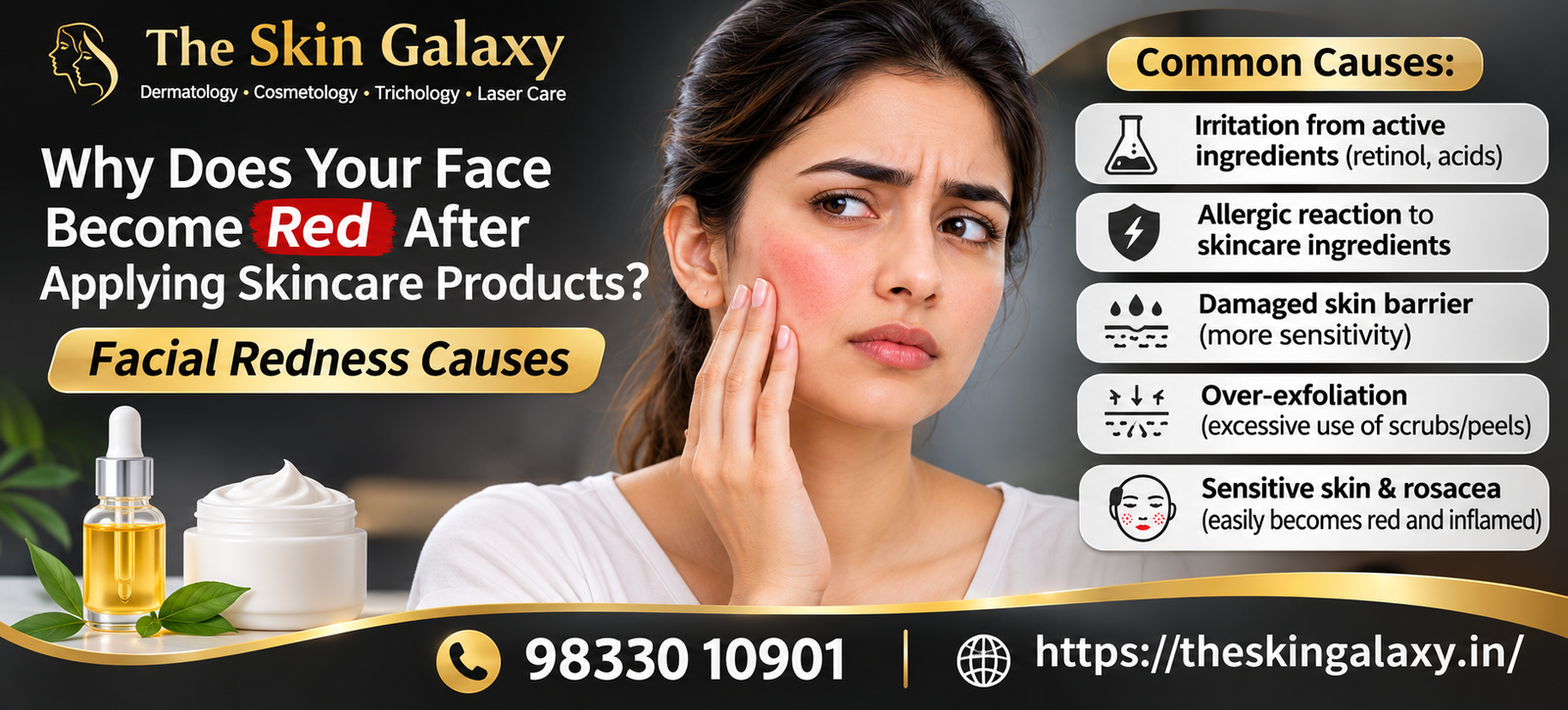
Why Does Your Face Become Red After Applying Skincare Products? | Facial Redness Causes – The Skin Galaxy
Have you ever applied a new face cream, serum, moisturizer, sunscreen, or face wash and noticed your skin turning red? You may also experience itching, burning, tingling, or uncomfortable tightness.
While skincare products are designed to improve skin health, certain ingredients can sometimes trigger irritation or allergic reactions.
Understanding the facial redness causes after applying skincare products is important because persistent irritation may damage your skin barrier and worsen existing skin conditions.
At The Skin Galaxy, we believe that healthy skin begins with understanding your skin type, recognizing early warning signs, and choosing skincare products carefully.
In this article, we explore why facial redness occurs after skincare, which ingredients may trigger reactions, how to soothe irritated skin, and when to consult a dermatologist.
What Is Facial Redness After Applying Skincare Products?
Facial redness refers to visible inflammation or flushing that develops on the face after exposure to a skincare product or another trigger.
It may appear on the cheeks, forehead, nose, chin, or around the mouth.
Common symptoms include:
- Red or inflamed patches on the face
- Burning or stinging after applying skincare
- Itching and discomfort
- Dryness, peeling, or flaking
- Skin tightness and increased sensitivity
- Small bumps or swelling
On deeper skin tones, inflammation may appear darker, purplish, or less visibly red.
Occasional mild, short-lived flushing can occur, but persistent redness, pain, swelling, or a rash should not be ignored.
8 Common Facial Redness Causes After Skincare Products
1. Skin Irritation From Active Ingredients
One of the most common facial redness causes is irritation from active skincare ingredients.
Products containing retinoids, exfoliating acids, or acne-treatment ingredients can sometimes cause dryness, peeling, stinging, and redness.
Examples include:
- Retinol and other retinoids
- Glycolic acid (AHA)
- Salicylic acid (BHA)
- Benzoyl peroxide
- Strong exfoliating formulations
These ingredients can be beneficial when used appropriately, but excessive concentration or frequent application may irritate the skin.
What to do: Stop using a product that causes significant irritation. Once your skin recovers, a dermatologist can advise whether it is appropriate to restart it at a lower concentration or frequency.
2. Allergic Reactions to Skincare Products
Allergic contact dermatitis occurs when the immune system reacts to a particular substance.
Common cosmetic allergens include fragrances, preservatives, certain botanical extracts, and some sunscreen ingredients.
Symptoms may include:
- Itchy facial redness
- Swelling around the eyes or cheeks
- Small bumps or an eczema-like rash
- Persistent irritation after product application
Unlike immediate irritation, allergic contact dermatitis may appear several hours or days after exposure.
A product that was previously well tolerated can also cause an allergic reaction later.
What to do: Discontinue the suspected product and seek dermatological advice. Professional patch testing may help identify the allergen.
3. Damaged Skin Barrier
Your skin barrier is the outer protective layer that helps retain moisture and limits exposure to environmental irritants.
When this barrier becomes damaged, even products that previously felt comfortable may cause stinging or redness.
Common reasons for skin barrier damage include:
- Excessive exfoliation
- Washing the face too frequently
- Harsh cleansers
- Using multiple strong active ingredients together
- Dry weather and low humidity
- Existing eczema or other inflammatory skin conditions
Signs of a weakened skin barrier include persistent dryness, tightness, flaking, sensitivity, and burning when applying products.
What to do: Simplify your routine and use a gentle cleanser and fragrance-free moisturizer. Avoid exfoliating products until irritation settles.
4. Over-Exfoliation of Facial Skin
Over-exfoliation is one of the common facial redness causes, especially when scrubs, chemical exfoliants, or active skincare products are used too frequently. Excessive exfoliation can damage the skin’s protective barrier, leading to redness, dryness, peeling, and a burning sensation. It may also make your skin more sensitive to other skincare products. To prevent irritation, avoid excessive exfoliation and allow your skin sufficient time to recover.
5. Sensitive Skin and Rosacea
People with sensitive skin or rosacea are more likely to experience facial redness after applying skincare products. Rosacea is a chronic skin condition that can cause persistent redness, facial flushing, burning sensations, and visible blood vessels, particularly around the cheeks and nose. Common triggers include sunlight, heat, harsh skincare ingredients, and certain cosmetics. Using gentle, fragrance-free products and consulting a dermatologist can help manage symptoms and prevent flare-ups.
6. Fragrances and Preservatives in Cosmetics
Fragrance is a recognized trigger of cosmetic contact allergies.
Some preservatives can also cause allergic reactions in susceptible individuals.
Products marketed as natural, herbal, or organic are not automatically free from irritation or allergy risks.
Even essential oils and botanical extracts may cause reactions in sensitive skin.
What to do: Consider fragrance-free skincare and review ingredient labels carefully. If you have a confirmed allergy, avoid products containing the identified ingredient.
7. Using Too Many Skincare Products Together
A complicated skincare routine is not always better.
Applying several products containing strong active ingredients can increase cumulative irritation.
For example, combining exfoliating acids, retinoids, and benzoyl peroxide without guidance may leave the skin dry and sensitive.
What to do: Introduce one new product at a time and avoid combining strong treatments unless recommended by a qualified professional.
8. Sun Exposure and Environmental Factors
Sun exposure, temperature changes, dry air, and environmental conditions may worsen facial redness.
Certain skincare ingredients can also increase sensitivity to sunlight.
When the skin is already irritated, exposure to heat, sunlight, and friction can make symptoms more noticeable.
What to do: Use a suitable broad-spectrum SPF 30 or higher sunscreen, seek shade, and avoid excessive heat. If your sunscreen itself causes irritation, ask a dermatologist about alternatives.
How to Identify Whether Facial Redness Is Irritation or an Allergy
Although irritation and allergic reactions can look similar, there are some differences.
| Feature | Skin Irritation | Allergic Reaction |
|---|---|---|
| Main cause | Direct irritation or skin barrier damage | Immune response to an allergen |
| Onset | May occur quickly or after repeated use | Often delayed by hours or days |
| Common symptoms | Burning, stinging, dryness | Itching, rash, swelling |
| Typical triggers | Strong acids, retinoids, harsh cleansers | Fragrances, preservatives, specific ingredients |
| Management | Avoid irritant and repair skin barrier | Avoid allergen; professional assessment may be needed |
These are general patterns, not a reliable way to diagnose the reaction yourself.
What to Do Immediately When Your Face Becomes Red After Skincare
If you notice facial redness after applying a skincare product, follow these steps.
Step 1: Stop Using the Suspected Product
Discontinue the product that appears to be causing the reaction.
Avoid applying additional active skincare products to the irritated area.
Step 2: Gently Rinse Your Face
Use cool or lukewarm water to remove the suspected product.
Avoid scrubbing, rubbing, or using harsh cleansers.
Step 3: Apply a Cool Compress
A clean, cool compress may help reduce temporary discomfort.
Do not apply ice directly to the skin.
Step 4: Use a Gentle Moisturizer
A simple, fragrance-free moisturizer can help support the skin barrier and reduce dryness.
Step 5: Avoid Exfoliating and Strong Active Ingredients
Temporarily avoid exfoliating acids, retinoids, abrasive scrubs, and other potentially irritating products.
Step 6: Consult a Dermatologist if Symptoms Persist
If redness becomes severe, keeps returning, spreads, or is accompanied by swelling, seek professional evaluation.
Important: Difficulty breathing, throat swelling, faintness, or rapidly progressing facial swelling requires emergency medical attention.
How to Prevent Facial Redness From Skincare Products
Prevention begins with understanding your skin’s needs and using products appropriately.
Choose Products Suitable for Your Skin Type
Different skin types have different skincare requirements.
- Dry skin: Gentle cleansers and richer moisturizers may help.
- Oily skin: Lightweight, non-comedogenic products may be appropriate.
- Sensitive skin: Simple, fragrance-free formulations are often preferable.
- Acne-prone skin: Acne treatments should be introduced carefully to minimize irritation.
Perform a Product Tolerance Test
Before applying a new skincare product to your entire face, test it on a small area of skin.
The American Academy of Dermatology recommends testing a small area twice daily for approximately 7–10 days, following the product’s usual application instructions.
A home tolerance test cannot rule out every possible allergy.
Introduce Products Gradually
Avoid starting several new products on the same day.
Introducing one product at a time makes it easier to identify which product may be causing a reaction.
Avoid Excessive Cleansing
Washing your face too frequently or using strong cleansers can strip the skin of moisture.
A gentle cleansing routine is generally more suitable for sensitive or irritated skin.
Maintain a Simple Skincare Routine
A basic routine may include:
Morning:
- Gentle cleanser
- Suitable moisturizer
- Broad-spectrum sunscreen SPF 30 or higher
Night:
- Gentle cleanser
- Fragrance-free moisturizer
Additional treatment products should be selected according to your skin condition and tolerance.
Which Skincare Ingredients May Cause Facial Redness?
Certain ingredients deserve extra attention, particularly if you have sensitive skin.
| Ingredient | Possible Skin Reaction |
|---|---|
| Retinol and retinoids | Dryness, peeling, irritation |
| Glycolic acid | Stinging and irritation |
| Salicylic acid | Dryness or irritation |
| Benzoyl peroxide | Redness, peeling, burning |
| Fragrance | Irritation or allergic contact dermatitis |
| Certain preservatives | Allergic reactions in susceptible individuals |
| Essential oils | Irritation or allergy |
| Strong cleansing agents | Dryness and barrier disruption |
Not everyone reacts to these ingredients. Product concentration, formulation, frequency of use, and individual skin sensitivity all influence the risk.
Can Facial Redness After Skincare Cause Long-Term Skin Problems?
Repeated inflammation can sometimes contribute to ongoing sensitivity and post-inflammatory pigmentation changes.
People with deeper skin tones may notice dark patches after an inflammatory reaction resolves.
Persistent inflammation may also aggravate existing conditions such as eczema or rosacea.
Early identification of the trigger and appropriate treatment can help reduce these complications.
When Should You Visit a Dermatologist for Facial Redness?
Consult a dermatologist if you experience:
- Facial redness that persists or repeatedly returns
- Severe burning, pain, or itching
- Swelling around the eyes
- Blisters, crusting, or broken skin
- Redness after multiple different skincare products
- Persistent flushing or suspected rosacea
- Dark marks following repeated skin inflammation
A dermatologist may evaluate your skincare routine, examine your skin, and recommend further testing if necessary.
For suspected allergic contact dermatitis, professional patch testing may help identify specific allergens.
Facial Redness Treatment and Skincare Guidance at The Skin Galaxy
At The Skin Galaxy, we understand that every individual’s skin responds differently to skincare products.
Facial redness may result from product irritation, allergic contact dermatitis, a weakened skin barrier, rosacea, or another underlying skin condition.
Identifying the cause is essential before choosing the right treatment.
A dermatologist can help you understand your skin condition, recognize potential triggers, and develop a suitable skincare routine.
If you frequently experience redness, burning, itching, or irritation after applying skincare products, consider seeking professional dermatological advice.
Healthy skin starts with the right care, not simply more skincare products.
Frequently Asked Questions About Facial Redness Causes
1. Why does my face turn red immediately after applying moisturizer?
Immediate redness may occur due to skin irritation, a damaged skin barrier, or sensitivity to an ingredient. If the reaction is persistent or uncomfortable, stop using the moisturizer and seek advice.
2. Is facial redness after applying serum normal?
Mild temporary irritation can occur with some active ingredients, but significant burning, persistent redness, or swelling should not be considered a normal sign that a product is working.
3. Can vitamin C serum cause facial redness?
Yes. Some vitamin C formulations, particularly acidic ones, may cause stinging or irritation in sensitive skin. The likelihood depends on the formulation and your skin’s condition.
4. How long does facial redness after skincare last?
Mild irritation may improve within hours or days after stopping the trigger. More significant dermatitis can last longer and may require medical treatment.
5. Can sunscreen cause facial redness?
Yes. Some sunscreen formulations can irritate sensitive skin or cause allergic contact dermatitis. A dermatologist can help identify suitable alternatives.
6. How can I reduce redness after applying face cream?
Stop using the suspected product, gently rinse your skin, apply a cool compress, and use a simple fragrance-free moisturizer if tolerated. Seek medical advice if symptoms persist or worsen.
7. Is redness a sign that skincare products are working?
Not necessarily. Redness can indicate irritation or inflammation rather than product effectiveness. Persistent redness or burning should not be ignored.
8. Can damaged skin barrier cause facial redness?
Yes. A weakened skin barrier can make the face more sensitive to skincare products, environmental conditions, and ordinary cleansing.
9. Should I stop all skincare products when my face becomes red?
Temporarily stop suspected irritants and unnecessary active products. Gentle cleansing, moisturizing, and suitable sun protection can usually continue if tolerated. Severe reactions require medical assessment.
10. When should I consult a dermatologist for skincare-related redness?
Consult a dermatologist if redness is severe, recurrent, persistent, or accompanied by swelling, significant discomfort, or other concerning symptoms.
Conclusion
Understanding facial redness causes after skincare is the first step toward protecting your skin.
Common triggers include harsh active ingredients, allergic reactions, excessive exfoliation, damaged skin barriers, sensitive skin, and existing dermatological conditions.
Rather than ignoring redness or experimenting with multiple new products, identify potential triggers, simplify your routine, and seek professional guidance when necessary.
The Skin Galaxy encourages a thoughtful approach to skincare that prioritizes skin health, comfort, and long-term results.
Facial Redness Causes Facial Redness Causes Facial Redness Causes Facial Redness Causes Facial Redness Causes Facial Redness Causes Facial Redness Causes Facial Redness Causes Facial Redness Causes Facial Redness Causes Facial Redness Causes Facial Redness Causes Facial Redness Causes Facial Redness Causes Facial Redness Causes Facial Redness Causes Facial Redness Causes Facial Redness Causes Facial Redness Causes Facial Redness Causes Facial Redness Causes Facial Redness Causes Facial Redness Causes Facial Redness Causes Facial Redness Causes Facial Redness Causes Facial Redness Causes Facial Redness Causes