
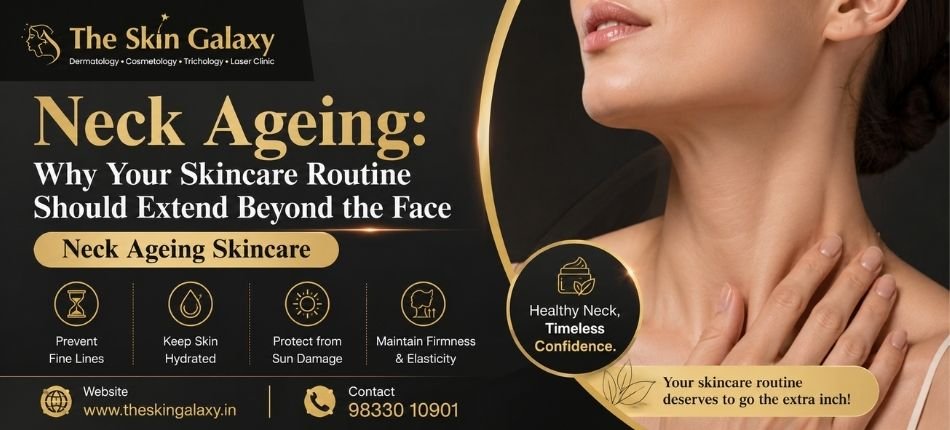
Neck Ageing: Why Your Skincare Routine Should Extend Beyond the Face | Neck Ageing Skincare – The Skin Galaxy
Most skincare routines receive plenty of attention from the forehead down to the jawline—but often stop there. The neck, despite being highly visible and regularly exposed to environmental factors, is frequently forgotten.
Over time, the skin on the neck can develop fine lines, wrinkles, uneven tone, dryness, and changes in firmness. Sun exposure and natural ageing are important contributors, while daily habits and repeated neck movement can also affect its appearance.
A consistent neck ageing skincare routine doesn’t necessarily require a completely separate collection of products. In many cases, appropriately extending suitable facial skincare to the neck can be a practical starting point.
Why Does the Neck Show Signs of Ageing?
Skin changes naturally with age. Collagen and elastin, which contribute to the skin’s structure and elasticity, change over time. The skin may gradually appear thinner, drier, or less firm.
The neck is also frequently exposed to sunlight, yet many people forget to apply sunscreen to this area.
Factors that may contribute to visible neck ageing include:
- Natural ageing
- Cumulative sun exposure
- Changes in collagen and elasticity
- Dryness
- Repetitive neck movement
- Genetics
- Lifestyle and environmental factors
- Inconsistent skincare
Understanding these factors can help you build a more complete skincare routine.
What Are the Common Signs of Neck Ageing?
Visible signs may differ from person to person, but common concerns include:
Fine Lines and Wrinkles
Horizontal lines can become more noticeable with age and repeated neck movement. Changes in collagen, elasticity, hydration, and sun exposure can also influence their appearance.
Skin Laxity
Some people notice that their neck skin gradually appears looser or less firm. This may occur as part of natural ageing and changes in the skin’s supporting structures.
Uneven Skin Tone
Repeated exposure to ultraviolet radiation can contribute to pigmentation, uneven tone, and other signs of photodamage.
Dryness and Rough Texture
The neck can become dry or rough when it receives less moisturising care than the face. A weakened skin barrier may make dryness more noticeable.
Why Should Skincare Extend Beyond the Face?
Your face and neck are both exposed to sunlight, pollution, weather changes, and other environmental factors.
Applying skincare only to the face can leave the neck without the same moisturising and sun-protective care.
When suitable for your skin, extending products such as moisturiser and broad-spectrum sunscreen to the neck can help support a more complete skincare routine.
Neck Ageing Skincare: What Should Your Routine Include?
1. Gentle Cleansing
Cleansing helps remove sweat, sunscreen, excess oil, and impurities from the skin.
Use a gentle cleanser and avoid aggressive scrubbing of the neck. Excessive rubbing or harsh cleansing may irritate sensitive skin.
2. Moisturising
Regular moisturising can help support the skin barrier and improve dryness.
Ingredients such as ceramides, glycerin, and hyaluronic acid are commonly used in moisturising products. Product selection should depend on individual skin type and sensitivity.
3. Sunscreen
Sun protection is one of the most important parts of neck ageing skincare.
Apply broad-spectrum sunscreen to exposed areas of the neck along with your face. Reapplication may be necessary depending on sun exposure, sweating, and product instructions.
Additional protection such as shade and protective clothing can also help reduce UV exposure.
4. Antioxidants
Some skincare routines include antioxidants such as vitamin C to address concerns related to environmental exposure and uneven-looking skin tone.
However, not every active ingredient suits every skin type. Introduce products gradually and discontinue them if significant irritation occurs.
5. Retinoids
Retinoids are commonly used in dermatology and skincare for concerns related to photoageing, fine lines, and skin texture.
The neck can be more sensitive than some areas of the face, so retinoid use may need to be introduced cautiously. A dermatologist can advise on the appropriate formulation, strength, and frequency, particularly for sensitive skin.
Is Sunscreen Important for the Neck?
Yes. Sun exposure contributes significantly to premature visible skin ageing.
Many people carefully apply sunscreen to their face but forget their neck, upper chest, ears, and other exposed areas.
Including the neck in your daily sun-protection routine can help reduce cumulative UV exposure and support healthier-looking skin over time.
Can Phone and Laptop Use Cause Neck Wrinkles?
Looking downward frequently can create repeated folds in the neck. These temporary lines may become more noticeable depending on age, skin characteristics, and repeated movement.
However, neck ageing is multifactorial. Device use should not be considered the sole cause of neck wrinkles.
Instead of trying to avoid normal neck movement, focus on overall skincare, sun protection, and healthy daily habits.
Can Neck Wrinkles Be Completely Removed With Skincare?
Topical skincare can help with concerns such as hydration, texture, and some signs of photoageing, but expectations should remain realistic.
Established wrinkles, significant laxity, pigmentation, or other age-related changes may not disappear with creams alone.
A dermatologist can assess the concern and discuss whether professional treatment options may be appropriate.
When Should You Consult a Dermatologist?
Consider professional advice if you notice persistent pigmentation, significant textural changes, irritation from skincare products, or ageing concerns that are not improving with your routine.
A dermatologist can assess your skin type and concerns before recommending suitable topical products or procedures.
This can also help prevent unnecessary experimentation with strong active ingredients.
Simple Tips for Healthier-Looking Neck Skin
- Extend suitable facial skincare to your neck.
- Apply sunscreen consistently.
- Moisturise regularly.
- Avoid aggressive scrubbing.
- Introduce active ingredients carefully.
- Avoid unnecessary product layering.
- Follow a consistent routine.
- Consult a dermatologist for persistent concerns.
Conclusion
The neck deserves attention as part of a complete skincare routine. Natural ageing, cumulative UV exposure, dryness, and changes in collagen and elasticity can all influence how neck skin looks over time.
A practical neck ageing skincare routine should focus on gentle cleansing, adequate moisturising, consistent sun protection, and carefully selected active ingredients when appropriate.
Instead of waiting for visible ageing to become prominent, including the neck in everyday skincare can support healthier-looking skin over the long term.
Neck Ageing Skincare Neck Ageing Skincare Neck Ageing Skincare Neck Ageing Skincare Neck Ageing Skincare Neck Ageing Skincare Neck Ageing Skincare Neck Ageing Skincare Neck Ageing Skincare Neck Ageing Skincare Neck Ageing Skincare Neck Ageing Skincare